QUESTION IMAGE
Question
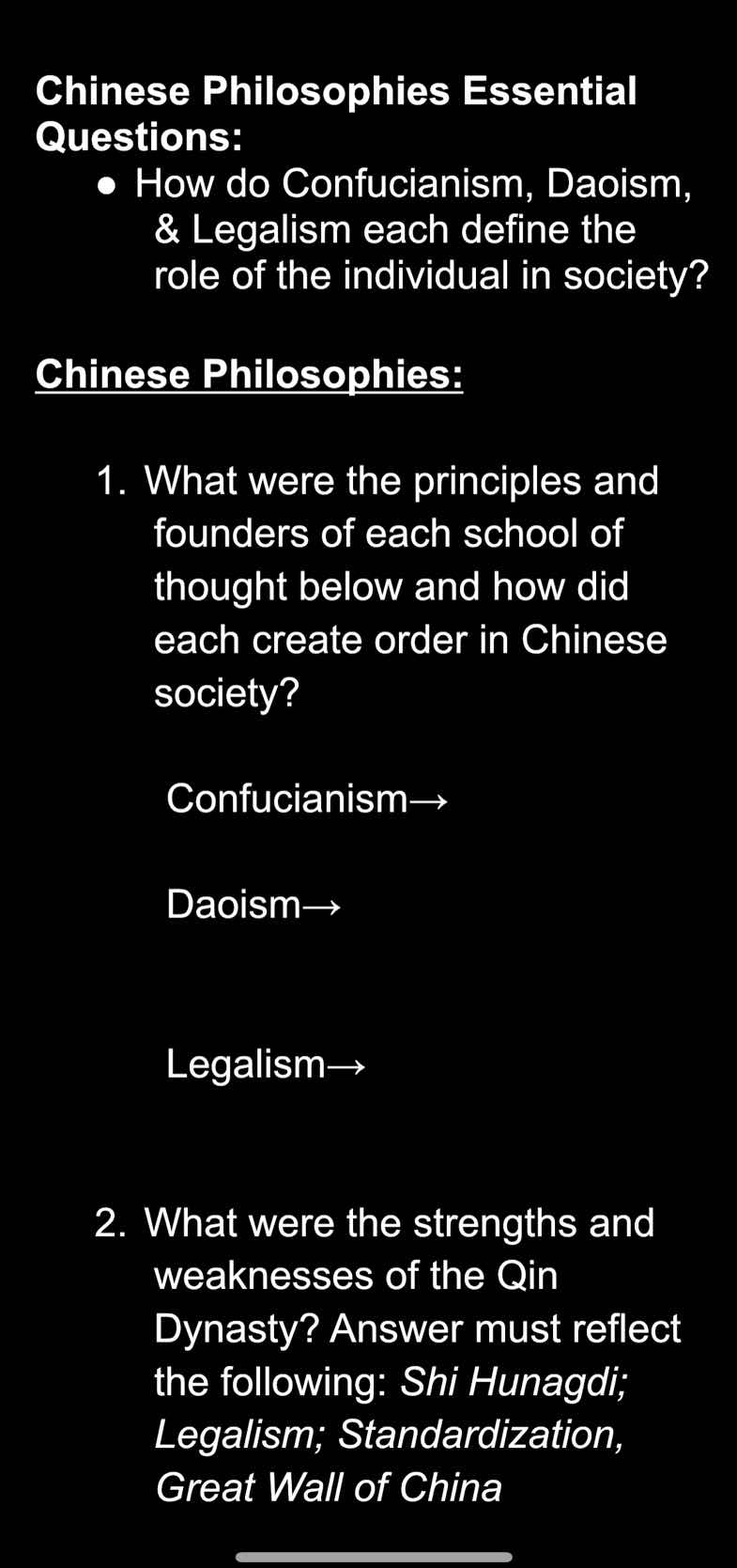
chinese philosophies essential questions: • how do confucianism, daoism, & legalism each define the role of the individual in society? chinese philosophies: 1. what were the principles and founders of each school of thought below and how did each create order in chinese society? confucianism→ daoism→ legalism→ 2. what were the strengths and weaknesses of the qin dynasty? answer must reflect the following: shi hunagdi; legalism; standardization, great wall of china
For Question 1:
Confucianism:
Founded by Confucius, core principles include ren (benevolence), li (ritual propriety), xiao (filial piety), and the five constant relationships. It created order by emphasizing hierarchical social roles, moral education, and virtuous leadership—individuals were expected to fulfill their role in the social hierarchy to maintain harmony.
Daoism:
Founded by Laozi (traditionally), core principles include wu wei (effortless action), harmony with the Dao (the natural way), and rejection of rigid social structures. It created order by encouraging individuals to align with natural patterns, reducing artificial rules and allowing society to function spontaneously.
Legalism:
Founded by figures like Han Feizi, core principles include strict, impartial laws, centralized power, and reward/punishment systems. It created order by enforcing compliance through clear, harsh laws and strong state authority, with the state controlling all aspects of society to eliminate chaos.
For Question 2:
Strengths of the Qin Dynasty:
- Under Shi Huangdi, Legalism was enforced to centralize power, eliminating feudal rivalries and unifying warring states into a single empire.
- Standardization of weights, measures, writing, and currency created economic and administrative unity, simplifying trade and governance across the empire.
- The construction of the Great Wall provided a defensive barrier against northern nomadic invasions, protecting the northern frontier and stabilizing the empire's borders.
Weaknesses of the Qin Dynasty:
- Legalism's harsh, repressive laws (including forced labor, strict punishments for minor offenses) led to widespread resentment among the population, sparking rebellions.
- Shi Huangdi's authoritarian rule, including the burning of books and execution of scholars, suppressed intellectual freedom and eroded popular support.
- The massive projects like the Great Wall and Shi Huangdi's tomb required extreme forced labor, draining the population's resources and causing widespread suffering, which contributed to the dynasty's rapid collapse after Shi Huangdi's death.

Snap & solve any problem in the app
Get step-by-step solutions on Sovi AI
Photo-based solutions with guided steps
Explore more problems and detailed explanations
1.
- Confucianism: Founder: Confucius; Principles: ren, li, xiao, hierarchical relationships; Order via moral virtue and role fulfillment.
- Daoism: Founder: Laozi (traditional); Principles: wu wei, harmony with Dao; Order via natural spontaneity, rejecting rigid rules.
- Legalism: Founder: Han Feizi; Principles: strict laws, central power, rewards/punishments; Order via state-enforced compliance.
2.
- Strengths: Shi Huangdi used Legalism to unify China; standardization unified economy/administration; Great Wall defended northern borders.
- Weaknesses: Legalist harshness sparked resentment; Shi Huangdi's repression suppressed dissent; forced labor for projects caused suffering, leading to rebellion and quick collapse.