QUESTION IMAGE
Question
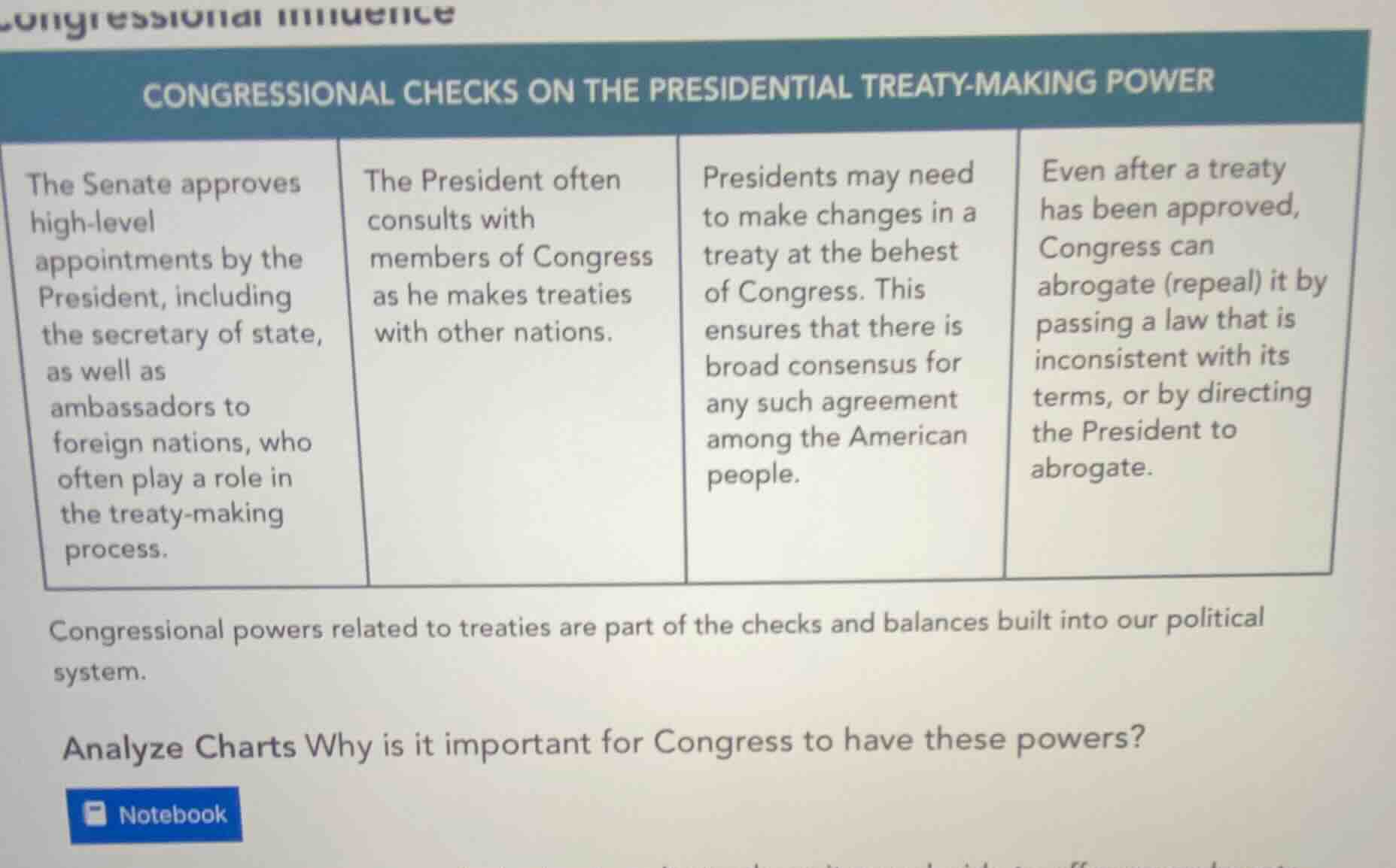
congressional checks on the presidential treaty-making power
the senate approves high-level appointments by the president, including the secretary of state, as well as ambassadors to foreign nations, who often play a role in the treaty-making process. the president often consults with members of congress as he makes treaties with other nations. presidents may need to make changes in a treaty at the behest of congress. this ensures that there is broad consensus for any such agreement among the american people. even after a treaty has been approved, congress can abrogate (repeal) it by passing a law that is inconsistent with its terms, or by directing the president to abrogate.
congressional powers related to treaties are part of the checks and balances built into our political system.
analyze charts why is it important for congress to have these powers?
notebook
These powers enforce the U.S. system of checks and balances, preventing the President from unilaterally making or implementing treaties that lack broad public or legislative support. They ensure treaties align with the interests of the American people, build consensus for international agreements, and allow for correction of problematic treaties after approval.

Snap & solve any problem in the app
Get step-by-step solutions on Sovi AI
Photo-based solutions with guided steps
Explore more problems and detailed explanations
These powers are critical to uphold the system of checks and balances, ensuring the President cannot act unilaterally on treaties. They guarantee broad consensus for international agreements, align treaties with public and legislative interests, and allow for the repeal of problematic treaties, preventing overreach of executive power.