QUESTION IMAGE
Question
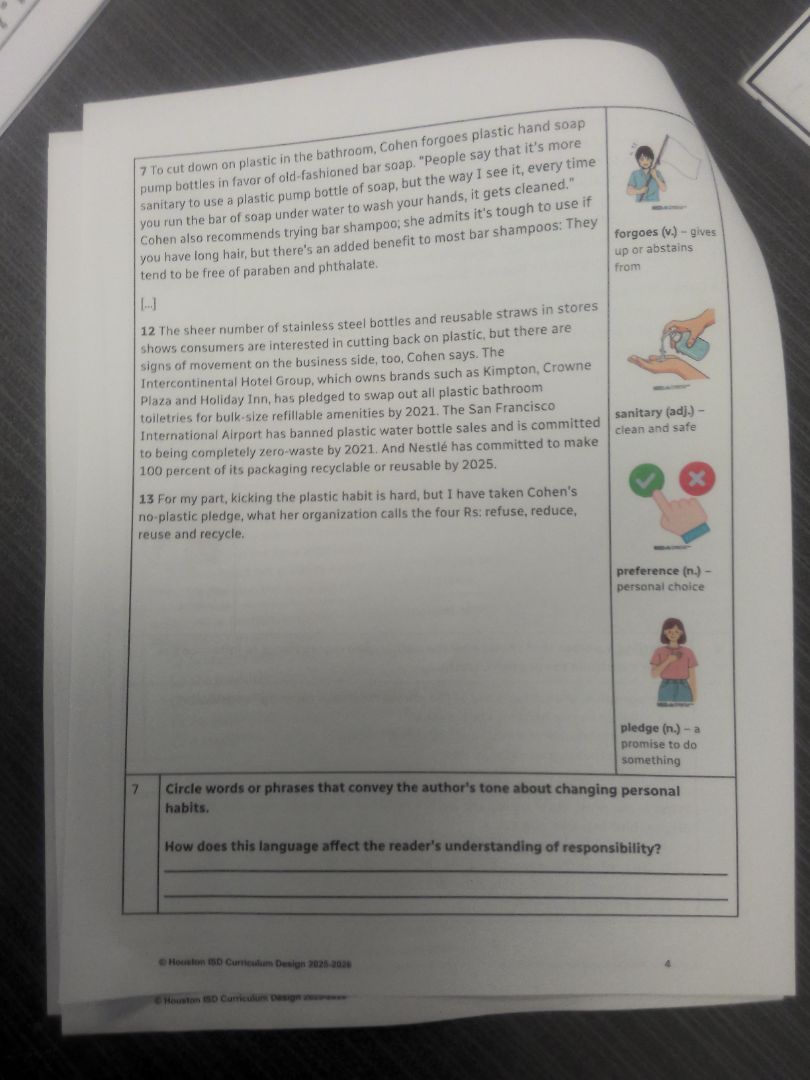
7 to cut down on plastic in the bathroom, cohen forgoes plastic hand soap pump bottles in favor of old - fashioned bar soap. \people say that its more sanitary to use a plastic pump bottle of soap, but the way i see it, every time you run the bar of soap under water to wash your hands, it gets cleaned.\ cohen also recommends trying bar shampoo; she admits its tough to use if you have long hair, but theres an added benefit to most bar shampoos: they tend to be free of paraben and phthalate.
...
12 the sheer number of stainless steel bottles and reusable straws in stores shows consumers are interested in cutting back on plastic, but there are signs of movement on the business side, too, cohen says. the intercontinental hotel group, which owns brands such as kimpton, crowne plaza and holiday inn, has pledged to swap out all plastic bathroom toiletries for bulk - size refillable amenities by 2021. the san francisco international airport has banned plastic water bottle sales and is committed to being completely zero - waste by 2021. and nestlé has committed to make 100 percent of its packaging recyclable or reusable by 2025.
13 for my part, kicking the plastic habit is hard, but i have taken cohens no - plastic pledge, what her organization calls the four rs: refuse, reduce, reuse and recycle.
7 circle words or phrases that convey the authors tone about changing personal habits.
how does this language affect the readers understanding of responsibility?
forgoes (v.) -- gives up or abstains from
sanitary (adj.) -- clean and safe
preference (n.) -- personal choice
pledge (n.) -- a promise to do something
Part 1: Circle words or phrases (for the first part of question 7)
To answer this, we analyze the relevant text (paragraph 7 and related context) for words/phrases that show the author’s tone about changing personal habits:
- From paragraph 7: “forgoes” (shows Cohen’s choice to avoid plastic), “recommends” (author presents Cohen’s advice on changing habits), “added benefit” (positive tone about bar shampoos as a plastic - free option).
- From paragraph 13: “no - plastic pledge”, “taken Cohen’s no - plastic pledge”, “four Rs: refuse, reduce, reuse and recycle” (these show the author’s/Cohen’s proactive tone about changing habits).
Part 2: How does this language affect the reader’s understanding of responsibility?
The language (e.g., “forgoes,” “recommends,” “pledge,” “four Rs”) uses a positive, actionable tone. Words like “recommends” and “pledge” imply that changing personal habits (going plastic - free) is a responsible choice. The “four Rs” framework gives a clear, structured way to act responsibly. This makes the reader see personal responsibility as active (refusing, reducing, etc.) and achievable, linking plastic - free habits to environmental and personal responsibility.
Final Answer (for the first part, example words to circle):
- Forgoes
- Recommends
- Added benefit
- No - plastic pledge
- Taken (Cohen’s no - plastic pledge)
- Refuse, reduce, reuse and recycle
(For the second part, the explanation above outlines how the language shapes the reader’s view of responsibility.)

Snap & solve any problem in the app
Get step-by-step solutions on Sovi AI
Photo-based solutions with guided steps
Explore more problems and detailed explanations
Part 1: Circle words or phrases (for the first part of question 7)
To answer this, we analyze the relevant text (paragraph 7 and related context) for words/phrases that show the author’s tone about changing personal habits:
- From paragraph 7: “forgoes” (shows Cohen’s choice to avoid plastic), “recommends” (author presents Cohen’s advice on changing habits), “added benefit” (positive tone about bar shampoos as a plastic - free option).
- From paragraph 13: “no - plastic pledge”, “taken Cohen’s no - plastic pledge”, “four Rs: refuse, reduce, reuse and recycle” (these show the author’s/Cohen’s proactive tone about changing habits).
Part 2: How does this language affect the reader’s understanding of responsibility?
The language (e.g., “forgoes,” “recommends,” “pledge,” “four Rs”) uses a positive, actionable tone. Words like “recommends” and “pledge” imply that changing personal habits (going plastic - free) is a responsible choice. The “four Rs” framework gives a clear, structured way to act responsibly. This makes the reader see personal responsibility as active (refusing, reducing, etc.) and achievable, linking plastic - free habits to environmental and personal responsibility.
Final Answer (for the first part, example words to circle):
- Forgoes
- Recommends
- Added benefit
- No - plastic pledge
- Taken (Cohen’s no - plastic pledge)
- Refuse, reduce, reuse and recycle
(For the second part, the explanation above outlines how the language shapes the reader’s view of responsibility.)