QUESTION IMAGE
Question
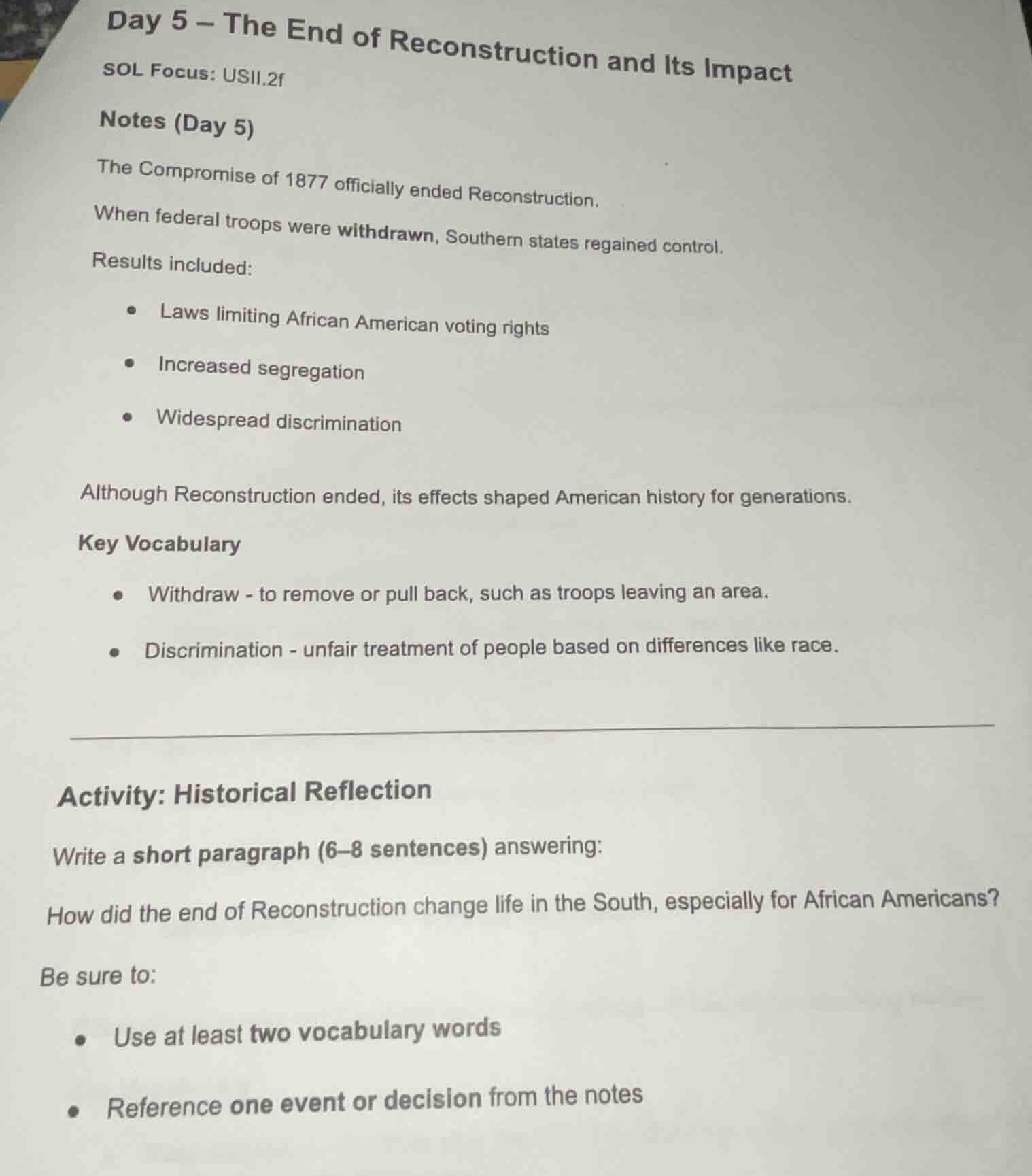
day 5 – the end of reconstruction and its impact
sol focus: usii.2f
notes (day 5)
the compromise of 1877 officially ended reconstruction.
when federal troops were withdrawn, southern states regained control.
results included:
- laws limiting african american voting rights
- increased segregation
- widespread discrimination
although reconstruction ended, its effects shaped american history for generations.
key vocabulary
- withdraw - to remove or pull back, such as troops leaving an area.
- discrimination - unfair treatment of people based on differences like race.
activity: historical reflection
write a short paragraph (6–8 sentences) answering:
how did the end of reconstruction change life in the south, especially for african americans?
be sure to:
- use at least two vocabulary words
- reference one event or decision from the notes
To answer this, we use the notes: The Compromise of 1877 ended Reconstruction, federal troops withdrew, Southern states regained control. African Americans faced laws limiting voting rights, increased segregation, and widespread discrimination. We'll incorporate "withdraw" and "discrimination" as vocabulary words.
Start by introducing the end of Reconstruction via the Compromise of 1877. Then explain troop withdrawal and Southern control. Describe the negative impacts on African Americans using the vocabulary and events from the notes.

Snap & solve any problem in the app
Get step-by-step solutions on Sovi AI
Photo-based solutions with guided steps
Explore more problems and detailed explanations
The end of Reconstruction, marked by the Compromise of 1877, drastically changed life in the South, especially for African Americans. When federal troops were ordered to withdraw, Southern states quickly regained control. This led to the creation of laws that limited African American voting rights, preventing many from participating in elections. Additionally, there was increased segregation, with public spaces like schools and transportation becoming racially divided. Widespread discrimination, defined as unfair treatment based on race, became prevalent in areas such as employment and housing. These changes reversed many of the gains African Americans had made during Reconstruction, and the effects of this discriminatory era would shape Southern society for generations to come.