QUESTION IMAGE
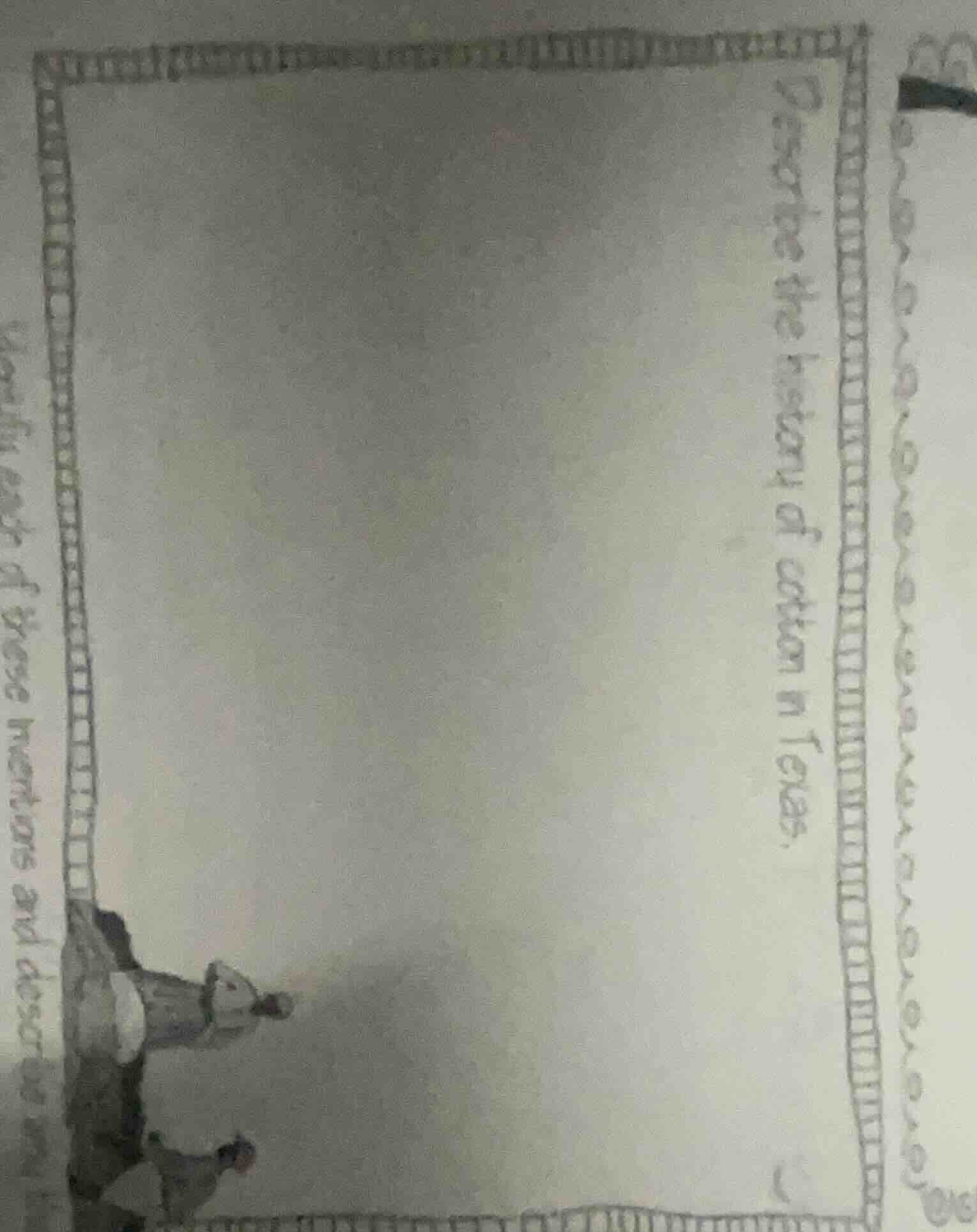
Question
describe the history of cotton in texas.
Brief Explanations
To describe the history of cotton in Texas, we can outline key periods:
- Early Settlement and Introduction: In the 18th - 19th centuries, cotton was introduced to Texas. Spanish and later Anglo - American settlers began to experiment with cotton cultivation. The climate and soil in parts of Texas, especially the Blackland Prairie region, were suitable for cotton growth.
- Pre - Civil War Expansion: Before the Civil War, cotton production in Texas started to expand. The demand for cotton in domestic and international markets (especially in the textile mills of the northeastern US and Europe) drove the growth. Slavery played a significant role in cotton cultivation as enslaved labor was used to plant, tend, and harvest the cotton. Texas had a growing slave population that supported the cotton economy.
- Civil War and Reconstruction: During the Civil War, cotton production was disrupted. Many enslaved people fled or were freed, and the war - torn economy affected cotton farming. After the war, during Reconstruction, sharecropping and tenant farming systems emerged. Formerly enslaved people and poor white farmers often became sharecroppers, working cotton fields for landowners in exchange for a share of the crop. This system continued the cotton - based agricultural economy in Texas.
- Late 19th - Early 20th Century: Technological Advancements and Boom: The invention of the cotton gin (earlier, but its impact continued) and later advancements in farming machinery like the mechanical cotton picker (in the early 20th century) transformed cotton production. The boll weevil infestation in the early 20th century was a major crisis, but Texas farmers adapted by diversifying crops and using pesticides. Also, the growth of the railroad network in Texas facilitated the transportation of cotton to markets, leading to a cotton boom in regions like the Texas High Plains (after irrigation systems were developed).
- 20th Century to Present: Diversification and Modernization: In the 20th century, Texas cotton production became more mechanized and scientific. Hybrid cotton varieties were developed for better yield and pest resistance. The industry also diversified, with cotton being used not only for traditional textiles but also in non - woven products, biofuels research, etc. Today, Texas is one of the leading cotton - producing states in the US, with a well - developed cotton industry that includes farming, ginning, and textile - related businesses.

Snap & solve any problem in the app
Get step-by-step solutions on Sovi AI
Photo-based solutions with guided steps
Explore more problems and detailed explanations
The history of cotton in Texas can be described as follows:
- Introduction and Early Growth (18th - mid - 19th century): Cotton was introduced to Texas by Spanish and Anglo - American settlers. The suitable climate and soil in areas like the Blackland Prairie supported early cultivation. Slavery - based labor began to be used for cotton farming as demand for cotton grew.
- Pre - Civil War Expansion: Cotton production expanded, driven by domestic and international (textile) demand. Enslaved labor was central to large - scale cotton farming, and Texas became an emerging cotton - producing region.
- Civil War and Reconstruction Disruptions and Changes: The Civil War disrupted cotton production. After the war, sharecropping and tenant farming systems emerged, with formerly enslaved people and poor farmers working cotton fields, maintaining the cotton - based agricultural economy.
- Late 19th - Early 20th Century: Challenges and Boom: The cotton gin and later farm machinery (like mechanical pickers) boosted production, but the boll weevil infestation caused a crisis. Farmers adapted through diversification and pesticides. Railroad development and irrigation in regions like the Texas High Plains spurred a cotton boom.
- 20th Century - Present: Modernization and Diversification: Mechanization, hybrid varieties, and scientific farming modernized cotton production. The cotton industry diversified, with cotton used in non - traditional products, and Texas remains a leading US cotton - producing state.