QUESTION IMAGE
Question
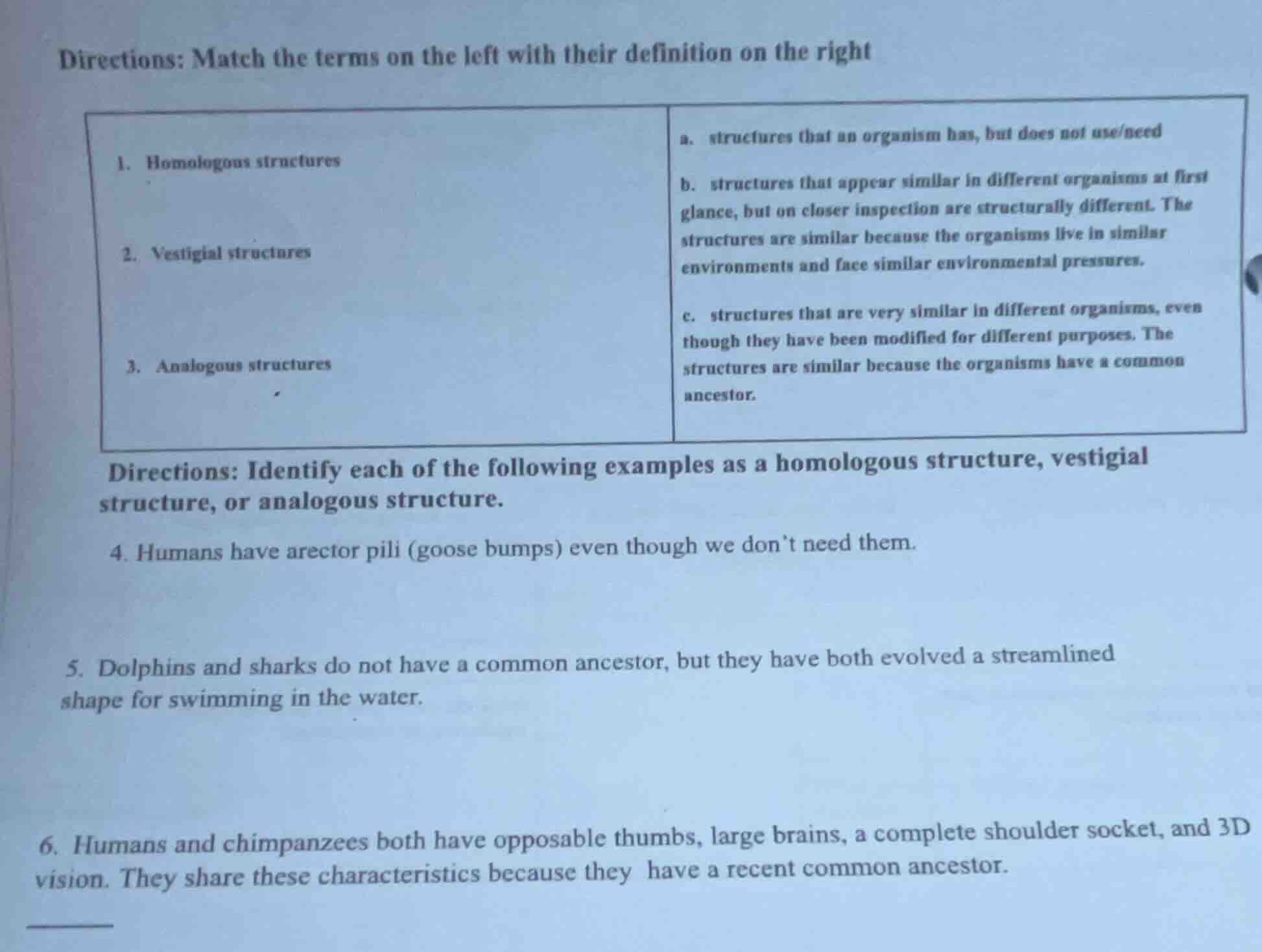
directions: match the terms on the left with their definition on the right
- homologous structures
- vestigial structures
- analogous structures
a. structures that an organism has, but does not use/need
b. structures that appear similar in different organisms at first glance, but on closer inspection are structurally different. the structures are similar because the organisms live in similar environments and face similar environmental pressures.
c. structures that are very similar in different organisms, even though they have been modified for different purposes. the structures are similar because the organisms have a common ancestor.
directions: identify each of the following examples as a homologous structure, vestigial structure, or analogous structure.
- humans have arector pili (goose bumps) even though we dont need them.
- dolphins and sharks do not have a common ancestor, but they have both evolved a streamlined shape for swimming in the water.
- humans and chimpanzees both have opposable thumbs, large brains, a complete shoulder socket, and 3d vision. they share these characteristics because they have a recent common ancestor.
For the matching section:
- Homologous structures come from a common ancestor and are modified for different uses, matching definition c.
- Vestigial structures are present but no longer needed/used by the organism, matching definition a.
- Analogous structures are similar due to shared environmental pressures (not common ancestry) and are structurally different, matching definition b.
For the example identification section:
- Goose bumps (arrector pili) in humans are unused structures, so they are vestigial.
- Dolphins and sharks' streamlined shapes evolved due to similar environments (no common ancestor), so they are analogous.
- Humans and chimpanzees share traits from a common ancestor, so these are homologous.

Snap & solve any problem in the app
Get step-by-step solutions on Sovi AI
Photo-based solutions with guided steps
Explore more problems and detailed explanations
Matching Answers:
- Homologous structures - c. structures that are very similar in different organisms, even though they have been modified for different purposes. The structures are similar because the organisms have a common ancestor.
- Vestigial structures - a. structures that an organism has, but does not use/need
- Analogous structures - b. structures that appear similar in different organisms at first glance, but on closer inspection are structurally different. The structures are similar because the organisms live in similar environments and face similar environmental pressures.
Example Identification Answers:
- Vestigial structure
- Analogous structure
- Homologous structure