QUESTION IMAGE
Question
dr. martin luther king jr
his values, impact, and blueprint for humanity
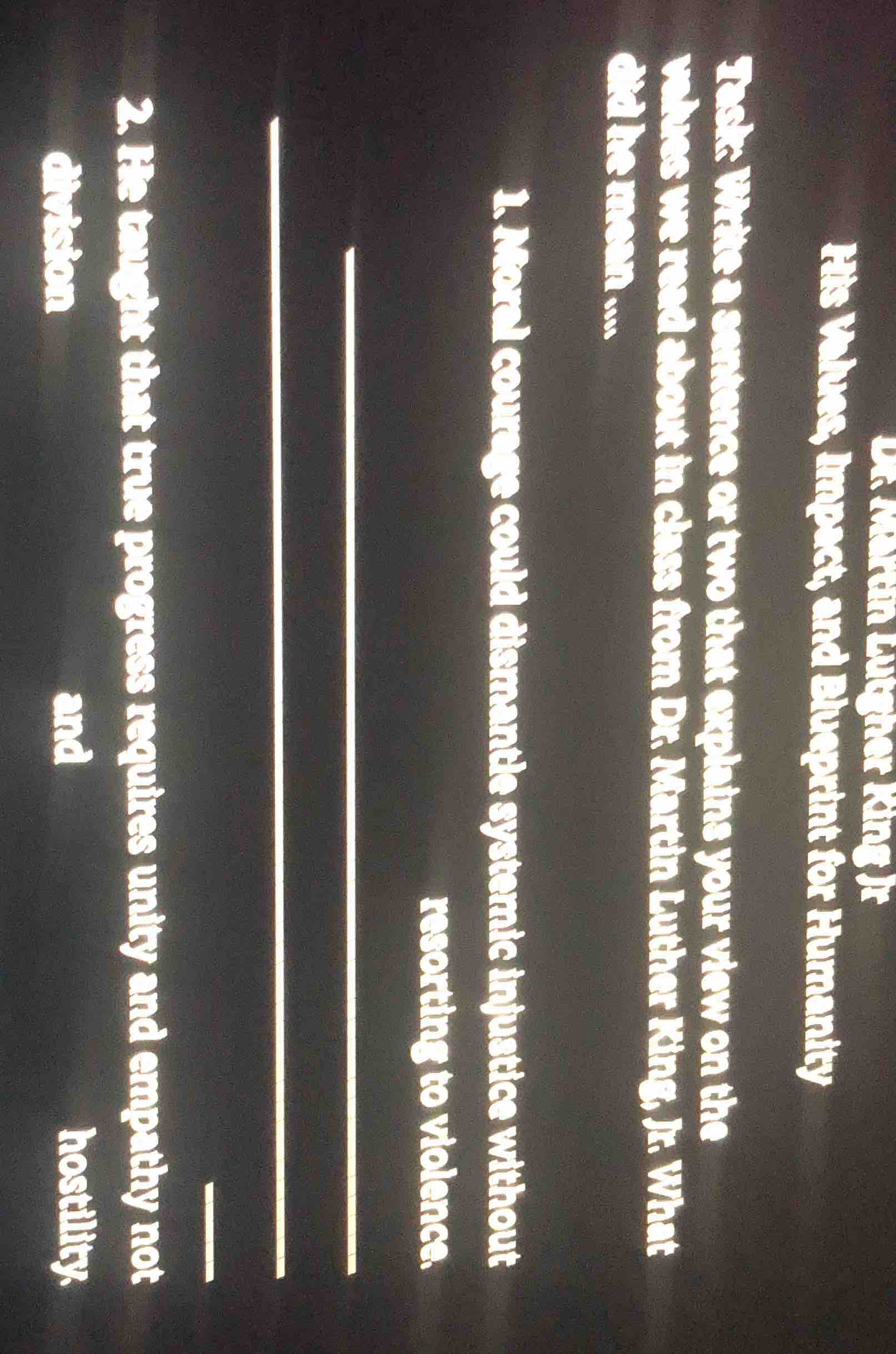
task: write a sentence or two that explains your view on the values we read about in class from dr. martin luther king, jr. what did he mean ...
- moral courage could dismantle systemic injustice without resorting to violence.
- he taught that true progress requires unity and empathy not division and hostility.
Sub - question 1
Dr. Martin Luther King Jr. believed in non - violent resistance. "Moral courage could dismantle systemic injustice without resorting to violence" means that one can fight against unfair systems (like racial segregation) by using moral strength, such as through peaceful protests, civil disobedience, and advocating for justice in a non - violent way. For example, during the civil rights movement, he led marches, sit - ins, etc., which were non - violent but still challenged the unjust laws and social structures. This approach showed that change can come from standing up for what is right morally, without using force to harm others, and it inspired many to join the fight for equality.
When Dr. Martin Luther King Jr. taught that "true progress requires unity and empathy not division and hostility", he was emphasizing that for society to move forward (in terms of civil rights, equality, etc.), people need to come together (unity) and understand each other's feelings and experiences (empathy). Division (like racial, social divisions) and hostility (like hate, violence) only hold back progress. For instance, in the civil rights struggle, bringing different racial and social groups together with empathy for each other's plights was key to achieving gains like the Civil Rights Act, while division and hostility would have led to more conflict and less positive change.

Snap & solve any problem in the app
Get step-by-step solutions on Sovi AI
Photo-based solutions with guided steps
Explore more problems and detailed explanations
"Moral courage could dismantle systemic injustice without resorting to violence" means that one can combat unfair social systems (like racial injustice) through morally - driven, non - violent actions (such as peaceful protests, civil disobedience). For example, Dr. King’s civil rights movement efforts (marches, sit - ins) used moral persuasion and peaceful resistance to challenge unjust laws, showing that violence isn't necessary to fight injustice.