QUESTION IMAGE
Question
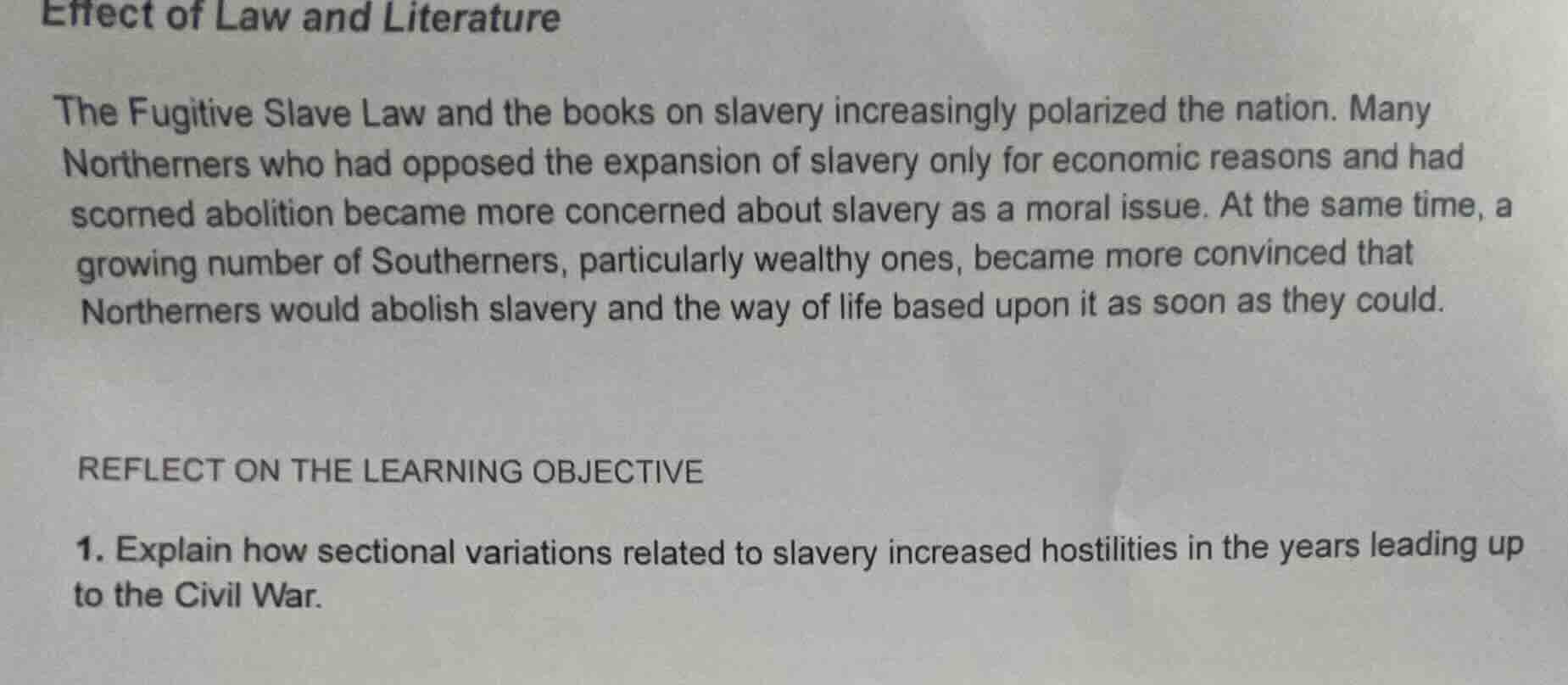
effect of law and literature
the fugitive slave law and the books on slavery increasingly polarized the nation. many northerners who had opposed the expansion of slavery only for economic reasons and had scorned abolition became more concerned about slavery as a moral issue. at the same time, a growing number of southerners, particularly wealthy ones, became more convinced that northerners would abolish slavery and the way of life based upon it as soon as they could.
reflect on the learning objective
- explain how sectional variations related to slavery increased hostilities in the years leading up to the civil war.
- Northern Shift: The Fugitive Slave Law and anti - slavery literature made Northerners, who previously opposed slavery for economic reasons, view it as a moral issue. This moral opposition to slavery clashed with the South's pro - slavery stance.
- Southern Fear: Southerners, especially the wealthy, feared that Northerners would abolish slavery and their way of life (which was based on slavery). This fear led to increased defensiveness and hostility towards the North.
- Polarization: The differing views (moral opposition in the North vs. fear of abolition in the South) created a growing divide. The Fugitive Slave Law and literature on slavery amplified these differences, making the two regions more hostile towards each other as they moved closer to the Civil War.

Snap & solve any problem in the app
Get step-by-step solutions on Sovi AI
Photo-based solutions with guided steps
Explore more problems and detailed explanations
Sectional variations related to slavery increased hostilities as follows: The Fugitive Slave Law and anti - slavery literature shifted Northern attitudes from economic opposition to moral concern about slavery. Meanwhile, Southerners, especially the wealthy, feared Northerners would abolish slavery and their slave - based way of life. These differing views (Northern moral opposition vs. Southern fear of abolition) polarized the nation, with each side becoming more hostile toward the other, escalating tensions before the Civil War.