QUESTION IMAGE
Question
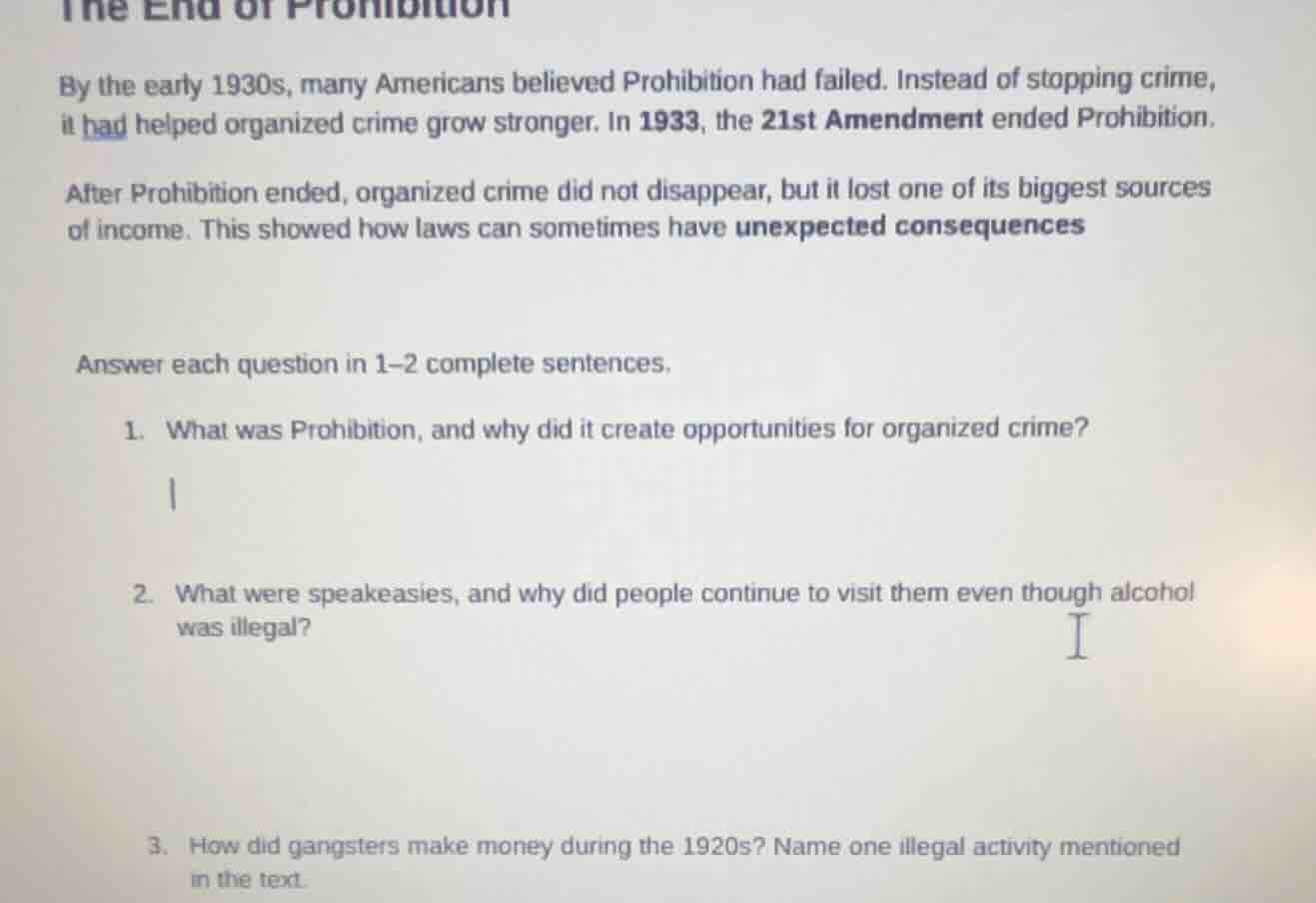
the end of prohibition
by the early 1930s, many americans believed prohibition had failed. instead of stopping crime, it had helped organized crime grow stronger. in 1933, the 21st amendment ended prohibition.
after prohibition ended, organized crime did not disappear, but it lost one of its biggest sources of income. this showed how laws can sometimes have unexpected consequences
answer each question in 1–2 complete sentences.
- what was prohibition, and why did it create opportunities for organized crime?
- what were speakeasies, and why did people continue to visit them even though alcohol was illegal?
- how did gangsters make money during the 1920s? name one illegal activity mentioned in the text.
Question 1
Prohibition was the legal ban on alcohol production, sale, and transportation; it created opportunities for organized crime because they could profit from illegally supplying alcohol since demand remained.
Speakeasies were illegal bars during Prohibition; people visited them because they wanted to drink alcohol despite its illegality.
Gangsters made money in the 1920s by engaging in illegal activities like bootlegging (supplying illegal alcohol), as Prohibition provided a lucrative market for such operations.

Snap & solve any problem in the app
Get step-by-step solutions on Sovi AI
Photo-based solutions with guided steps
Explore more problems and detailed explanations
Prohibition was the legal ban on alcohol production, sale, and transportation, and it created opportunities for organized crime as they could profit from illegally supplying alcohol due to persistent demand.