QUESTION IMAGE
Question
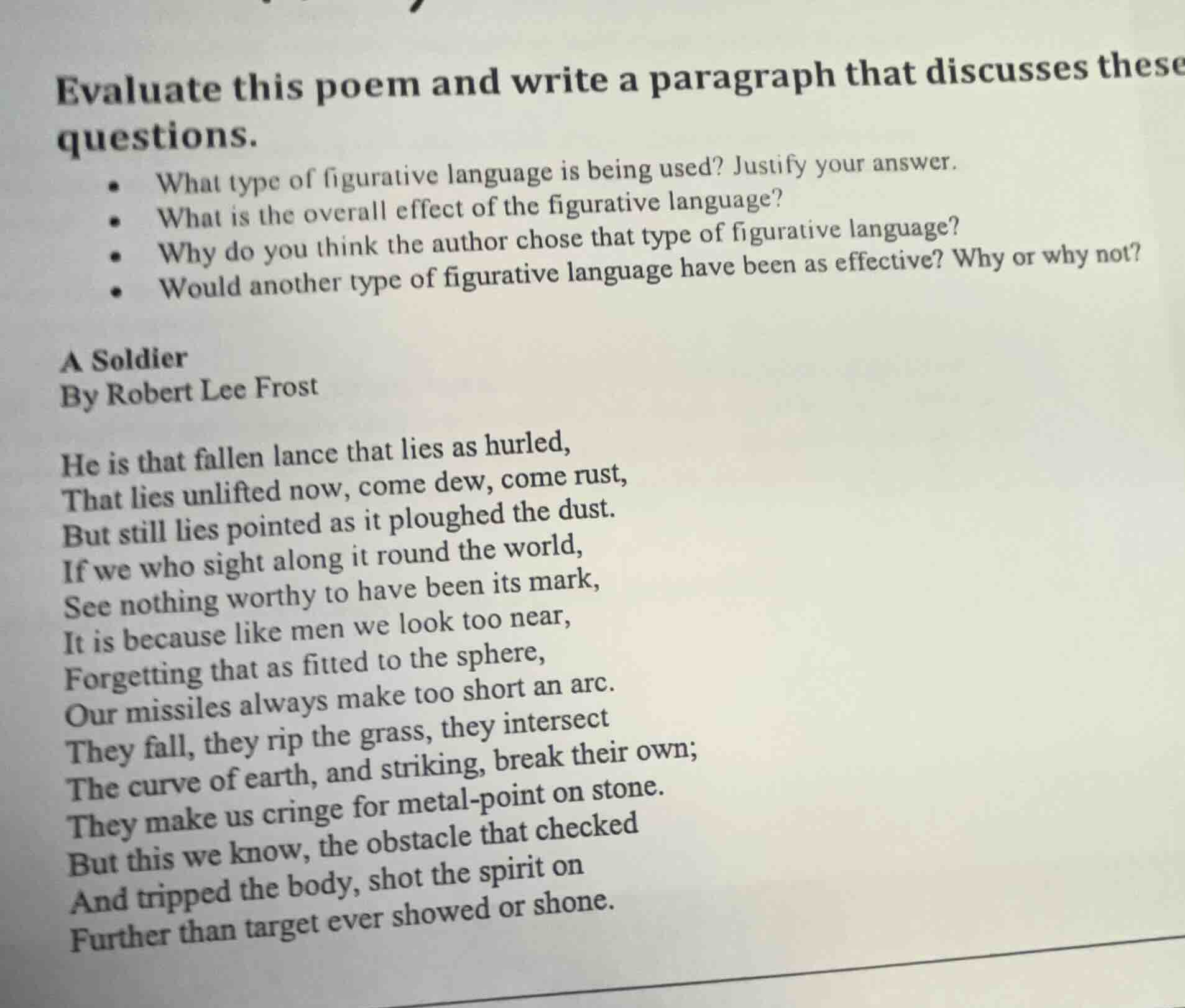
evaluate this poem and write a paragraph that discusses these questions.
- what type of figurative language is being used? justify your answer.
- what is the overall effect of the figurative language?
- why do you think the author chose that type of figurative language?
- would another type of figurative language have been as effective? why or why not?
a soldier
by robert lee frost
he is that fallen lance that lies as hurled,
that lies unlifted now, come dew, come rust,
but still lies pointed as it ploughed the dust.
if we who sight along it round the world,
see nothing worthy to have been its mark,
it is because like men we look too near,
forgetting that as fitted to the sphere,
our missiles always make too short an arc.
they fall, they rip the grass, they intersect
the curve of earth, and striking, break their own;
they make us cringe for metal - point on stone.
but this we know, the obstacle that checked
and tripped the body, shot the spirit on
further than target ever showed or shone.
The poem uses a sustained metaphor, comparing the fallen soldier to a "fallen lance" throughout the text. This figurative language frames the soldier as a weapon that served a purpose, now discarded but still holding its original direction, which emphasizes the soldier's lost potential and the unfulfilled, pointed intent of his service. The overall effect is to create a somber, detached yet respectful tone that links the soldier's sacrifice to the impersonal nature of warfare, framing his death as a tool laid aside rather than just a person lost. Frost chose this metaphor because lances are traditional, honorable weapons tied to military duty, which aligns with the soldier's identity, and the image of a rusting, unlifted lance visually conveys neglect and the lingering weight of his uncompleted purpose. A simile (e.g., "He is like a fallen lance") would be less effective because the direct metaphor merges the soldier and the lance into a single identity, making the connection between the soldier's body, his military role, and his abandoned fate more intimate and immersive; a simile would create a distance that weakens the poem's quiet, heavy focus on the soldier's merged identity with his duty.

Snap & solve any problem in the app
Get step-by-step solutions on Sovi AI
Photo-based solutions with guided steps
Explore more problems and detailed explanations
The poem uses a sustained metaphor (comparing the fallen soldier directly to a "fallen lance" without "like" or "as"). This figurative language creates a somber, reverent tone that links the soldier's identity to his military duty, emphasizing his unfulfilled potential and the impersonal weight of his sacrifice. Frost chose this metaphor because the lance, a traditional military weapon, mirrors the soldier's honorable, purpose-driven role, while the image of an unlifted, rusting lance visually conveys neglect and lingering uncompleted duty. A simile would be less effective: the direct metaphor merges the soldier and the lance into one identity, deepening the connection between his body, his service, and his abandoned fate, whereas a simile would create emotional distance that weakens the poem's intimate, heavy focus on the soldier's merged identity with his duty.