QUESTION IMAGE
Question
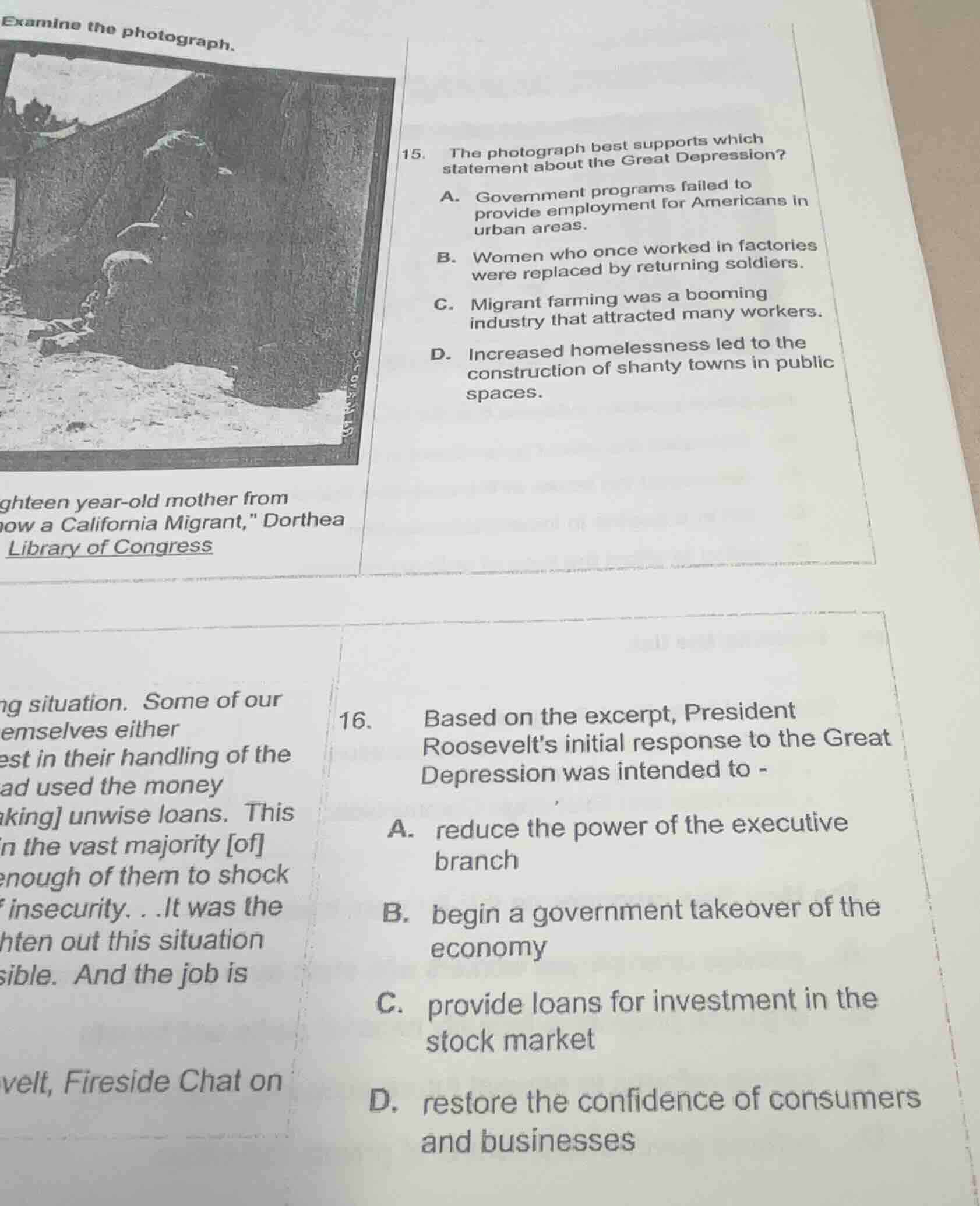
examine the photograph.
- the photograph best supports which statement about the great depression?
a. government programs failed to provide employment for americans in urban areas.
b. women who once worked in factories were replaced by returning soldiers.
c. migrant farming was a booming industry that attracted many workers.
d. increased homelessness led to the construction of shanty towns in public spaces.
eighteen year - old mother from
ow a california migrant,\ dorthea
library of congress
- based on the excerpt, president roosevelts initial response to the great depression was intended to -
a. reduce the power of the executive branch
b. begin a government takeover of the economy
c. provide loans for investment in the stock market
d. restore the confidence of consumers and businesses
For Question 15:
The photograph shows a makeshift, ramshackle dwelling (a shanty) and is identified as being of a California migrant during the Great Depression. This matches the context of shanty towns (Hoovervilles) that emerged due to widespread homelessness in the era. Option A is incorrect as the image does not relate to urban employment programs; Option B is unrelated to the image's content about housing/homelessness; Option C is wrong because migrant farming was a desperate, low-paying option, not a booming industry.
For Question 16:
The excerpt references addressing financial insecurity and "straighten out" the situation, which aligns with FDR's initial Great Depression efforts (like Fireside Chats) focused on rebuilding public and business trust in the economy. Option A is incorrect because FDR expanded executive power; Option B is wrong as he did not seek a full government takeover of the economy; Option C is incorrect because his policies aimed to stabilize, not encourage risky stock market loans.

Snap & solve any problem in the app
Get step-by-step solutions on Sovi AI
Photo-based solutions with guided steps
Explore more problems and detailed explanations
- D. Increased homelessness led to the construction of shanty towns in public spaces.
- D. restore the confidence of consumers and businesses