QUESTION IMAGE
Question
exit ticket
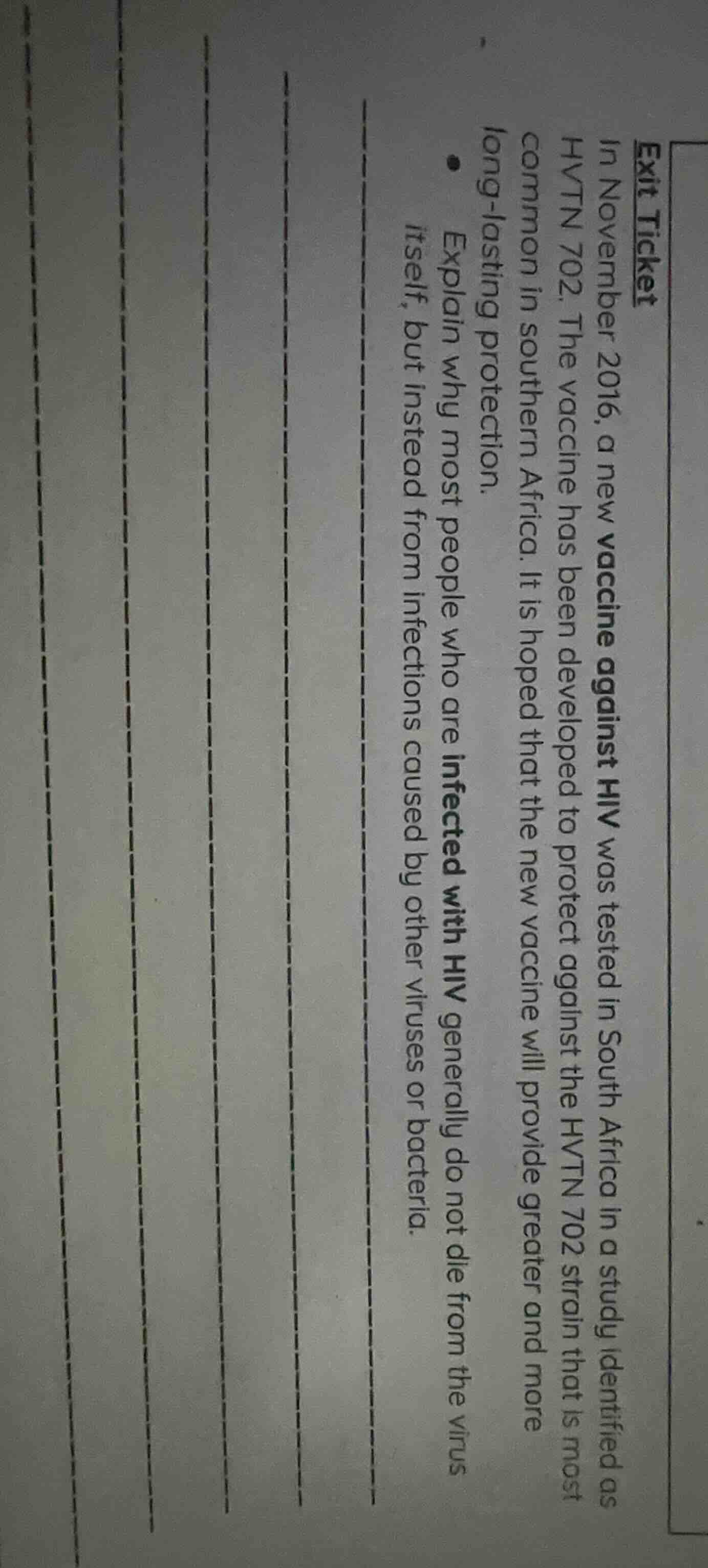
in november 2016, a new vaccine against hiv was tested in south africa in a study identified as hvtn 702. the vaccine has been developed to protect against the hvtn 702 strain that is most common in southern africa. it is hoped that the new vaccine will provide greater and more long - lasting protection.
- explain why most people who are infected with hiv generally do not die from the virus itself, but instead from infections caused by other viruses or bacteria.
HIV attacks the immune system, specifically CD4+ T - cells. As the immune system weakens over time (due to HIV's destruction of these cells), the body becomes more susceptible to opportunistic infections (from other viruses, bacteria, etc.). However, the progression to severe illness or death from HIV itself takes time (often years, especially with modern treatments). In the early stages or even with untreated HIV for some time, the direct effects of HIV (like rapid cell death) aren't the immediate cause of death. Instead, the compromised immune system leads to infections that the body can't fight off, and it's these secondary infections that often become fatal. Also, antiretroviral therapy (ART) can now control HIV replication, reducing direct HIV - related damage, so people live with HIV but die from opportunistic infections when immunity is too low (if not on ART or if ART fails).

Snap & solve any problem in the app
Get step-by-step solutions on Sovi AI
Photo-based solutions with guided steps
Explore more problems and detailed explanations
Most people with HIV do not die from the virus itself because HIV primarily attacks the immune system (specifically CD4+ T - cells), weakening it over time. The direct lethal effects of HIV take time to manifest, and in the interim (or even with long - term infection, especially with treatment), the weakened immune system makes the body vulnerable to opportunistic infections (from other viruses, bacteria, fungi, etc.). These secondary infections, which the immune system can no longer effectively combat, are often the cause of death. Additionally, modern antiretroviral therapies can suppress HIV replication, reducing direct HIV - related damage, further allowing people to survive longer with HIV but be at risk of dying from these secondary infections.