QUESTION IMAGE
Question
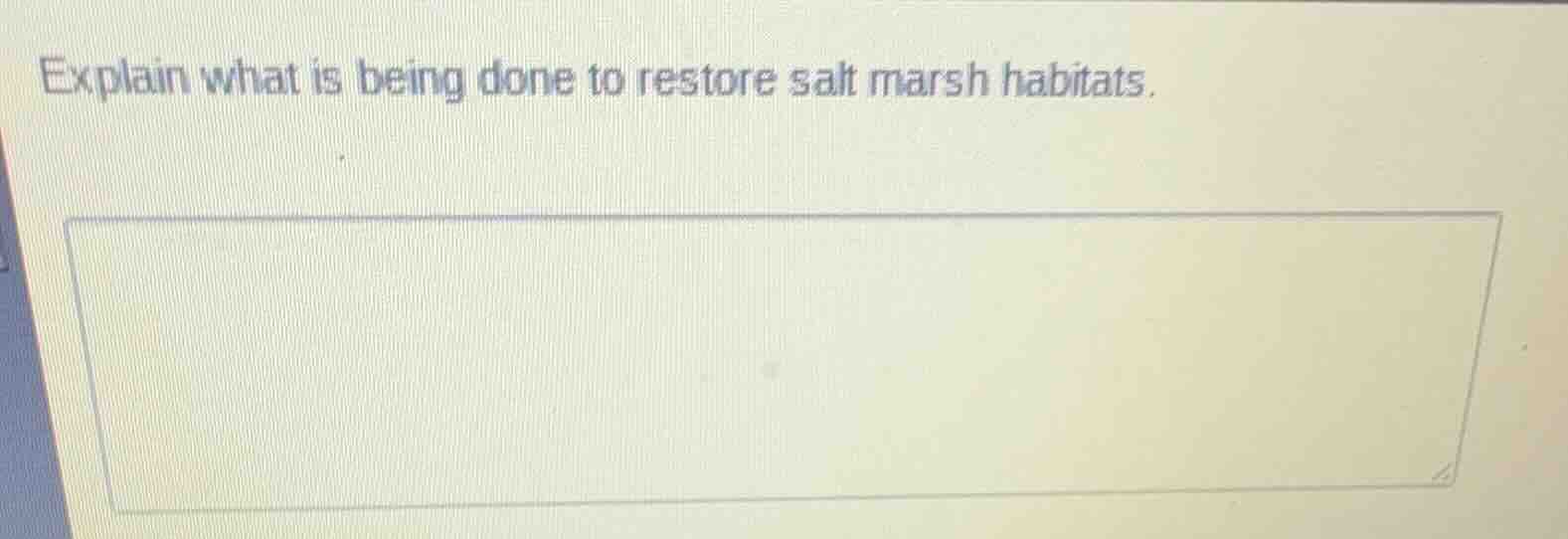
explain what is being done to restore salt marsh habitats.
Brief Explanations
- Tidal Reconnection: Breaching or removing man-made structures like dikes, seawalls, or tide gates to reestablish natural tidal flow, which supplies salt marshes with sediment, nutrients, and the water levels they need to thrive.
- Sediment Addition: Adding sediment to eroding marshes to raise their elevation, helping them keep pace with sea-level rise and rebuild marsh platforms that can support native vegetation.
- Native Vegetation Planting: Introducing or encouraging the growth of native salt-tolerant plants (like cordgrass) to stabilize sediment, provide habitat, and speed up marsh recovery, especially in areas where natural recolonization is slow.
- Nutrient Management: Reducing nutrient runoff from nearby agricultural or urban areas to prevent excessive algal growth that can smother marsh plants and disrupt the ecosystem balance.
- Livestock Exclusion: Fencing off marshes to prevent overgrazing by livestock, which damages vegetation and disturbs marsh soil structure.
- Climate Adaptation Planning: Designing restoration projects with future sea-level rise in mind, such as creating "living shorelines" that use natural materials (like oyster reefs) to reduce erosion and protect marshes, or allowing marshes to migrate inland by removing barriers.

Snap & solve any problem in the app
Get step-by-step solutions on Sovi AI
Photo-based solutions with guided steps
Explore more problems and detailed explanations
Key actions to restore salt marsh habitats include reestablishing natural tidal flow by removing man-made barriers, adding sediment to rebuild eroding marsh platforms, planting native salt-tolerant vegetation to stabilize soil and support ecosystem recovery, reducing nutrient runoff from adjacent areas, excluding livestock to prevent overgrazing, and implementing climate-adaptive strategies like living shorelines to protect marshes from sea-level rise and erosion.