QUESTION IMAGE
Question
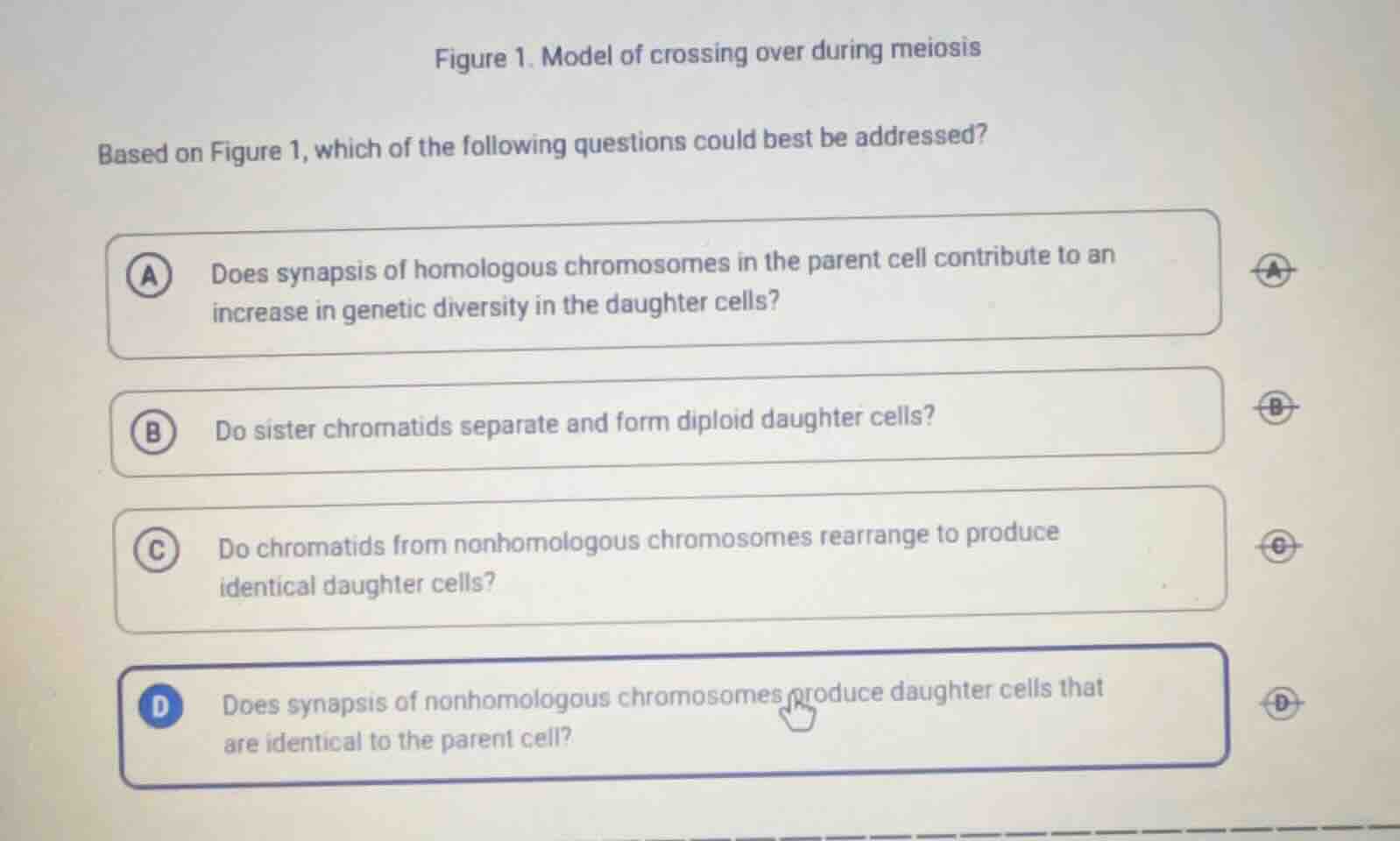
figure 1. model of crossing over during meiosis
based on figure 1, which of the following questions could best be addressed?
a. does synapsis of homologous chromosomes in the parent cell contribute to an increase in genetic diversity in the daughter cells?
b. do sister chromatids separate and form diploid daughter cells?
c. do chromatids from nonhomologous chromosomes rearrange to produce identical daughter cells?
d. does synapsis of nonhomologous chromosomes produce daughter cells that are identical to the parent cell?
- Option A: Synapsis (pairing) of homologous chromosomes during meiosis (as shown in the crossing - over model) allows for crossing - over, which exchanges genetic material between homologs. This process increases genetic diversity in the daughter cells (gametes). The figure of crossing over during meiosis is relevant to investigating this relationship.
- Option B: In meiosis, sister chromatids separate in meiosis II, and the daughter cells are haploid, not diploid. So this statement is incorrect, and the figure of crossing over (which is about homologous chromosomes) can't address a question about sister chromatids forming diploid cells.
- Option C: Crossing over occurs between homologous chromosomes, not non - homologous chromosomes, and meiosis produces genetically diverse daughter cells, not identical ones. So this option is incorrect.
- Option D: Synapsis occurs between homologous chromosomes, not non - homologous chromosomes, and meiosis produces daughter cells that are different from the parent cell (haploid vs. diploid and genetically diverse). So this option is incorrect.

Snap & solve any problem in the app
Get step-by-step solutions on Sovi AI
Photo-based solutions with guided steps
Explore more problems and detailed explanations
A. Does synapsis of homologous chromosomes in the parent cell contribute to an increase in genetic diversity in the daughter cells?