QUESTION IMAGE
Question
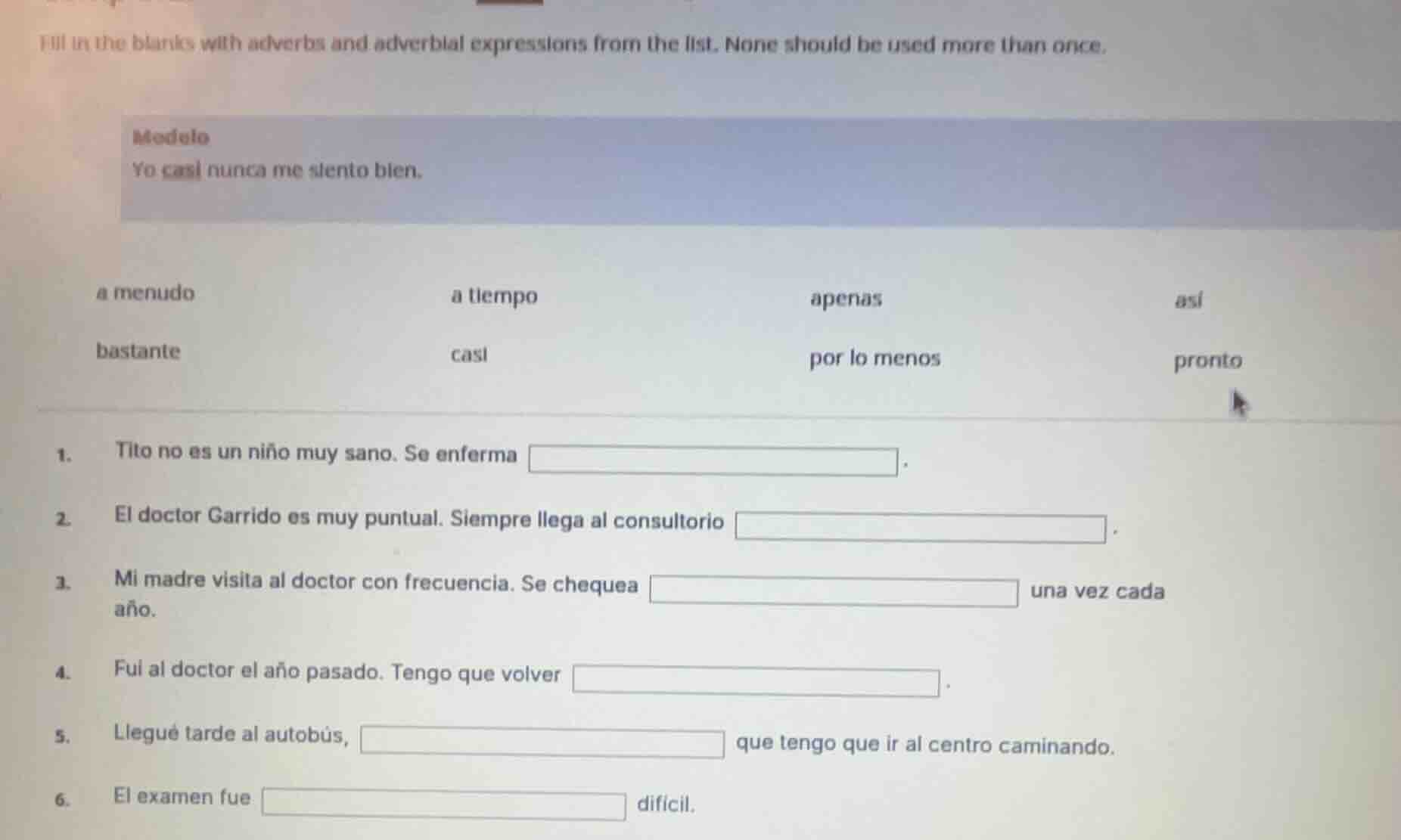
fill in the blanks with adverbs and adverbial expressions from the list. none should be used more than once.
modelo
yo casi nunca me siento bien.
a menudo
a tiempo
apenas
así
bastante
casi
por lo menos
pronto
- tito no es un niño muy sano. se enferma □ .
- el doctor garrido es muy puntual. siempre llega al consultorio □ .
- mi madre visita al doctor con frecuencia. se chequea □ una vez cada año.
- fui al doctor el año pasado. tengo que volver □ .
- llegué tarde al autobús, □ que tengo que ir al centro caminando.
- el examen fue □ difícil.
Brief Explanations
- The sentence states Tito is not healthy, so he gets sick often. a menudo means "often/frequently", which fits.
- The doctor is very punctual, so he arrives on time. a tiempo means "on time", matching the context.
- The mother visits the doctor frequently, so she gets checked at least once a year. por lo menos means "at least", which fits the frequency context.
- The speaker went to the doctor last year and needs to go again soon. pronto means "soon", which is correct here.
- The speaker missed the bus, so now they have to walk. así means "so/thus", connecting the cause and effect.
- The sentence describes the exam as difficult; bastante means "quite/rather", which modifies "difícil" appropriately.
(Note: The remaining words casi and apenas do not fit the context of these 6 sentences, which aligns with the task only requiring filling the given blanks.)

Snap & solve any problem in the app
Get step-by-step solutions on Sovi AI
Photo-based solutions with guided steps
Explore more problems and detailed explanations
- a menudo
- a tiempo
- por lo menos
- pronto
- así
- bastante