QUESTION IMAGE
Question
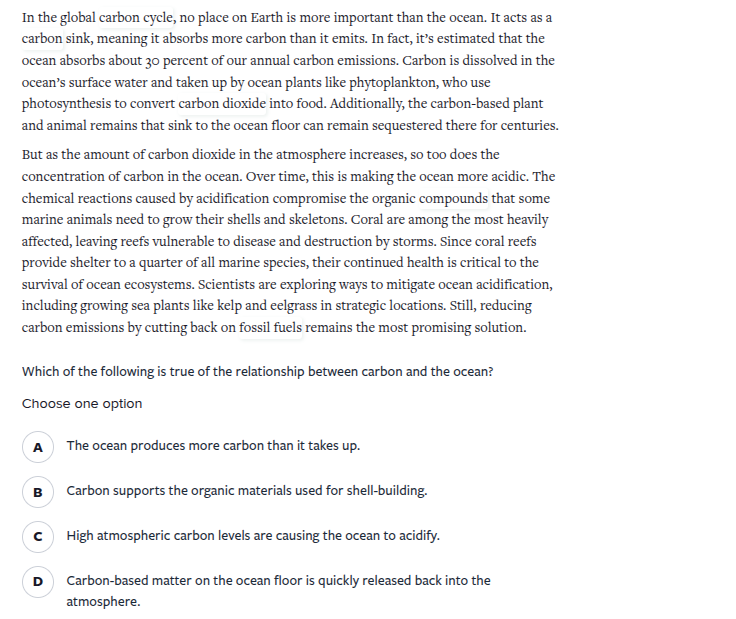
in the global carbon cycle, no place on earth is more important than the ocean. it acts as a carbon sink, meaning it absorbs more carbon than it emits. in fact, its estimated that the ocean absorbs about 30 percent of our annual carbon emissions. carbon is dissolved in the oceans surface water and taken up by ocean plants like phytoplankton, who use photosynthesis to convert carbon dioxide into food. additionally, the carbon - based plant and animal remains that sink to the ocean floor can remain sequestered there for centuries. but as the amount of carbon dioxide in the atmosphere increases, so too does the concentration of carbon in the ocean. over time, this is making the ocean more acidic. the chemical reactions caused by acidification compromise the organic compounds that some marine animals need to grow their shells and skeletons. coral are among the most heavily affected, leaving reefs vulnerable to disease and destruction by storms. since coral reefs provide shelter to a quarter of all marine species, their continued health is critical to the survival of ocean ecosystems. scientists are exploring ways to mitigate ocean acidification, including growing sea plants like kelp and eelgrass in strategic locations. still, reducing carbon emissions by cutting back on fossil fuels remains the most promising solution. which of the following is true of the relationship between carbon and the ocean? choose one option a the ocean produces more carbon than it takes up. b carbon supports the organic materials used for shell - building. c high atmospheric carbon levels are causing the ocean to acidify. d carbon - based matter on the ocean floor is quickly released back into the atmosphere.
- Option A: The passage says the ocean "absorbs more carbon than it emits", so A is false.
- Option B: The text mentions acidification compromises organic compounds for shell - building, not that carbon supports them. So B is incorrect.
- Option C: The passage states "as the amount of carbon dioxide in the atmosphere increases, so too does the concentration of carbon in the ocean. Over time, this is making the ocean more acidic", so C is true.
- Option D: The passage says carbon - based plant and animal remains "can remain sequestered there for centuries", so D is false.

Snap & solve any problem in the app
Get step-by-step solutions on Sovi AI
Photo-based solutions with guided steps
Explore more problems and detailed explanations
C. High atmospheric carbon levels are causing the ocean to acidify.