QUESTION IMAGE
Question
the grand canyon
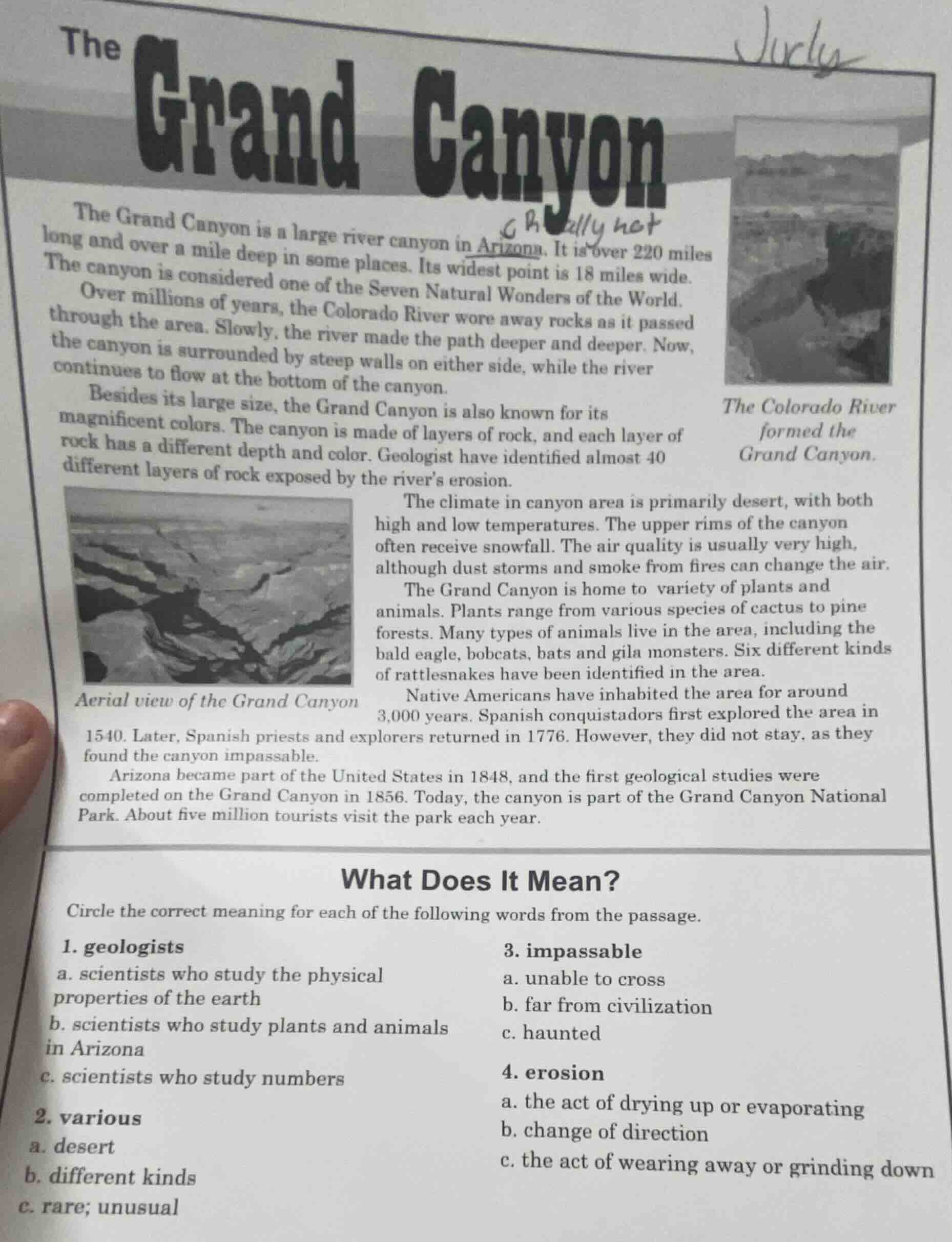
the grand canyon is a large river canyon in arizona. it is over 220 miles long and over a mile deep in some places. its widest point is 18 miles wide. the canyon is considered one of the seven natural wonders of the world.
over millions of years, the colorado river wore away rocks as it passed through the area. slowly, the river made the path deeper and deeper. now, the canyon is surrounded by steep walls on either side, while the river continues to flow at the bottom of the canyon.
besides its large size, the grand canyon is also known for its magnificent colors. the canyon is made of layers of rock, and each layer of rock has a different depth and color. geologist have identified almost 40 different layers of rock exposed by the river’s erosion.
the climate in canyon area is primarily desert, with both high and low temperatures. the upper rims of the canyon often receive snowfall. the air quality is usually very high, although dust storms and smoke from fires can change the air.
the grand canyon is home to variety of plants and animals. plants range from various species of cactus to pine forests. many types of animals live in the area, including the bald eagle, bobcats, bats and gila monsters. six different kinds of rattlesnakes have been identified in the area.
native americans have inhabited the area for around 3,000 years. spanish conquistadors first explored the area in 1540. later, spanish priests and explorers returned in 1776. however, they did not stay, as they found the canyon impassable.
arizona became part of the united states in 1848, and the first geological studies were completed on the grand canyon in 1856. today, the canyon is part of the grand canyon national park. about five million tourists visit the park each year.
what does it mean?
circle the correct meaning for each of the following words from the passage.
- geologists
a. scientists who study the physical properties of the earth
b. scientists who study plants and animals in arizona
c. scientists who study numbers
- various
a. desert
b. different kinds
c. rare; unusual
- impassable
a. unable to cross
b. far from civilization
c. haunted
- erosion
a. the act of drying up or evaporating
b. change of direction
c. the act of wearing away or grinding down
Question 1: geologists
To determine the meaning of "geologists", we refer to the passage context. The passage mentions geologists identifying rock layers, related to earth's physical properties. Option a says scientists studying earth's physical properties, which matches. Option b is about plants/animals (biologists), option c about numbers (mathematicians). So a is correct.
In the passage, "various species of cactus" and "different kinds of rattlesnakes" imply "various" means different kinds. Option a is desert (unrelated), option c is rare (incorrect). So b is correct.
The passage says Spanish did not stay as the canyon was impassable. "Unable to cross" fits (they couldn't cross it). Option b is far from civilization (remote), option c is haunted (unrelated). So a is correct.

Snap & solve any problem in the app
Get step-by-step solutions on Sovi AI
Photo-based solutions with guided steps
Explore more problems and detailed explanations
a. scientists who study the physical properties of the earth