QUESTION IMAGE
Question
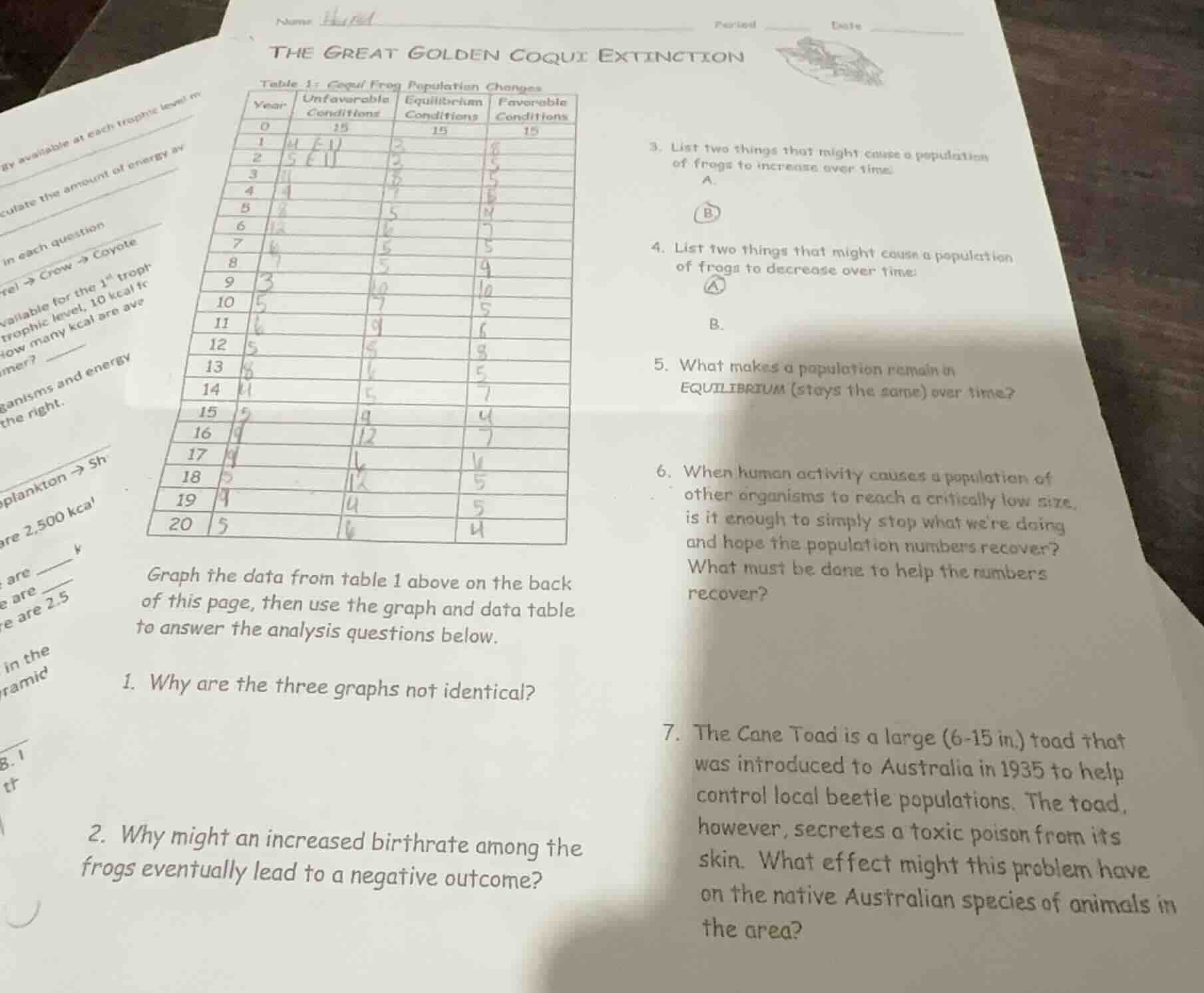
the great golden coqui extinction
table 1: coqui frog population changes
year unfavorable conditions equilibrium conditions favorable conditions
0 15 15 15
1 11 2 8
2 11 2 5
3 11 2 5
4 4 9 6
5 2 5 4
6 12 6 7
7 4 5 5
8 7 5 9
9 3 10 10
10 5 7 5
11 4 9 6
12 5 8 8
13 8 4 5
14 11 5 7
15 5 9 4
16 9 12 7
17 4 1 4
18 5 12 5
19 9 4 5
20 5 6 4
graph the data from table 1 above on the back of this page, then use the graph and data table to answer the analysis questions below.
- why are the three graphs not identical?
- why might an increased birthrate among the frogs eventually lead to a negative outcome?
- list two things that might cause a population of frogs to increase over time:
a.
b.
- list two things that might cause a population of frogs to decrease over time:
a.
b.
- what makes a population remain in equilibrium (stays the same) over time?
- when human activity causes a population of other organisms to reach a critically low size, is it enough to simply stop what were doing and hope the population numbers recover? what must be done to help the numbers recover?
- the cane toad is a large (6-15 in.) toad that was introduced to australia in 1935 to help control local beetle populations. the toad, however, secretes a toxic poison from its skin. what effect might this problem have on the native australian species of animals in the area?

Snap & solve any problem in the app
Get step-by-step solutions on Sovi AI
Photo-based solutions with guided steps
Explore more problems and detailed explanations
- The three graphs represent different environmental conditions (unfavorable, equilibrium, favorable) that impact the frog population differently over time.
- An increased birthrate may lead to resource scarcity (food, space), causing competition, starvation, or increased spread of disease, leading to population decline.
- A. Abundant food supply
B. Lack of natural predators
- A. Habitat loss or destruction
B. Increase in predator population
- A balance between birth rates and death rates, stable availability of resources, and no major environmental disturbances or changes.
- No, stopping harmful human activity alone is often not enough. Targeted conservation efforts like habitat restoration, supplementary feeding, reducing remaining threats, and possibly captive breeding and reintroduction are needed.
- Native Australian species that prey on the cane toads may suffer population declines or extinction due to poisoning, disrupting the local food web and ecosystem balance.