QUESTION IMAGE
Question
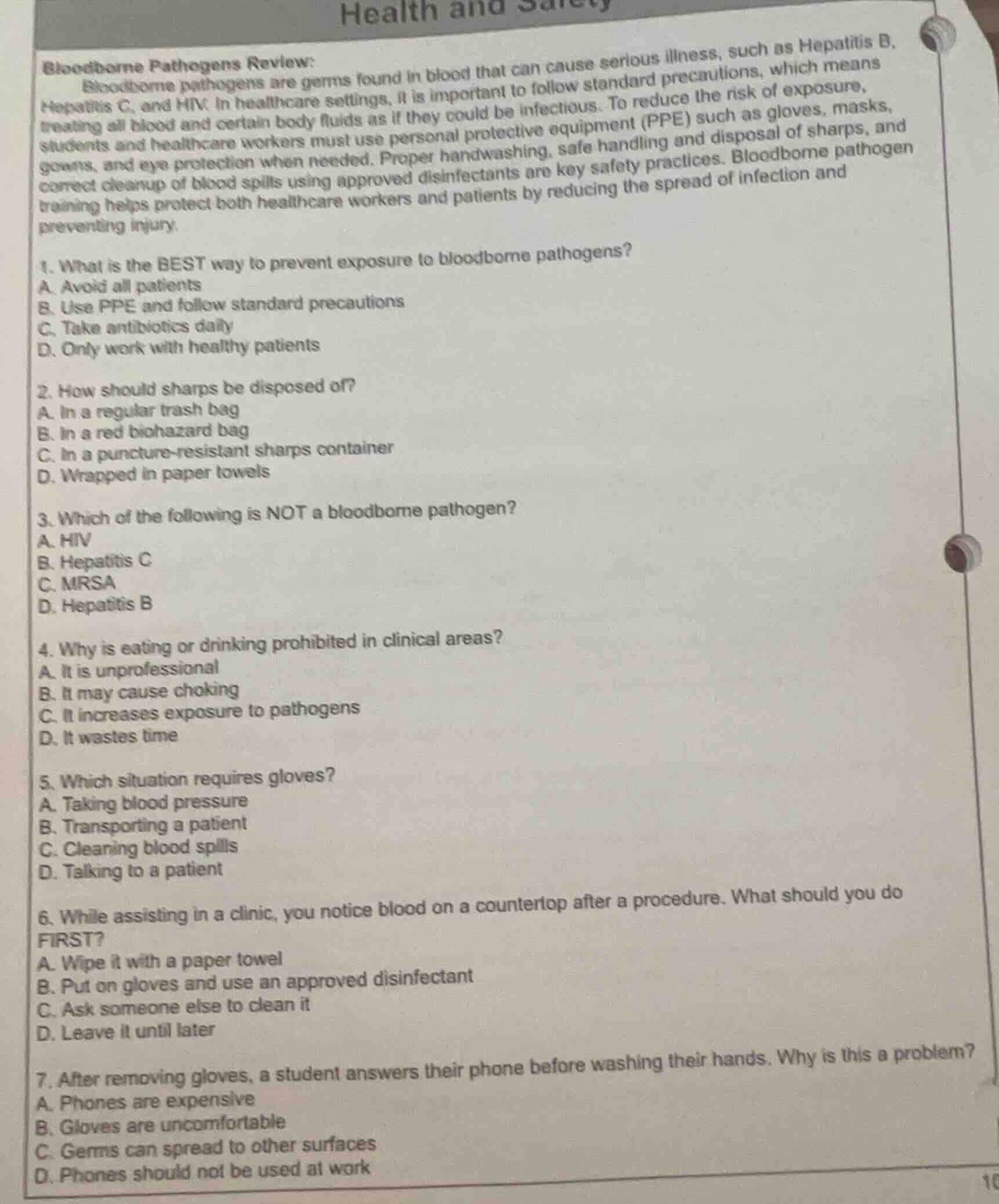
health and safetybloodborne pathogens review:bloodborne pathogens are germs found in blood that can cause serious illness, such as hepatitis b, hepatitis c, and hiv. in healthcare settings, it is important to follow standard precautions, which means treating all blood and certain body fluids as if they could be infectious. to reduce the risk of exposure, students and healthcare workers must use personal protective equipment (ppe) such as gloves, masks, gowns, and eye protection when needed. proper handwashing, safe handling and disposal of sharps, and correct cleanup of blood spills using approved disinfectants are key safety practices. bloodborne pathogen training helps protect both healthcare workers and patients by reducing the spread of infection and preventing injury.1. what is the best way to prevent exposure to bloodborne pathogens?a. avoid all patientsb. use ppe and follow standard precautionsc. take antibiotics dailyd. only work with healthy patients2. how should sharps be disposed of?a. in a regular trash bagb. in a red biohazard bagc. in a puncture-resistant sharps containerd. wrapped in paper towels3. which of the following is not a bloodborne pathogen?a. hivb. hepatitis cc. mrsad. hepatitis b4. why is eating or drinking prohibited in clinical areas?a. it is unprofessionalb. it may cause chokingc. it increases exposure to pathogensd. it wastes time5. which situation requires gloves?a. taking blood pressureb. transporting a patientc. cleaning blood spillsd. talking to a patient6. while assisting in a clinic, you notice blood on a countertop after a procedure. what should you do first?a. wipe it with a paper towelb. put on gloves and use an approved disinfectantc. ask someone else to clean itd. leave it until later7. after removing gloves, a student answers their phone before washing their hands. why is this a problem?a. phones are expensiveb. gloves are uncomfortablec. germs can spread to other surfacesd. phones should not be used at work
- The provided text states standard precautions plus PPE are key to reducing exposure.
- Safe sharp disposal requires puncture-resistant containers to prevent injury/exposure.
- The text lists HIV, Hepatitis B, C as bloodborne; MRSA is not in this list.
- Eating/drinking in clinical areas raises pathogen exposure risk via contaminated hands/surfaces.
- Cleaning blood spills involves direct contact with infectious material, requiring gloves.
- The first step for blood spills is to use PPE (gloves) and approved disinfectants per safety guidelines.
- Unwashed hands post-gloves can transfer germs from gloves to the phone, spreading pathogens.

Snap & solve any problem in the app
Get step-by-step solutions on Sovi AI
Photo-based solutions with guided steps
Explore more problems and detailed explanations
- B. Use PPE and follow standard precautions
- C. In a puncture-resistant sharps container
- C. MRSA
- C. It increases exposure to pathogens
- C. Cleaning blood spills
- B. Put on gloves and use an approved disinfectant
- C. Germs can spread to other surfaces