QUESTION IMAGE
Question
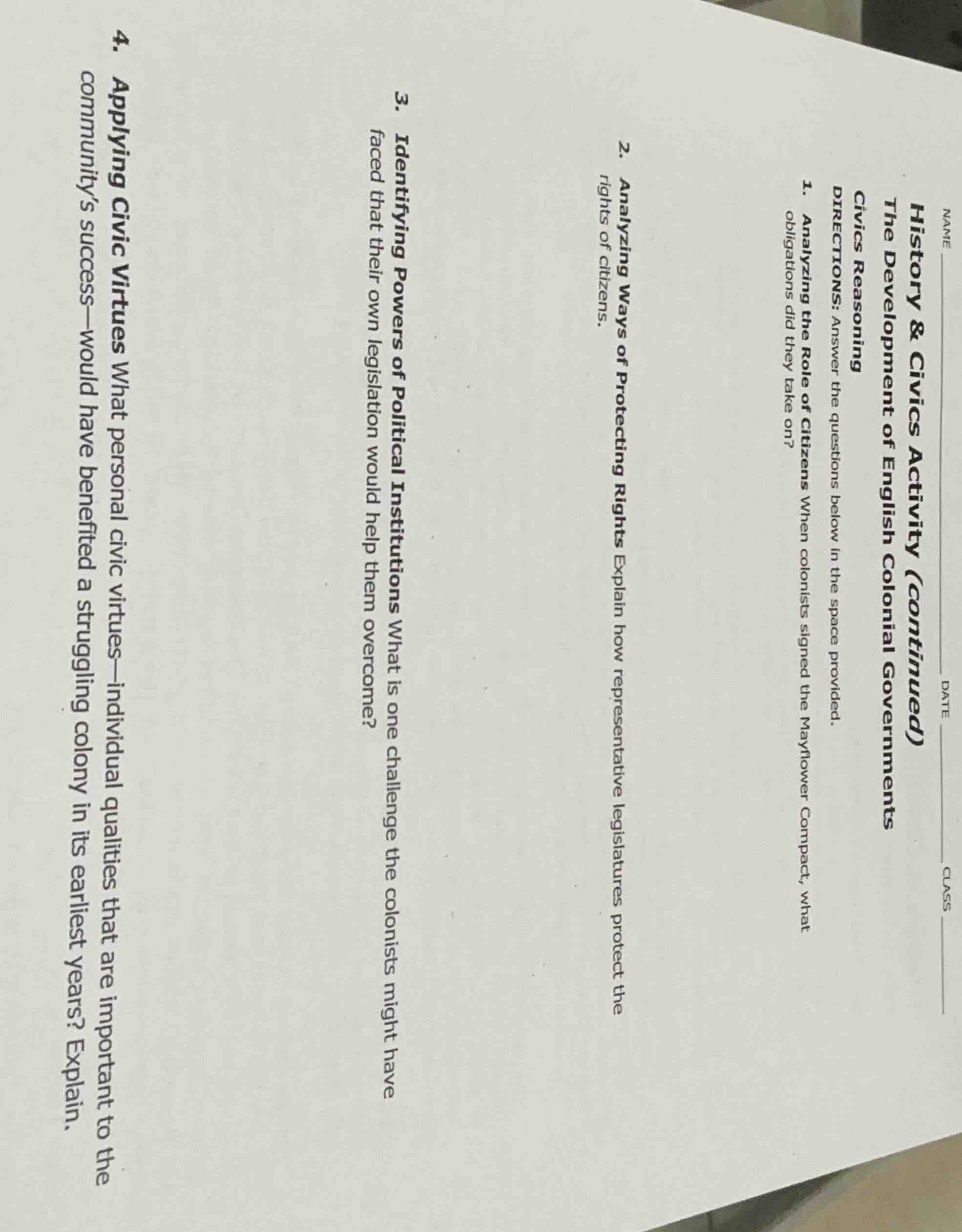
history & civics activity (continued)
the development of english colonial governments
civics reasoning
directions: answer the questions below in the space provided.
- analyzing the role of citizens when colonists signed the mayflower compact, what obligations did they take on?
- analyzing ways of protecting rights explain how representative legislatures protect the rights of citizens.
- identifying powers of political institutions what is one challenge the colonists might have faced that their own legislation would help them overcome?
- applying civic virtues what personal civic virtues—individual qualities that are important to the community’s success—would have benefited a struggling colony in its earliest years? explain.
Question 1:
When colonists signed the Mayflower Compact, they took on obligations like self - governance (agreeing to make laws for the common good), following the established laws, and working together for the survival and well - being of the colony. The compact was a form of social contract where they pledged to abide by the rules they created collectively.
Representative legislatures protect citizens' rights in several ways. First, representatives are elected by the people, so they are accountable to the citizens. These representatives can propose, debate, and pass laws that safeguard individual rights such as freedom of speech, religion, and the right to a fair trial. They can also act as a check on other branches of government (like the executive branch) to prevent the abuse of power that could violate citizens' rights. For example, in the colonial context, representative assemblies like the Virginia House of Burgesses gave colonists a voice in matters that affected their rights, such as taxation and trade regulations.
One challenge colonists might have faced was a lack of a stable food supply, especially in the early years of settlement. A legislative solution could have been to pass laws mandating communal farming or food sharing. For example, the legislature could require each family to contribute a certain amount of their harvest to a communal storehouse, which would then be used to support families that had a poor harvest. This would help ensure that no one went hungry and would promote the overall survival of the colony. Another challenge could be conflicts with Native Americans. Legislation could be passed to establish a formal process for negotiating treaties and resolving disputes, such as creating a committee of colonists and Native American representatives to discuss issues and find peaceful solutions.

Snap & solve any problem in the app
Get step-by-step solutions on Sovi AI
Photo-based solutions with guided steps
Explore more problems and detailed explanations
When colonists signed the Mayflower Compact, their obligations included:
- Agreeing to establish a form of self - government, where they would create and follow laws for the good of the Plymouth Colony.
- Pledging to work together for the survival and prosperity of the colony, as they recognized the need for collective action in the new, challenging environment.
- Abiding by the rules and decisions made through this self - governing system, showing a commitment to the social contract they had created.