QUESTION IMAGE
Question
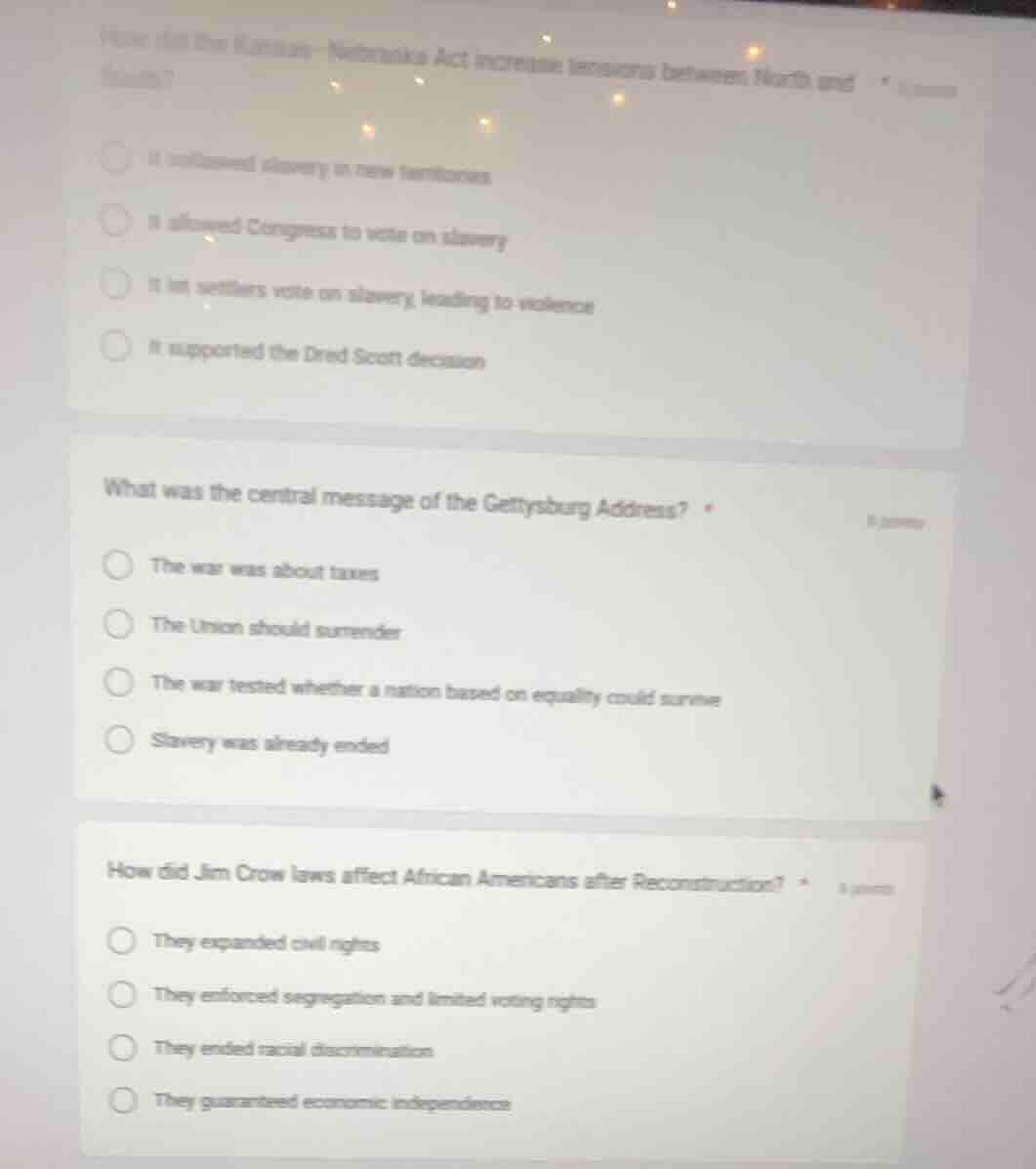
how did the kansas - nebraska act increase tensions between north and south?
it outlawed slavery in new territories
it allowed congress to vote on slavery
it let settlers vote on slavery, leading to violence
it supported the dred scott decision
what was the central message of the gettysburg address?
the war was about taxes
the union should surrender
the war tested whether a nation based on equality could survive
slavery was already ended
how did jim crow laws affect african americans after reconstruction?
they expanded civil rights
they enforced segregation and limited voting rights
they ended racial discrimination
they guaranteed economic independence
First Question: How did the Kansas - Nebraska Act increase tensions between North and South?
The Kansas - Nebraska Act introduced popular sovereignty, letting settlers in these territories vote on whether to allow slavery. This led to a rush of pro - slavery and anti - slavery settlers into the region, and violent conflicts (like "Bleeding Kansas") erupted, which greatly increased North - South tensions. Option A is incorrect as the act didn't just reduce slavery in new territories. Option B is wrong because it was settlers, not Congress, who voted. Option D is incorrect as the act was before the Dred Scott decision.
The Gettysburg Address was given during the Civil War. Lincoln's message was that the war was a test of whether a nation "conceived in Liberty, and dedicated to the proposition that all men are created equal" could survive. Option A is wrong as the war was about preserving the Union and the issue of slavery, not taxes. Option B is incorrect as the Union was fighting to win, not surrender. Option D is wrong as slavery was still in place during the time of the address.
Jim Crow laws were state and local laws in the South that enforced racial segregation (like separate schools, public facilities) and also imposed restrictions on African American voting rights (through literacy tests, poll taxes, etc.). Option A is wrong as they restricted civil rights. Option C is incorrect as they enforced racial discrimination, not end it. Option D is wrong as they did not guarantee economic independence; in fact, they often restricted economic opportunities for African Americans.

Snap & solve any problem in the app
Get step-by-step solutions on Sovi AI
Photo-based solutions with guided steps
Explore more problems and detailed explanations
C. It let settlers vote on slavery, leading to violence