QUESTION IMAGE
Question
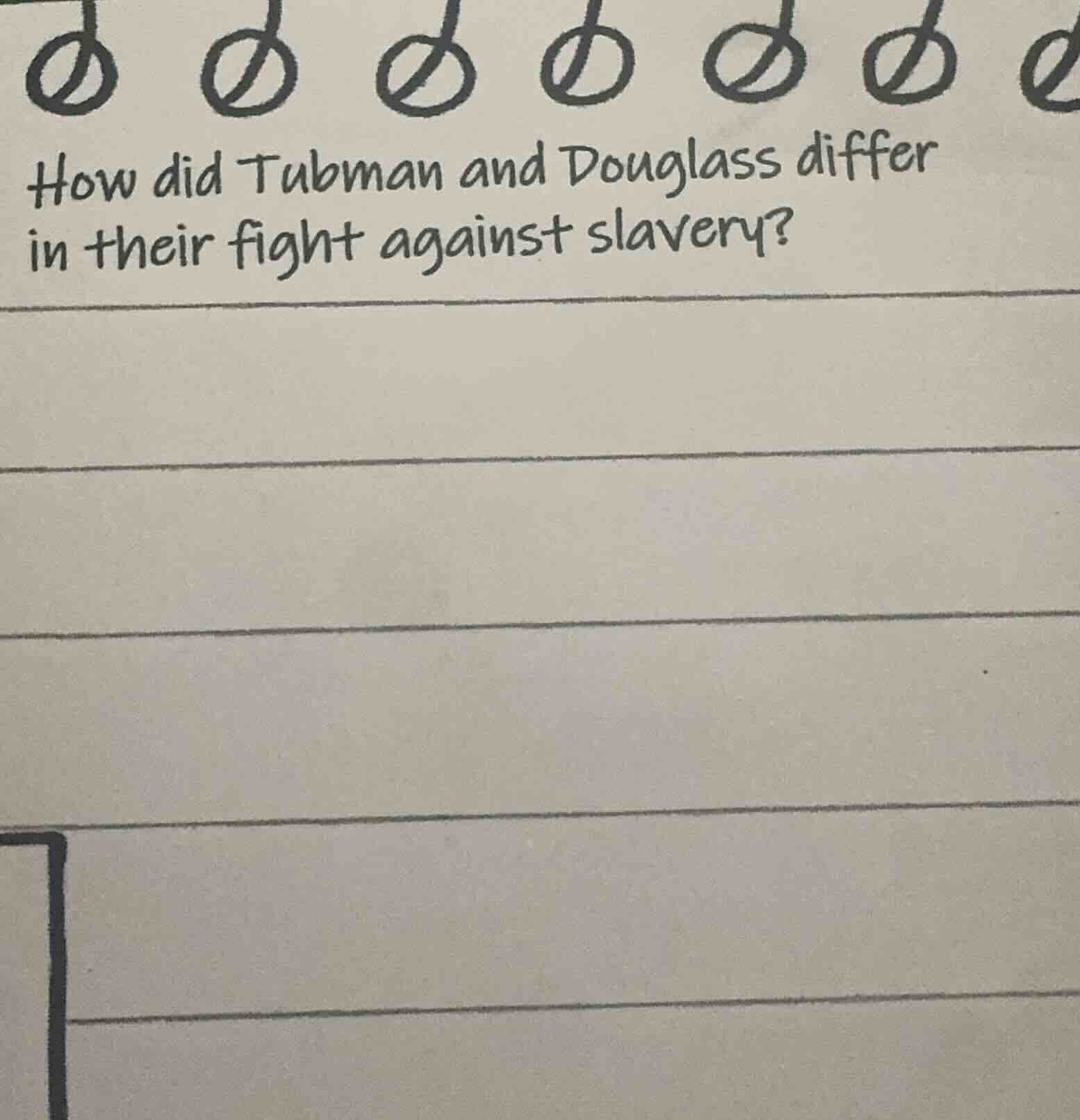
how did tubman and douglass differ in their fight against slavery?
Brief Explanations
- Core Tactical Focus: Harriet Tubman led covert, on-the-ground operations via the Underground Railroad, directly enslaved people to freedom in the North and Canada. Frederick Douglass used public advocacy: he gave speeches, wrote autobiographies, and edited abolitionist newspapers to sway public opinion and push for legislative change.
- Risk and Visibility: Tubman worked in secret, facing immediate violence and re-enslavement if caught, while Douglass was a public, well-known figure who operated openly in abolitionist circles.
- Scope of Action: Tubman's work was focused on individual, immediate emancipation of enslaved people, while Douglass focused on broader, systemic change to end slavery entirely across the U.S.

Snap & solve any problem in the app
Get step-by-step solutions on Sovi AI
Photo-based solutions with guided steps
Explore more problems and detailed explanations
Harriet Tubman and Frederick Douglass differed in their anti-slavery efforts in three key ways:
- Tubman led secret, on-the-ground missions via the Underground Railroad to directly free enslaved people, while Douglass used public speeches, writing, and advocacy to shape public opinion and push for systemic anti-slavery policy.
- Tubman operated in covert, high-risk, low-visibility conditions to avoid capture, while Douglass was a prominent, public face of the abolitionist movement.
- Tubman focused on immediate, individual emancipation of enslaved people, while Douglass centered his work on broader, nationwide abolition of slavery as an institution.