QUESTION IMAGE
Question
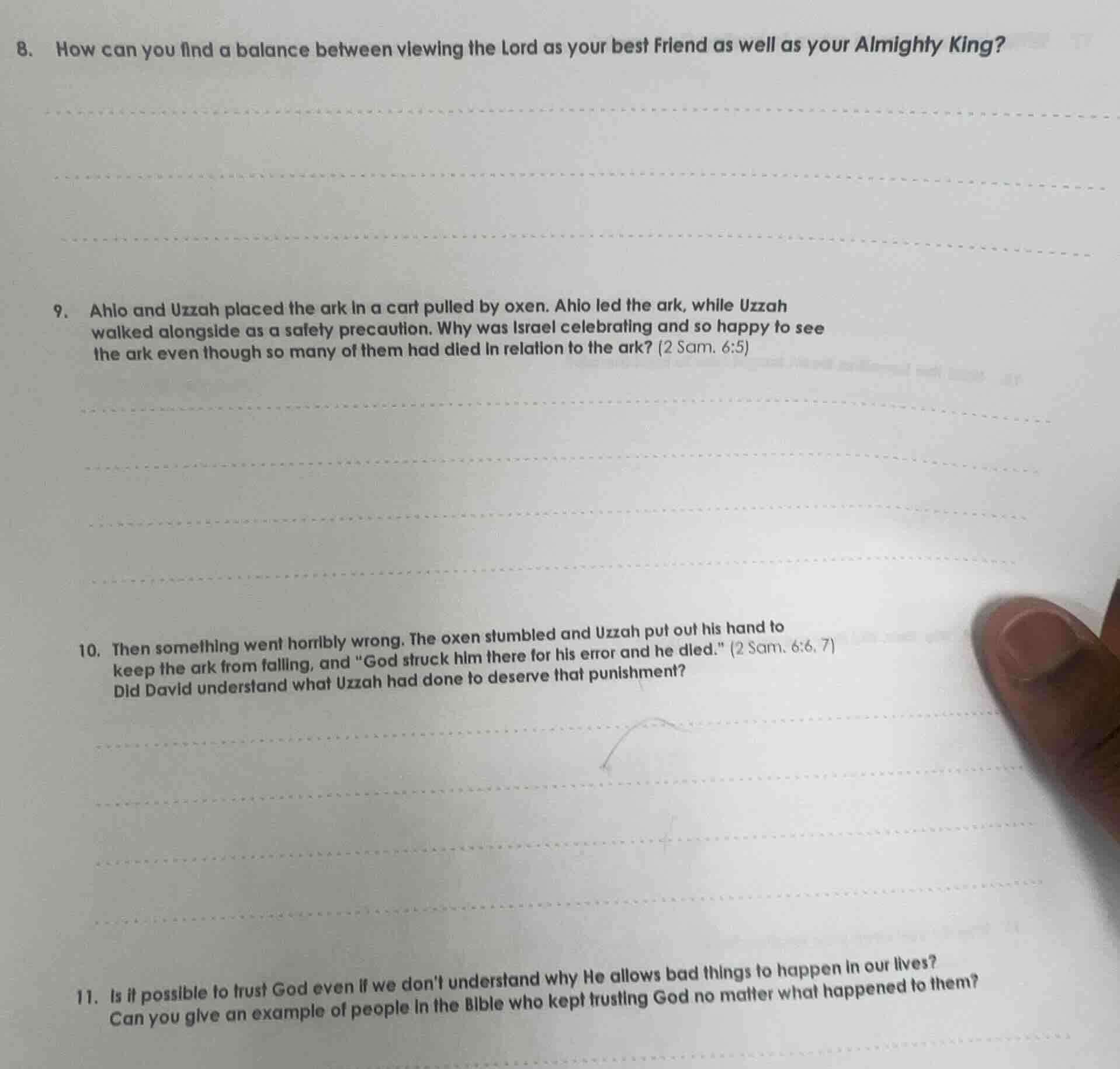
- how can you find a balance between viewing the lord as your best friend as well as your almighty king?
- ahio and uzzah placed the ark in a cart pulled by oxen. ahio led the ark, while uzzah walked alongside as a safety precaution. why was israel celebrating and so happy to see the ark even though so many of them had died in relation to the ark? (2 sam. 6:5)
- then something went horribly wrong. the oxen stumbled and uzzah put out his hand to keep the ark from falling, and \god struck him there for his error and he died.\ (2 sam. 6:6, 7) did david understand what uzzah had done to deserve that punishment?
- is it possible to trust god even if we dont understand why he allows bad things to happen in our lives? can you give an example of people in the bible who kept trusting god no matter what happened to them?
For Question 8:
This balance comes from recognizing two core biblical truths: God's intimate, loving nature (as a friend who walks with believers, seen in passages like John 15:15) and His absolute sovereignty and holiness (as King, seen in Revelation 19:16). Believers can cultivate this by approaching God with vulnerable trust in personal moments while upholding reverence for His authority in all areas of life.
For Question 9:
The Ark of the Covenant represented God's physical presence among the Israelites. Even after past deaths linked to improper handling of the Ark, the Israelites celebrated because they associated the Ark with God's favor, protection, and the fulfillment of His covenant promises. They saw its return as a sign of God restoring His presence to their community.
For Question 10:
David did not initially understand the reason for Uzzah's death; he reacted with anger and fear (2 Samuel 6:8). Later, he learned that only the Levites were permitted to touch the Ark (as commanded in Numbers 4:15), and Uzzah had violated this sacred rule by touching it, showing a lack of reverence for God's holy laws.
For Question 11:
Yes, it is possible to trust God without understanding His plans, as trust in God is rooted in His character (faithfulness, goodness) rather than full comprehension of circumstances. A biblical example is Job: despite losing his family, wealth, and health, and not understanding why he suffered, he remained faithful to God and ultimately affirmed his trust in Him (Job 19:25). Another example is Joseph, who was sold into slavery, falsely imprisoned, but trusted God's plan to use his suffering to save his family and many others (Genesis 50:20).

Snap & solve any problem in the app
Get step-by-step solutions on Sovi AI
Photo-based solutions with guided steps
Explore more problems and detailed explanations
- Balance is found by embracing both God's intimate friendship (seen in John 15:15, where Jesus calls disciples friends) and His sovereign, holy kingship (Revelation 19:16). Approach God with vulnerable trust in personal moments, while upholding reverence for His absolute authority in all areas of life.
- The Ark represented God's physical presence among the Israelites. They celebrated its arrival because they linked it to God's covenant favor, protection, and the restoration of His presence in their community, despite past tragedies from improper handling.
- David did not initially understand; he reacted with anger and fear. He later learned Uzzah violated God's command (Numbers 4:15) that only Levites could touch the Ark, showing irreverence for God's holiness.
- Yes, trust in God can exist without full understanding, as it is rooted in His faithful, good character. Examples include Job, who remained faithful despite unthinkable suffering and not knowing why it happened, and Joseph, who trusted God's plan even when sold into slavery and falsely imprisoned.