QUESTION IMAGE
Question
impacts of a populations age distribution (pages 202-205)
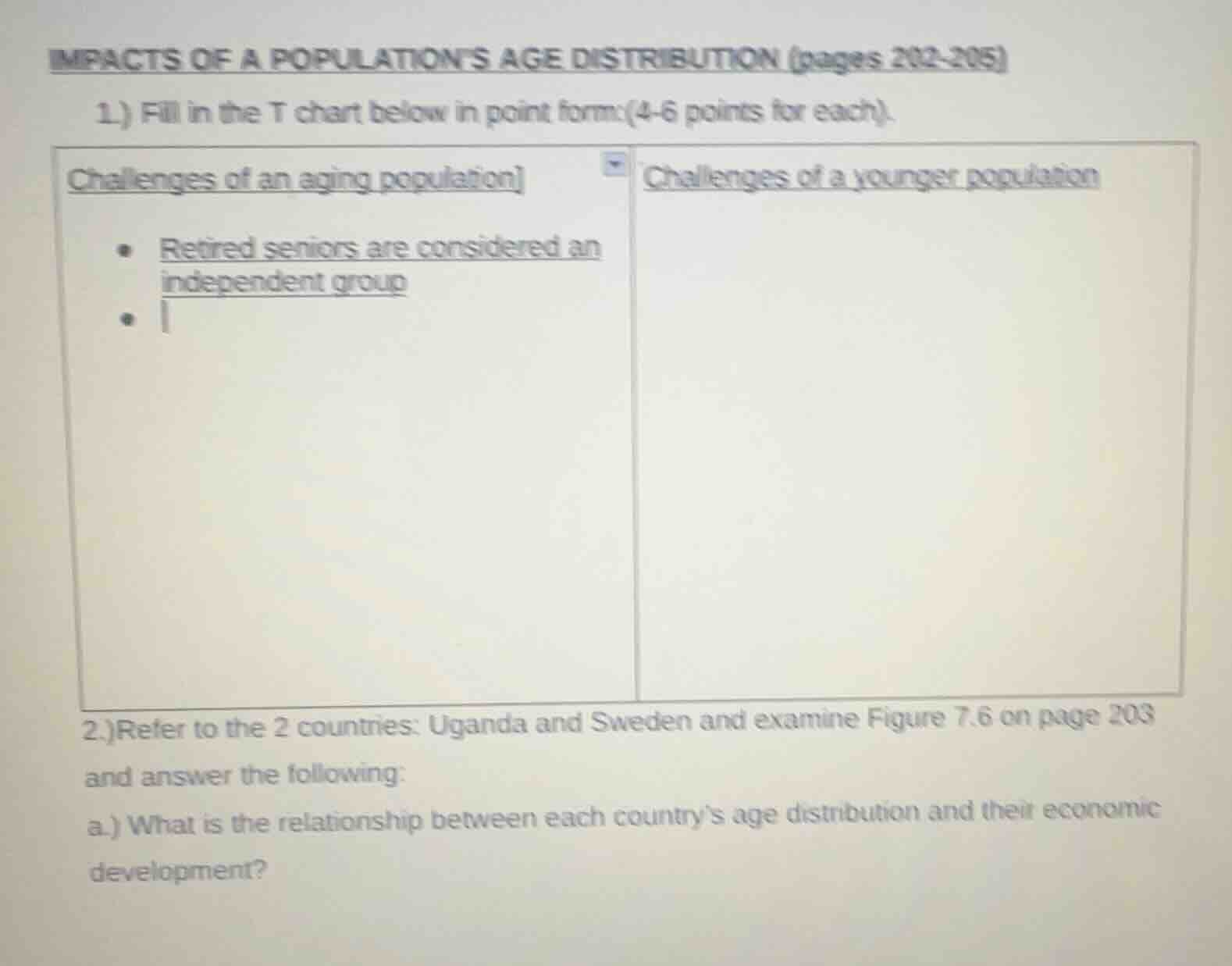
1.) fill in the t chart below in point form:(4-6 points for each).
challenges of an aging population challenges of a younger population
- retired seniors are considered an independent group
-
2.)refer to the 2 countries: uganda and sweden and examine figure 7.6 on page 203 and answer the following:
a.) what is the relationship between each countrys age distribution and their economic development?
For Question 1:
For aging populations, additional challenges stem from strain on public services, reduced workforce, and higher healthcare costs. For younger populations, challenges center on youth unemployment, strain on education systems, and pressure to create jobs.
For Question 2a:
Sweden has an aging population, linked to its developed economy with established social safety nets, but faces labor shortages and high pension/healthcare costs. Uganda has a young population, linked to its developing economy with a large potential workforce, but struggles with underfunded education/healthcare and youth unemployment barriers to growth.

Snap & solve any problem in the app
Get step-by-step solutions on Sovi AI
Photo-based solutions with guided steps
Explore more problems and detailed explanations
1.) T Chart:
Challenges of an aging population
- Retired seniors are considered an independent group
- Rising public healthcare and pension costs
- Shrinking working-age labor force
- Increased burden on working taxpayers
- Strain on elder care infrastructure
- Slow economic growth from reduced productivity
Challenges of a younger population
- High youth unemployment rates
- Overcrowded underfunded education systems
- Strain on basic healthcare services
- Pressure to create new jobs rapidly
- High dependency ratio on working adults
- Risk of social unrest from unmet youth needs
2.) a.)
- Sweden (Aging Population & Developed Economy): Sweden's aging population aligns with its high-income developed status. Its mature economy has the resources to support elderly care and pensions, but the shrinking working-age population creates labor shortages, slows productivity growth, and places a growing financial burden on the smaller workforce to fund social services for the elderly.
- Uganda (Young Population & Developing Economy): Uganda's very young population aligns with its developing economy. The large youth cohort represents a potential demographic dividend if educated and employed, but the country faces barriers: underfunded education/healthcare systems cannot support the youth population, high youth unemployment is prevalent, and the large dependent youth population strains the smaller working-age adult group, limiting economic growth potential.