QUESTION IMAGE
Question
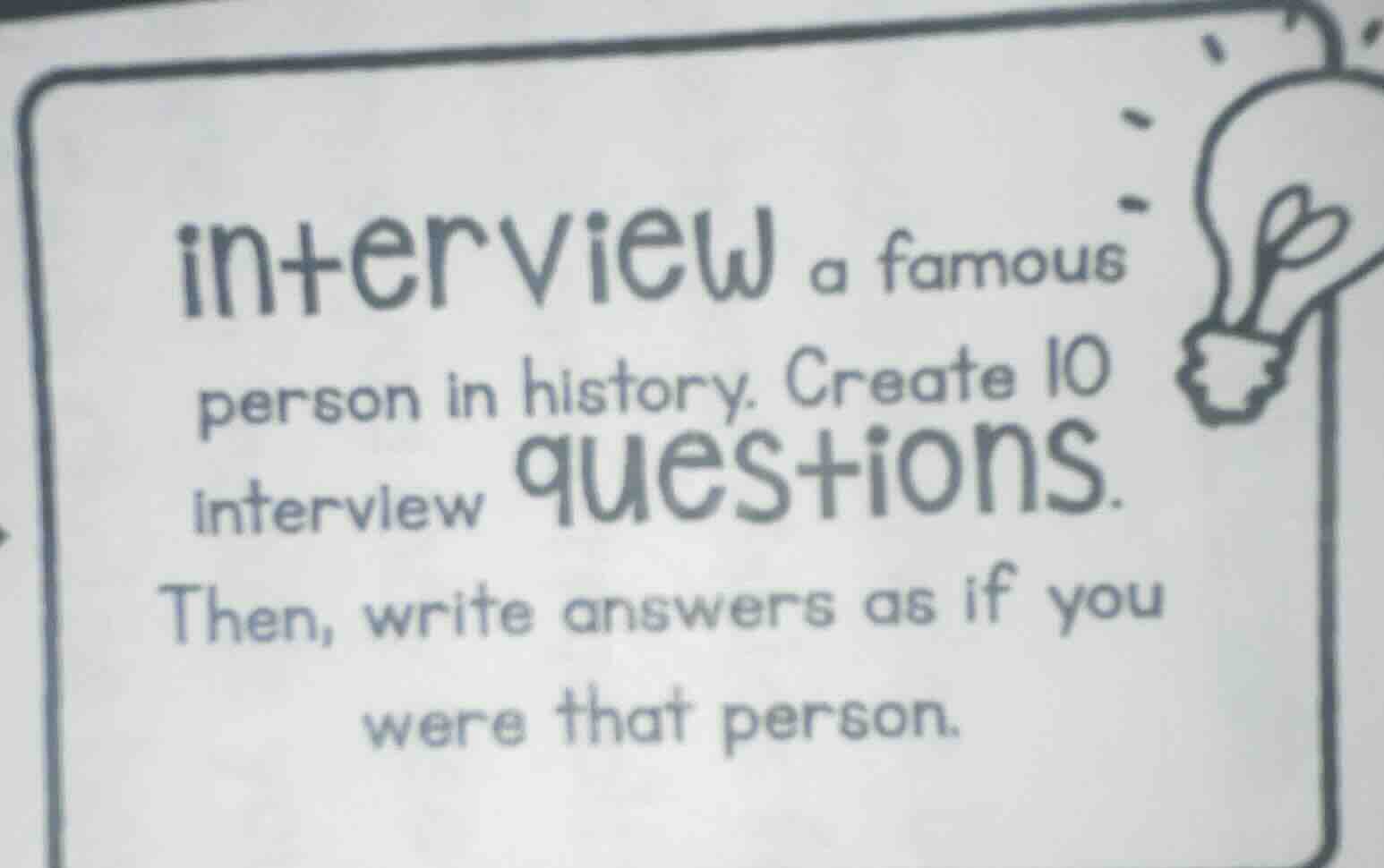
interview a famous person in history. create 10 interview questions. then, write answers as if you were that person.
Selected Marie Curie, a pioneering historical figure in science, to craft targeted questions about her motivations, challenges, and legacy, then respond in her voice with authentic context.

Snap & solve any problem in the app
Get step-by-step solutions on Sovi AI
Photo-based solutions with guided steps
Explore more problems and detailed explanations
- Q: What first sparked your interest in science?
A: As a child, I was fascinated by how the natural world worked—especially the hidden forces in matter. My father’s physics and chemistry equipment at home, and my hunger for learning despite limited access to education, pushed me toward this path.
- Q: How did you persist through gender barriers in academia?
A: I refused to see myself as limited by my gender. I focused on my work; when universities barred me, I studied in underground labs. Recognition came from results, not prejudice.
- Q: What was the hardest part of discovering radium?
A: Processing tons of pitchblende in a cold, drafty shed, with no proper equipment, was grueling. We worked for years, extracting tiny amounts of radium, but the thrill of uncovering something new kept us going.
- Q: How did your relationship with Pierre Curie shape your work?
A: Pierre was my equal in curiosity and drive. We shared every idea, every late night in the lab. His belief in me gave me confidence, and our collaboration made our discoveries possible.
- Q: What made you decide to donate your Nobel Prize medals?
A: Medals are just metal; the knowledge we gained is what matters. I gave them to the war effort, as I wanted my work to serve a greater, urgent purpose.
- Q: Did you ever fear the risks of radiation exposure?
A: We did not fully understand its dangers at first. Later, when we saw its effects, we adjusted, but I never let fear stop me from exploring its potential to help people.
- Q: What advice would you give to young women in science today?
A: Do not let anyone tell you you do not belong. Focus on your passion, work diligently, and remember that progress comes from those who dare to question and persist.
- Q: How did World War I change your approach to science?
A: It pushed me to apply our knowledge of radiation to save lives. I created mobile X-ray units to help surgeons treat wounded soldiers—science must serve humanity in times of need.
- Q: What was your greatest regret in your scientific career?
A: I regret not being able to spend more time with my daughters while I worked. But I hoped my work would leave them a world where women could pursue their dreams freely.
- Q: How do you want to be remembered by history?
A: Not as a "famous woman scientist," but as someone who followed her curiosity, advanced human understanding, and showed that anyone can contribute to progress, no matter their background.