QUESTION IMAGE
Question
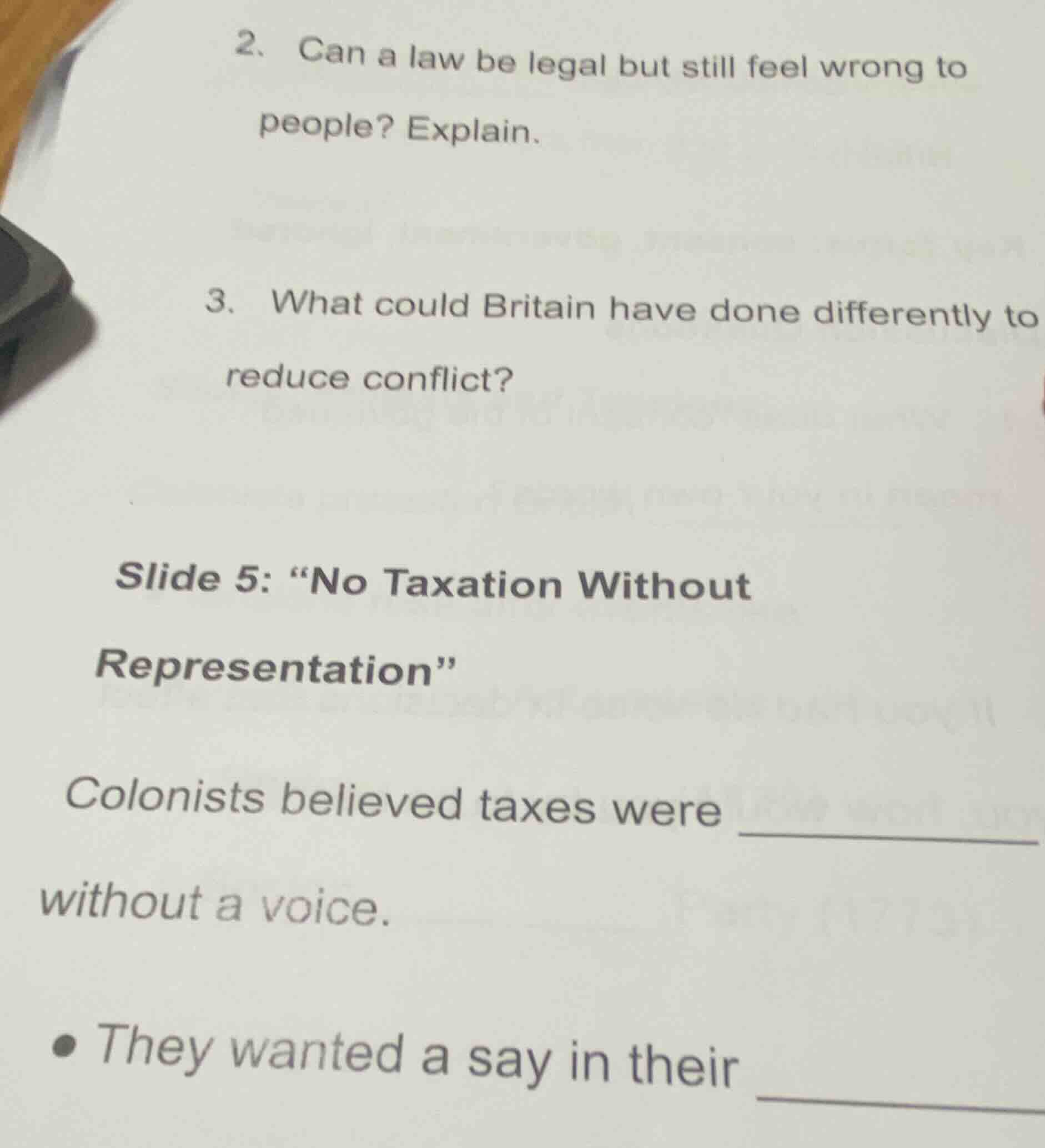
- can a law be legal but still feel wrong to people? explain.
- what could britain have done differently to reduce conflict?
slide 5: “no taxation without representation”
colonists believed taxes were
without a voice.
- they wanted a say in their
Brief Explanations
- For question 2: Legality refers to adherence to formal legal rules, while moral or ethical wrongness is based on shared values or individual conscience. Laws can be legally valid but violate the public's sense of fairness or justice. For example, historical laws enforcing racial segregation were legal in some countries but widely seen as unjust because they violated basic human equality.
- For question 3: Britain could have granted colonial representatives seats in the British Parliament to address the "No Taxation Without Representation" grievance, or allowed colonial assemblies more autonomy over local taxation and governance. This would have addressed the colonists' core complaint of lacking a voice in policies that affected them.
- For the fill-in blanks: The phrase "No Taxation Without Representation" centers on the colonists' belief that taxes imposed without political representation were unjust. They wanted a formal role in creating the tax laws that applied to them.

Snap & solve any problem in the app
Get step-by-step solutions on Sovi AI
Photo-based solutions with guided steps
Explore more problems and detailed explanations
- Yes, a law can be legal but feel wrong. Laws are formal rules enforced by a government, but they may conflict with societal moral values, equity, or human rights. For example, historical segregation laws were legally enforced but violated the fundamental principle of equality, making them feel deeply wrong to marginalized groups and many others.
- Britain could have allowed colonial representatives to participate in the British Parliament, giving colonists a voice in the creation of tax laws. It could also have devolved more authority to colonial assemblies to manage local taxation and governance, addressing the core grievance of "No Taxation Without Representation."
- Colonists believed taxes were unjust without a voice.
- They wanted a say in their tax laws/government policies