QUESTION IMAGE
Question
lesson 4 • hands-on activity
investigating sexual
reproduction
udent objective
an model the process and effects of sexual reproduction.
ou look a family portrait, chances are you will observe that the children
k similar to but not identical to the parents. our genes are not identical to
parents’ because humans produce offspring through sexual reproduction.
an genes are grouped into twenty - three pairs of chromosomes. what
pens to genes during sexual reproduction? how is sexual reproduction
rent from asexual reproduction? what are the effects of sexual
oduction across multiple generations?
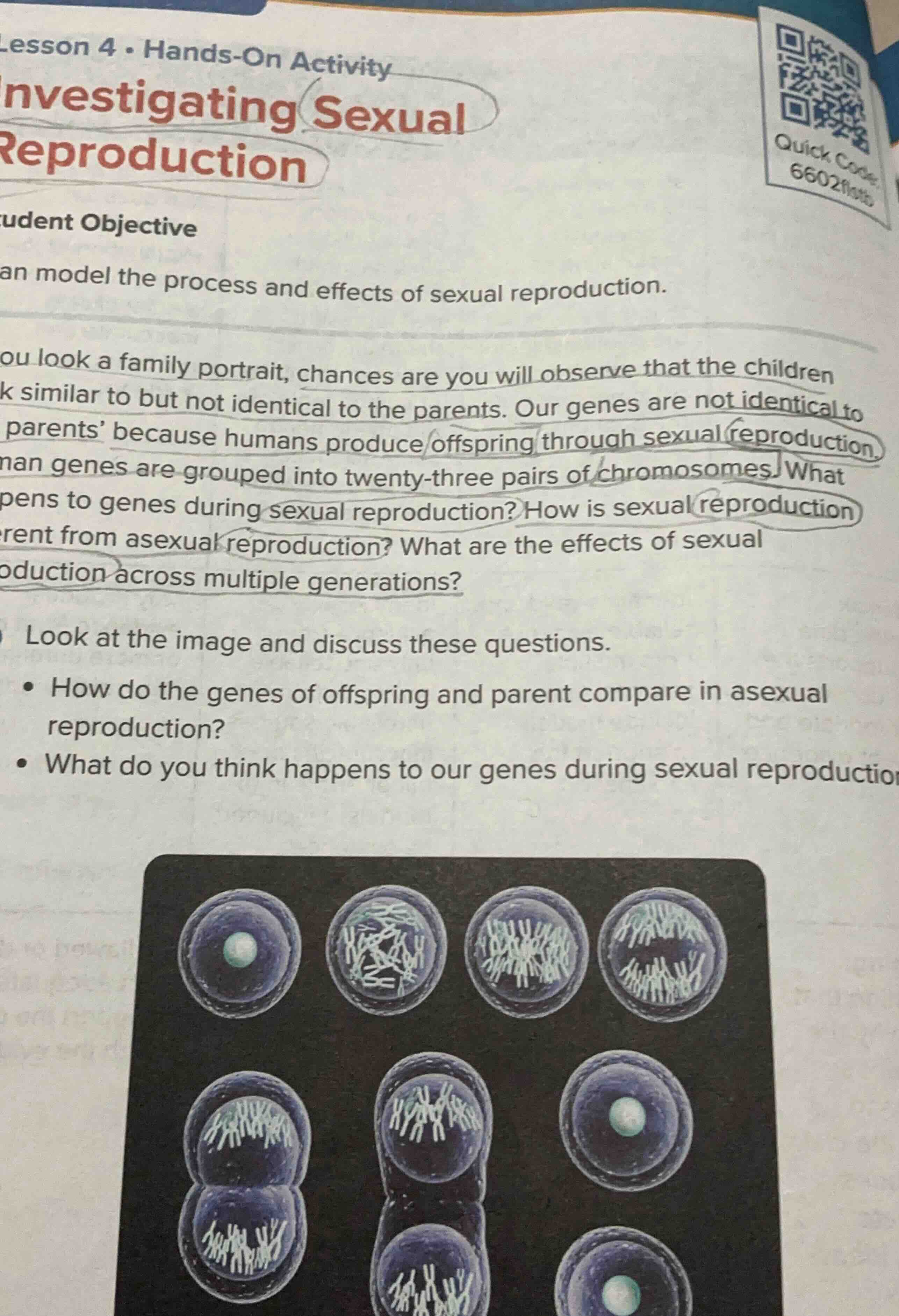
look at the image and discuss these questions.
- how do the genes of offspring and parent compare in asexual
reproduction?
- what do you think happens to our genes during sexual reproductio
- For asexual reproduction, offspring inherit the exact full set of genetic material from a single parent, so their genes are genetically identical to the parent (no genetic variation from the parent).
- During sexual reproduction, specialized cells (gametes, sperm and egg) form via meiosis, which halves the chromosome number and shuffles genetic material through crossing over. Then, a sperm and egg fuse during fertilization, combining half the genetic material from each parent. This creates offspring with a unique combination of genes from both parents.

Snap & solve any problem in the app
Get step-by-step solutions on Sovi AI
Photo-based solutions with guided steps
Explore more problems and detailed explanations
- In asexual reproduction, the genes of offspring are genetically identical to the single parent's genes; there is no genetic difference between them.
- During sexual reproduction:
- Germ cells undergo meiosis, which reduces the chromosome number by half and shuffles genetic material through crossing over, creating genetically unique gametes (sperm/egg).
- Fertilization occurs, where one gamete from each parent fuses, combining half the genetic material from the mother and half from the father. This results in offspring with a unique, mixed set of genes from both parents.