QUESTION IMAGE
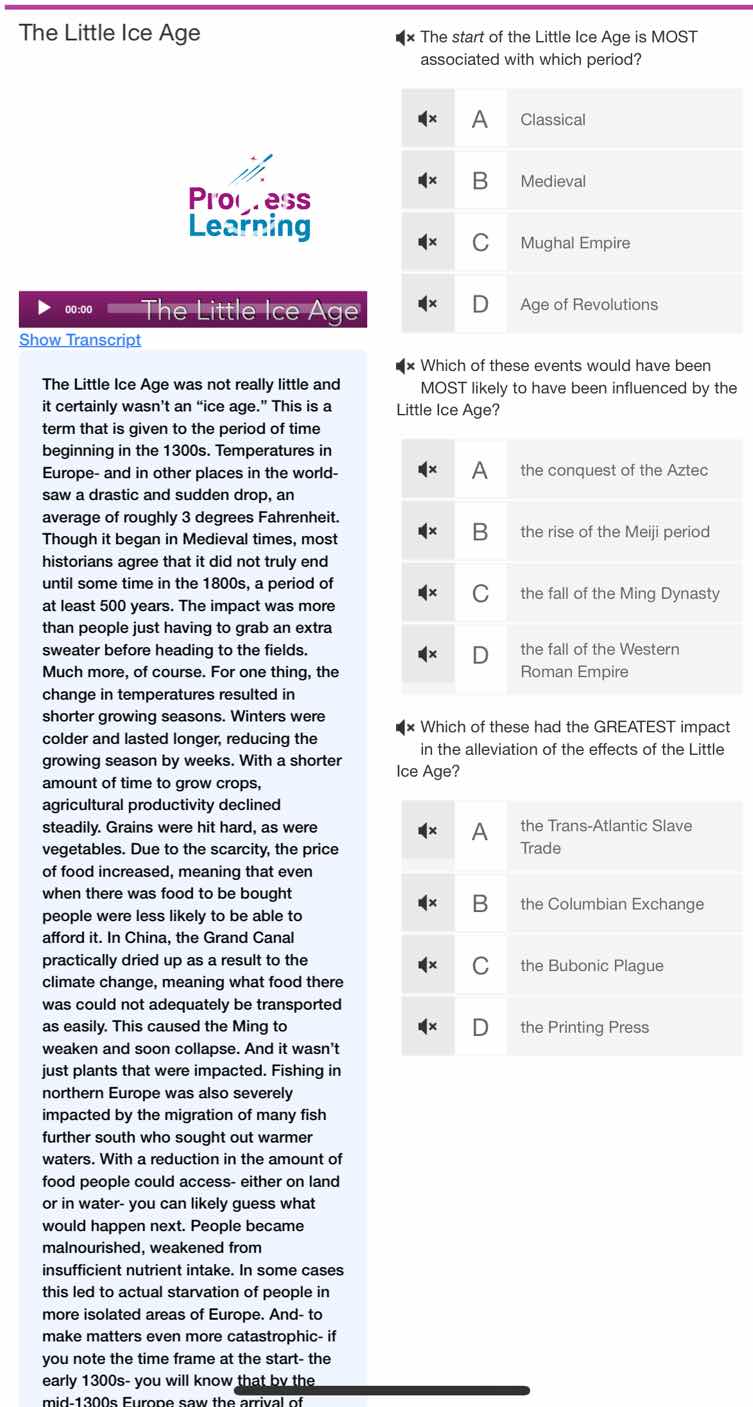
Question
the little ice age
the little ice age was not really little and it certainly wasnt an \ice age.\ this is a term that is given to the period of time beginning in the 1300s. temperatures in europe- and in other places in the world- saw a drastic and sudden drop, an average of roughly 3 degrees fahrenheit. though it began in medieval times, most historians agree that it did not truly end until some time in the 1800s, a period of at least 500 years. the impact was more than people just having to grab an extra sweater before heading to the fields. much more, of course. for one thing, the change in temperatures resulted in shorter growing seasons. winters were colder and lasted longer, reducing the growing season by weeks. with a shorter amount of time to grow crops, agricultural productivity declined steadily. grains were hit hard, as were vegetables. due to the scarcity, the price of food increased, meaning that even when there was food to be bought people were less likely to be able to afford it. in china, the grand canal practically dried up as a result to the climate change, meaning what food there was could not adequately be transported as easily. this caused the ming to weaken and soon collapse. and it wasnt just plants that were impacted. fishing in northern europe was also severely impacted by the migration of many fish further south who sought out warmer waters. with a reduction in the amount of food people could access- either on land or in water- you can likely guess what would happen next. people became malnourished, weakened from insufficient nutrient intake. in some cases this led to actual starvation of people in more isolated areas of europe. and- to make matters even more catastrophic- if you note the time frame at the start- the early 1300s- you will know that by the mid-1300s europe saw the arrival of
the start of the little ice age is most associated with which period?
a classical
b medieval
c mughal empire
d age of revolutions
which of these events would have been most likely to have been influenced by the little ice age?
a the conquest of the aztec
b the rise of the meiji period
c the fall of the ming dynasty
d the fall of the western roman empire
which of these had the greatest impact in the alleviation of the effects of the little ice age?
a the trans-atlantic slave trade
b the columbian exchange
c the bubonic plague
d the printing press
First Question:
The text states the Little Ice Age began in the 1300s, which is the Medieval period. The Classical period is much earlier, the Mughal Empire's timeline and the Age of Revolutions are later, so the start is most associated with the Medieval period.
The text mentions the Ming Dynasty weakened and collapsed due to the Little Ice Age's impact on food transport (Grand Canal drying) and agriculture. The conquest of the Aztec was in the early 1500s (before significant Little Ice Age impacts), the Meiji period was in the 19th century (after the Little Ice Age's main period), and the fall of the Western Roman Empire was in the 5th century (long before the Little Ice Age started in the 1300s). So the fall of the Ming Dynasty is most likely influenced.
The Columbian Exchange introduced new crops (like potatoes, corn) that could grow in shorter seasons or harsher conditions, helping alleviate food shortages from the Little Ice Age. The Trans - Atlantic Slave Trade was about labor, the Bubonic Plague was a disease, and the Printing Press was about information - none directly alleviated the Little Ice Age's effects like new crops from the Columbian Exchange.

Snap & solve any problem in the app
Get step-by-step solutions on Sovi AI
Photo-based solutions with guided steps
Explore more problems and detailed explanations
B. Medieval