QUESTION IMAGE
Question
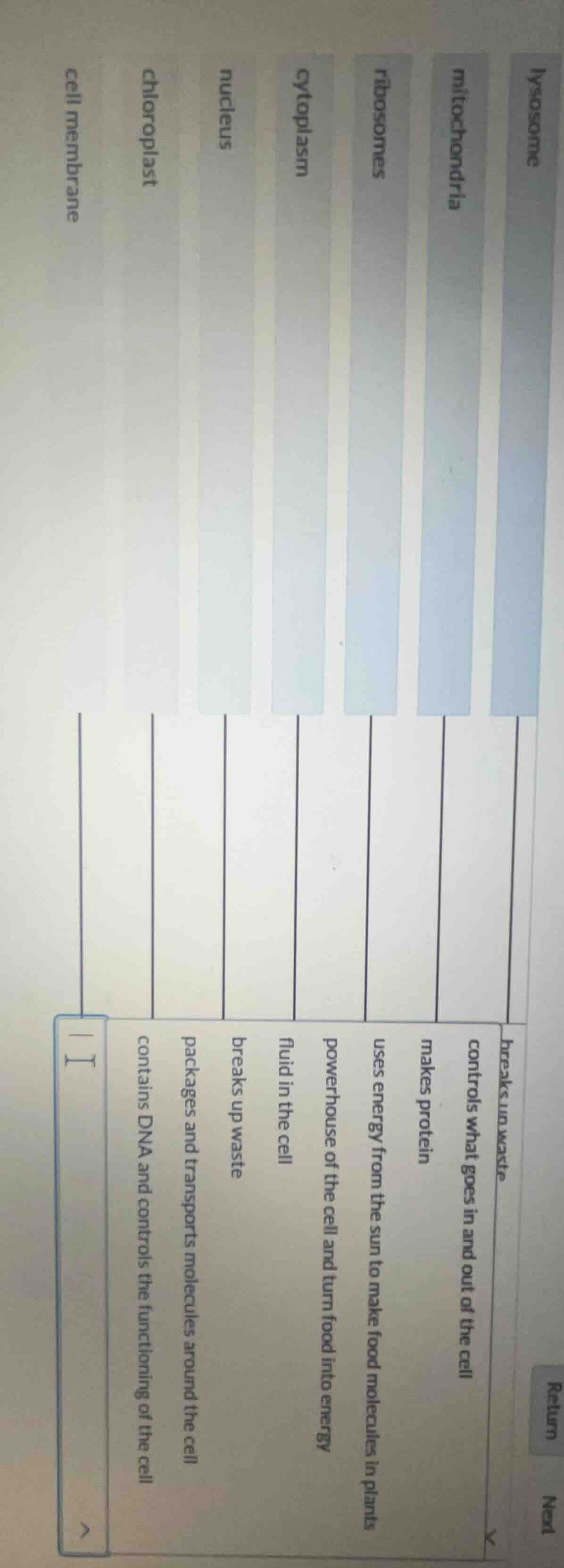
lysosome
mitochondria
ribosomes
cytoplasm
nucleus
chloroplast
cell membrane
breaks in waste
controls what goes in and out of the cell
makes protein
uses energy from the sun to make food molecules in plants
powerhouse of the cell and turn food into energy
fluid in the cell
breaks up waste
packages and transports molecules around the cell
contains dna and controls the functioning of the cell
Se asocian cada orgánulo celular con su función específica según los conocimientos de biología celular:
- El lisosoma contiene enzimas que degradan desechos.
- La membrana celular regula el paso de sustancias.
- La mitocondria genera energía a partir de alimentos.
- Los ribosomas sintetizan proteínas.
- El citoplasma es el fluido que llena la célula.
- El núcleo contiene el ADN y controla la célula.
- El cloroplasto convierte luz solar en alimento (en plantas).
(Nota: Hay una función sobrante ("packages and transports molecules around the cell") que corresponde al aparato de Golgi, no listado entre los orgánulos)

Snap & solve any problem in the app
Get step-by-step solutions on Sovi AI
Photo-based solutions with guided steps
Explore more problems and detailed explanations
- lysosome: breaks up waste
- cell membrane: controls what goes in and out of the cell
- mitochondria: powerhouse of the cell and turn food into energy
- ribosomes: makes protein
- cytoplasm: fluid in the cell
- nucleus: contains DNA and controls the functioning of the cell
- chloroplast: uses energy from the sun to make food molecules in plants