QUESTION IMAGE
Question
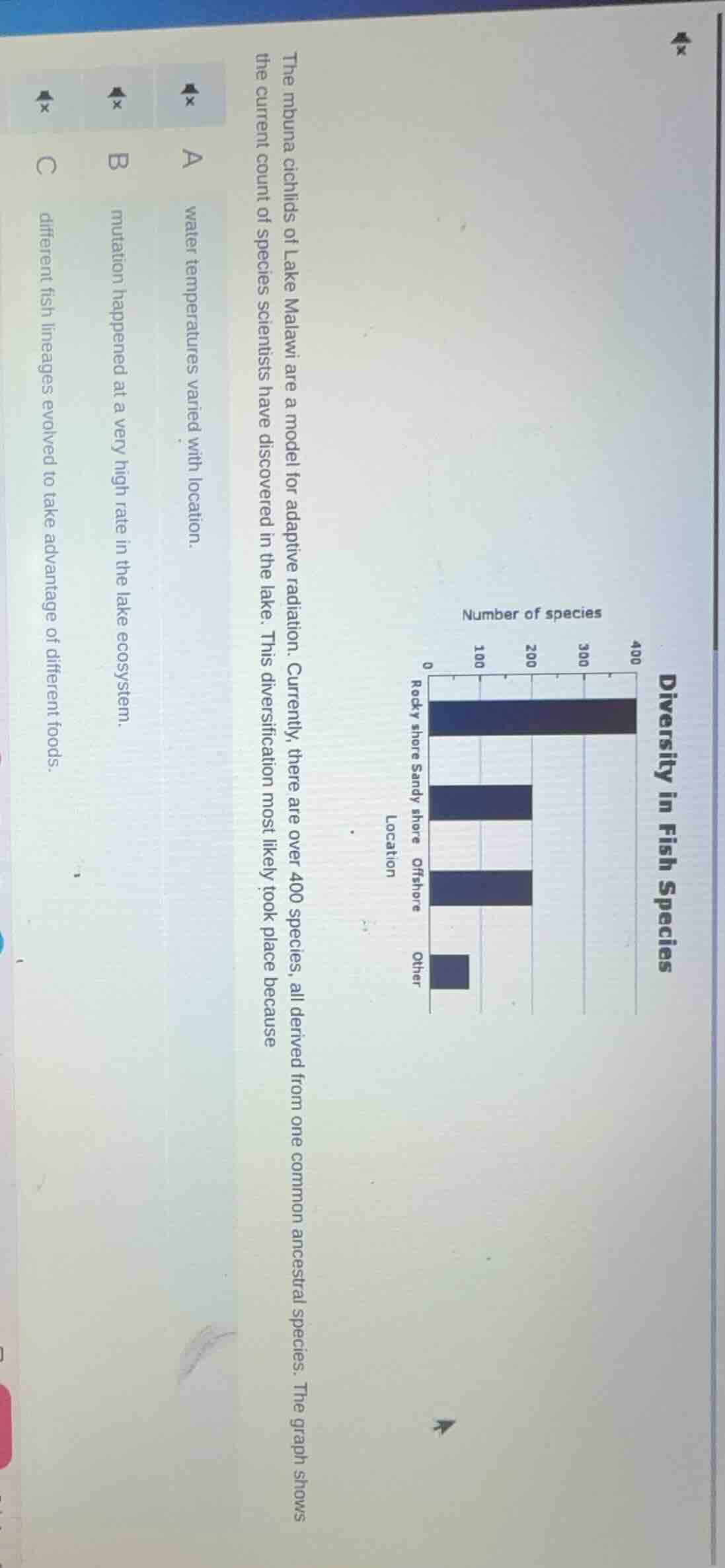
the mbuna cichlids of lake malawi are a model for adaptive radiation. currently, there are over 400 species, all derived from one common ancestral species. the graph shows the current count of species scientists have discovered in the lake. this diversification most likely took place because
a water temperatures varied with location.
b mutation happened at a very high rate in the lake ecosystem.
c different fish lineages evolved to take advantage of different foods.
To determine the reason for adaptive radiation in mbuna cichlids, we analyze each option:
- Option A: Water temperature variation with location doesn't directly explain how 400+ species evolved from one ancestor to utilize different ecological niches (like food sources) shown in the graph.
- Option B: A high mutation rate alone doesn't ensure diversification into species that exploit different resources; it needs a selective pressure related to the ecosystem.
- Option C: The graph shows different species counts across locations (rocky shore, sandy shore, offshore), implying different fish lineages evolved to use different foods (ecological niches) in the lake ecosystem. This fits adaptive radiation, where a common ancestor diversifies to exploit various resources.

Snap & solve any problem in the app
Get step-by-step solutions on Sovi AI
Photo-based solutions with guided steps
Explore more problems and detailed explanations
C. different fish lineages evolved to take advantage of different foods.