QUESTION IMAGE
Question
mental health and us
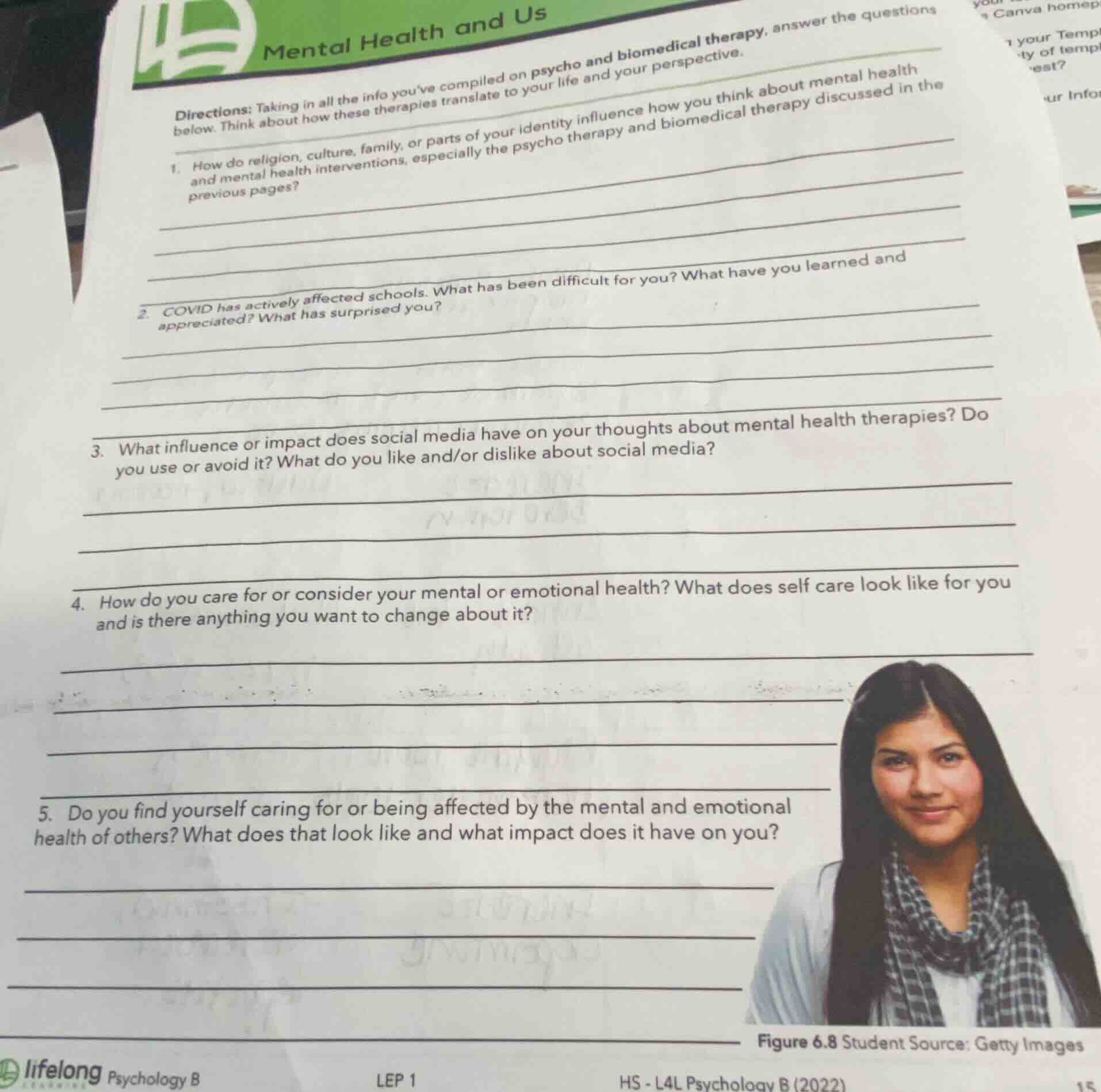
directions: taking in all the info you’ve compiled on psycho and biomedical therapy, answer the questions below. think about how these therapies translate to your life and your perspective.
- how do religion, culture, family, or parts of your identity influence how you think about mental health and mental health interventions, especially the psycho therapy and biomedical therapy discussed in the previous pages?
- covid has actively affected schools. what has been difficult for you? what have you learned and appreciated? what has surprised you?
- what influence or impact does social media have on your thoughts about mental health therapies? do you use or avoid it? what do you like and/or dislike about social media?
- how do you care for or consider your mental or emotional health? what does self care look like for you and is there anything you want to change about it?
- do you find yourself caring for or being affected by the mental and emotional health of others? what does that look like and what impact does it have on you?
figure 6.8 student source: getty images
lifelong psychology b lep 1 hs - l4l psychology b (2022)
These questions are related to mental health, personal experiences, and the influence of various factors on mental health. Since they are part of a Psychology B course (as seen from the bottom of the page), the subfield here is Psychology (under Social Science). To answer these, we can use the Answer - Explanation Format for each sub - question:
Sub - question 1
Religion can provide moral frameworks and community support that may shape one's view of mental health, like seeing it as a spiritual struggle or a call for communal care. Culture influences norms around mental health, e.g., some cultures stigmatize mental illness while others have traditional healing practices. Family can impact mental health through upbringing, support systems, or intergenerational patterns. Identity aspects like gender or ethnicity can affect access to mental health resources and self - perception. Psychotherapy and biomedical therapy can be influenced by these factors; for example, a culture that values family may prefer family - involved therapy, and religious beliefs may affect acceptance of biomedical treatments like medication.
Difficulties during COVID in schools could include remote learning challenges (like tech issues, isolation), disrupted routines, and anxiety about health. Learned lessons could be resilience, adaptability, and the importance of connection. Appreciated aspects might be new tech skills or family time. Surprises could be how quickly education adapted or the long - term mental health impacts.
Social media can spread mental health information (good or bad), create comparison culture (impacting self - esteem), or offer support communities. Use/avoid: Some use for connection, others avoid due to negativity. Likes: Community, info; dislikes: comparison, misinformation.

Snap & solve any problem in the app
Get step-by-step solutions on Sovi AI
Photo-based solutions with guided steps
Explore more problems and detailed explanations
Religion, culture, family, and identity influence mental health and therapies by shaping beliefs, support systems, and treatment acceptance. E.g., religious beliefs may view mental health as spiritual, culture as norms, family as support, and identity as resource access. Psychotherapy may be family - centered in family - valued cultures, and biomedical therapy acceptance may be religiously influenced.