QUESTION IMAGE
Question
microscopic structure of skin appendages
activity 8
examining hair structures on a skin slide
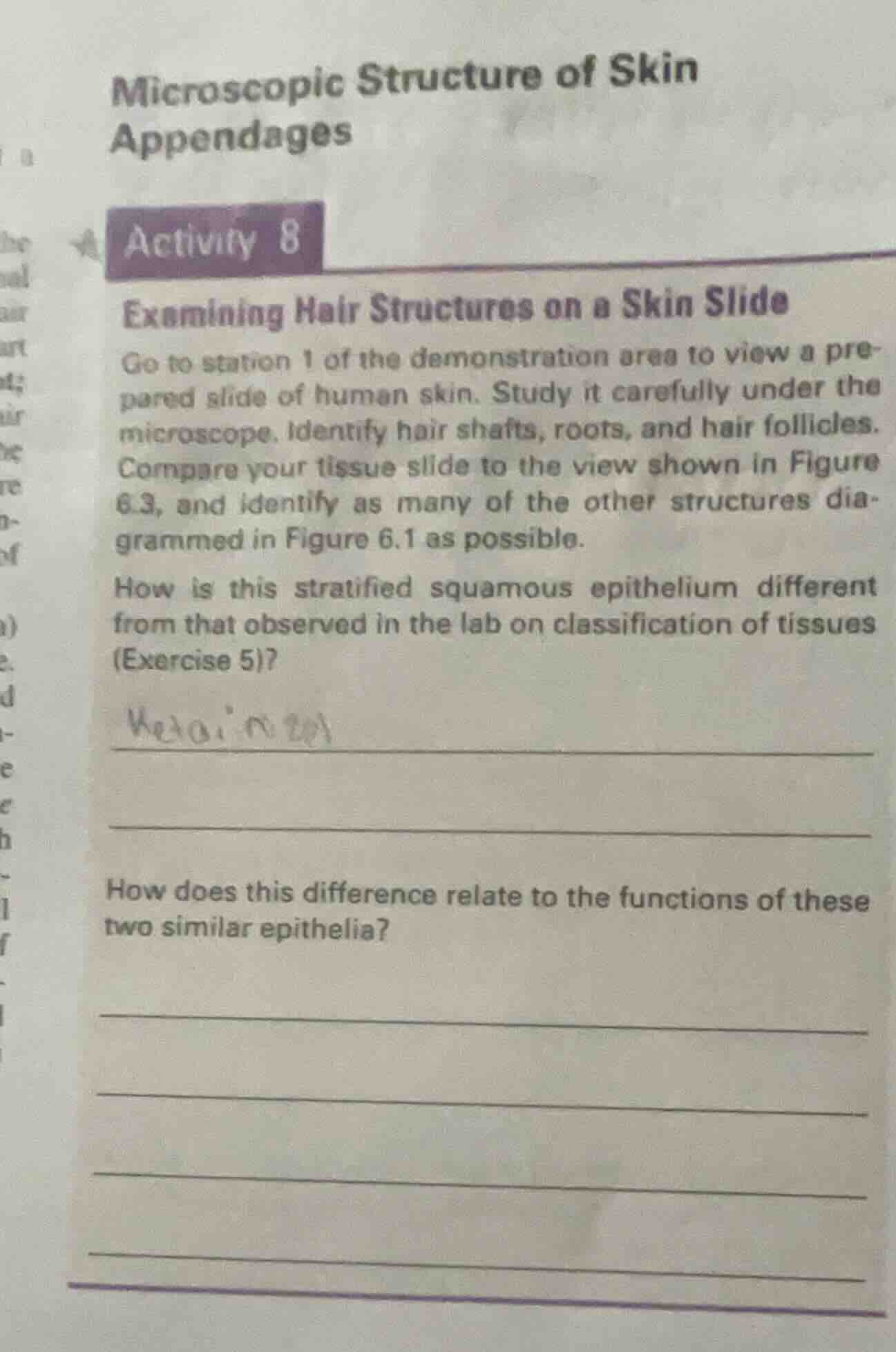
go to station 1 of the demonstration area to view a pre-pared slide of human skin. study it carefully under the microscope. identify hair shafts, roots, and hair follicles. compare your tissue slide to the view shown in figure 6.3, and identify as many of the other structures dia-grammed in figure 6.1 as possible.
how is this stratified squamous epithelium different from that observed in the lab on classification of tissues (exercise 5)?
how does this difference relate to the functions of these two similar epithelia?
- For the first question: The stratified squamous epithelium of skin (epidermis) is keratinized—its top layers are composed of dead, flattened cells filled with the tough protein keratin, which creates a protective, waterproof barrier. The stratified squamous epithelium observed in basic tissue classification (like that lining the oral cavity or esophagus) is non-keratinized; its surface cells are living, moist, and lack keratin.
- For the second question: The keratinized skin epithelium's tough, dead outer layer enables it to resist mechanical damage, prevent water loss, and block pathogens, matching the skin's role as a protective, waterproof barrier. Non-keratinized stratified squamous epithelium remains moist with living surface cells, allowing it to withstand friction while maintaining a permeable, moist lining for tissues like the oral cavity that need to interact with food, saliva, and other substances without drying out.

Snap & solve any problem in the app
Get step-by-step solutions on Sovi AI
Photo-based solutions with guided steps
Explore more problems and detailed explanations
- The skin's stratified squamous epithelium is keratinized (has dead, keratin-filled surface cells), while the tissue lab's example is non-keratinized (has living, moist surface cells).
- The keratinized layer of skin provides a waterproof, abrasion-resistant protective barrier for the body's exterior. Non-keratinized epithelium supports moist, friction-resistant lining of internal/open cavities (like the mouth) without blocking moisture exchange.