QUESTION IMAGE
Question
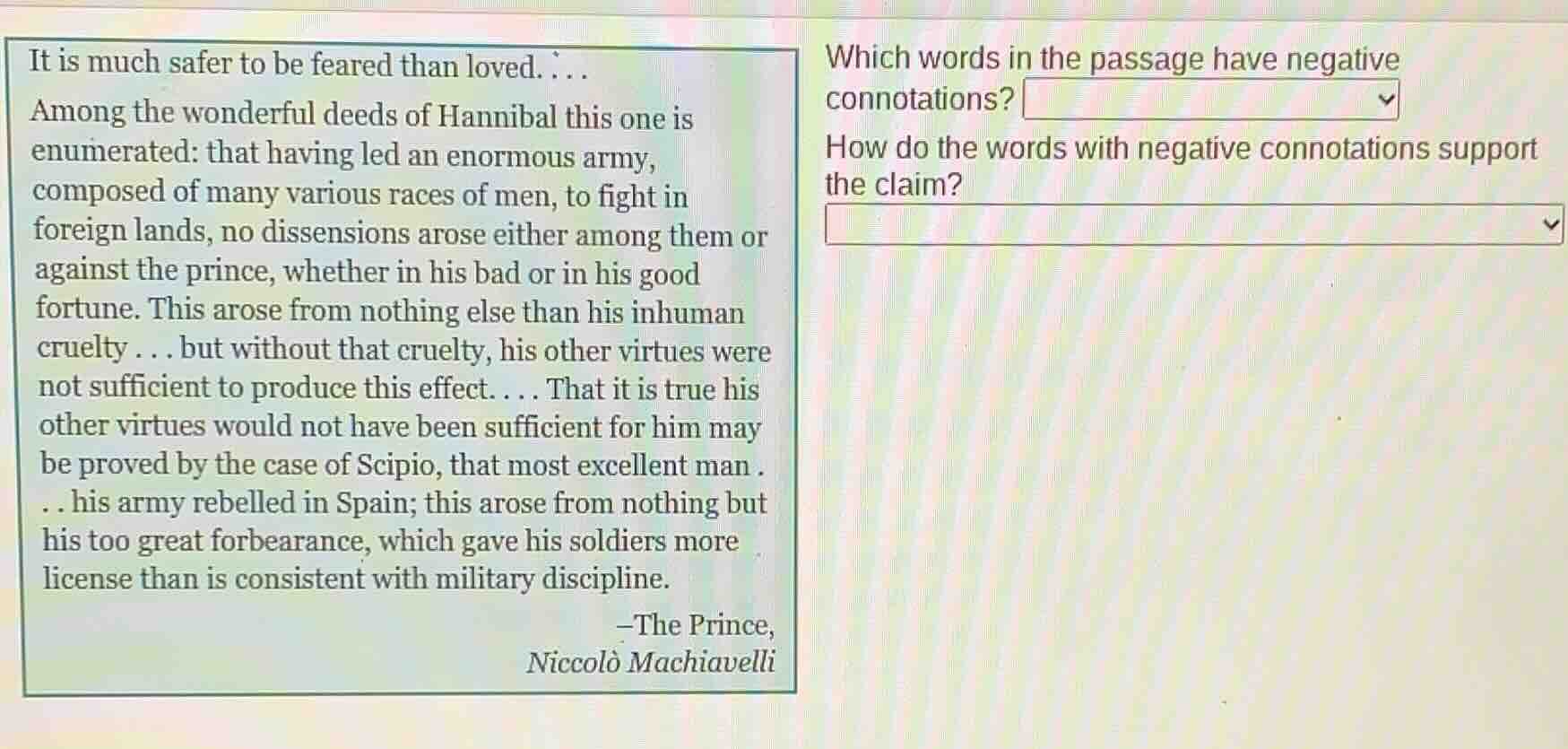
it is much safer to be feared than loved. . . .
among the wonderful deeds of hannibal this one is
enumerated: that having led an enormous army,
composed of many various races of men, to fight in
foreign lands, no dissensions arose either among them or
against the prince, whether in his bad or in his good
fortune. this arose from nothing else than his inhuman
cruelty . . . but without that cruelty, his other virtues were
not sufficient to produce this effect. . . . that it is true his
other virtues would not have been sufficient for him may
be proved by the case of scipio, that most excellent man .
. . his army rebelled in spain; this arose from nothing but
his too great forbearance, which gave his soldiers more
license than is consistent with military discipline.
-the prince,
niccolò machiavelli
which words in the passage have negative
connotations?
how do the words with negative connotations support
the claim?
- For the first question, identify words in the passage that carry negative, unfavorable implied meanings beyond their literal definitions. "Inhuman cruelty" directly describes a harsh, condemned trait; "rebelled" refers to a mutinous, insubordinate act; "license" here means excessive, unregulated freedom that violates order.
- For the second question, link these negative words to the core claim that being feared (via harshness) is safer than being loved. Hannibal's "inhuman cruelty" is framed as the necessary tool to prevent dissent, while Scipio's leniency led to his army's "rebellion" from too much "license"—this contrast proves that kindness/leniency fails to maintain control, while feared cruelty sustains order.

Snap & solve any problem in the app
Get step-by-step solutions on Sovi AI
Photo-based solutions with guided steps
Explore more problems and detailed explanations
- Words with negative connotations: inhuman cruelty, rebelled, license
- The negative words support the claim by contrasting Hannibal's "inhuman cruelty" (which prevented dissent and kept his army unified) with Scipio's leniency that led to his army's "rebellion" from excessive "license". This contrast demonstrates that leniency (associated with being loved) leads to disorder, while feared cruelty ensures control, proving it is safer to be feared.