QUESTION IMAGE
Question
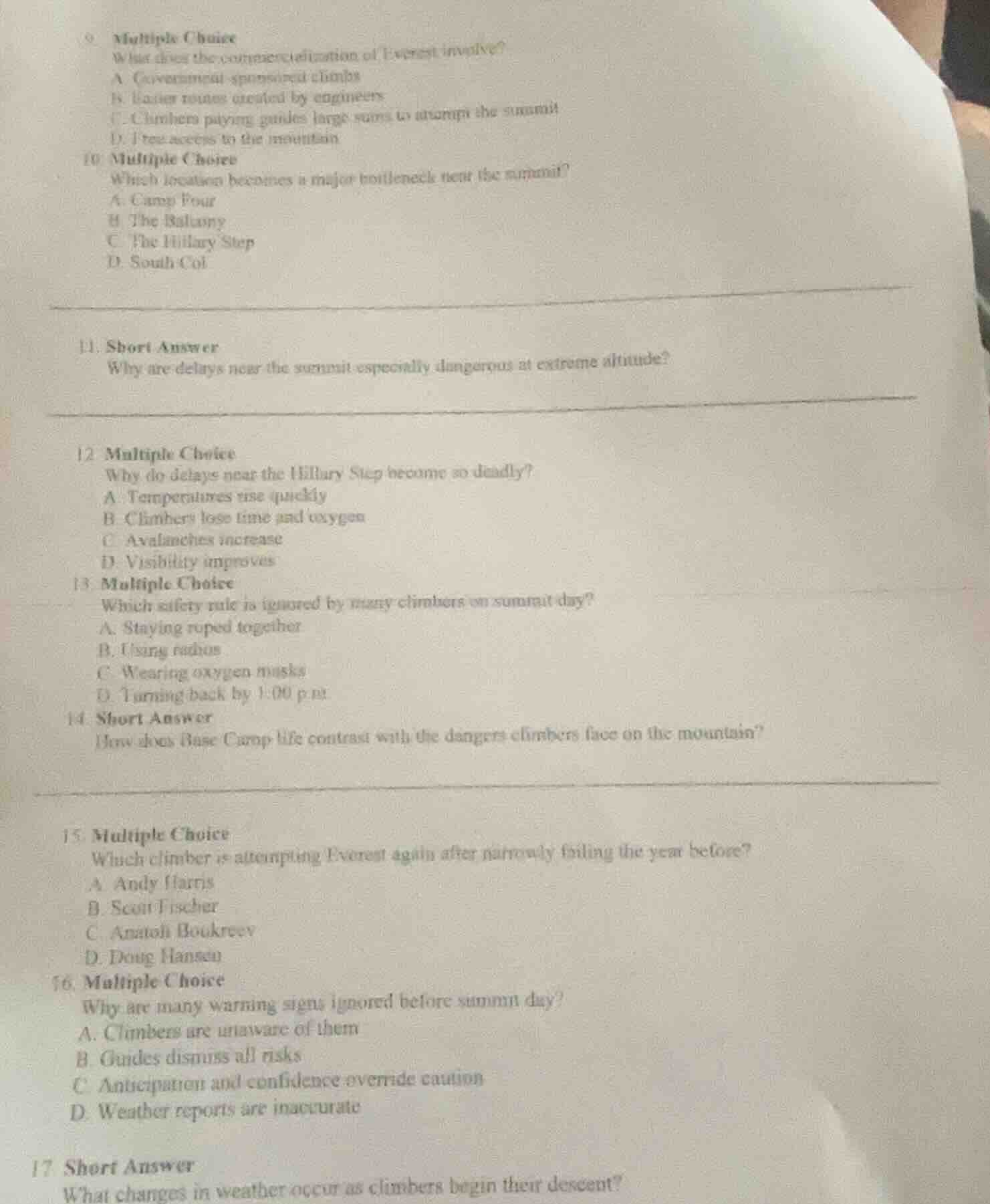
9 multiple choice
what does the commercialization of everest involve?
a. government - sponsored climbs
b. easier routes created by engineers
c. climbers paying guides large sums to attempt the summit
d. free access to the mountain
10 multiple choice
which location becomes a major bottleneck near the summit?
a. camp four
b. the balcony
c. the hillary step
d. south col
11 short answer
why are delays near the summit especially dangerous at extreme altitude?
12 multiple choice
why do delays near the hillary step become so deadly?
a. temperatures rise quickly
b. climbers lose time and oxygen
c. avalanches increase
d. visibility improves
13 multiple choice
which safety rule is ignored by many climbers on summit day?
a. staying roped together
b. using radios
c. wearing oxygen masks
d. turning back by 1:00 p.m.
14 short answer
how does base camp life contrast with the dangers climbers face on the mountain?
15 multiple choice
which climber is attempting everest again after narrowly failing the year before?
a. andy harris
b. scott fischer
c. anatoli boukreev
d. doug hansen
16 multiple choice
why are many warning signs ignored before summit day?
a. climbers are unaware of them
b. guides dismiss all risks
c. anticipation and confidence override caution
d. weather reports are inaccurate
17 short answer
what changes in weather occur as climbers begin their descent?
- Commercialization of Everest involves paid guided expeditions, where climbers pay large sums to guides for summit attempts.
- The Hillary Step is a narrow, steep section near the summit that creates major bottlenecks as climbers queue to pass.
- At extreme altitude, oxygen is extremely scarce, and the body cannot function long without sufficient oxygen; delays exhaust oxygen supplies and lead to hypothermia or altitude sickness.
- Delays at the Hillary Step mean climbers spend more time at extreme altitude, depleting their limited oxygen supplies and exposing them to deadly conditions.
- The "turn back by 1:00 p.m." rule is a critical safety guideline to ensure climbers have enough time and oxygen to descend, but many ignore it to reach the summit.
- Base Camp has relatively sheltered, communal living with access to supplies, medical support, and rest, while higher mountain sections involve extreme cold, low oxygen, and constant risk of accidents.
- Doug Hansen attempted Everest again after failing to reach the summit the previous year.
- Climbers' intense anticipation and overconfidence in their ability to reach the summit often make them dismiss or ignore pre-summit warning signs.
- As climbers descend, temperatures can rise slightly, but wind speeds often increase, and sudden storms or whiteouts can still occur unexpectedly.

Snap & solve any problem in the app
Get step-by-step solutions on Sovi AI
Photo-based solutions with guided steps
Explore more problems and detailed explanations
- C. Climbers paying guides large sums to attempt the summit
- C. The Hillary Step
- Extreme altitude has minimal oxygen; delays deplete oxygen stores, cause hypothermia, and worsen altitude sickness, leading to organ failure or death.
- B. Climbers lose time and oxygen
- D. Turning back by 1:00 p.m
- Base Camp is a relatively safe, communal space with access to food, shelter, and medical care, while the mountain above has extreme cold, near-zero oxygen, and constant risks of avalanches, falls, and altitude-related illness.
- D. Doug Hansen
- C. Anticipation and confidence override caution
- Temperatures may rise marginally, but strong winds often pick up, and sudden, severe storms (including whiteouts) can develop rapidly, creating dangerous descent conditions.