QUESTION IMAGE
Question
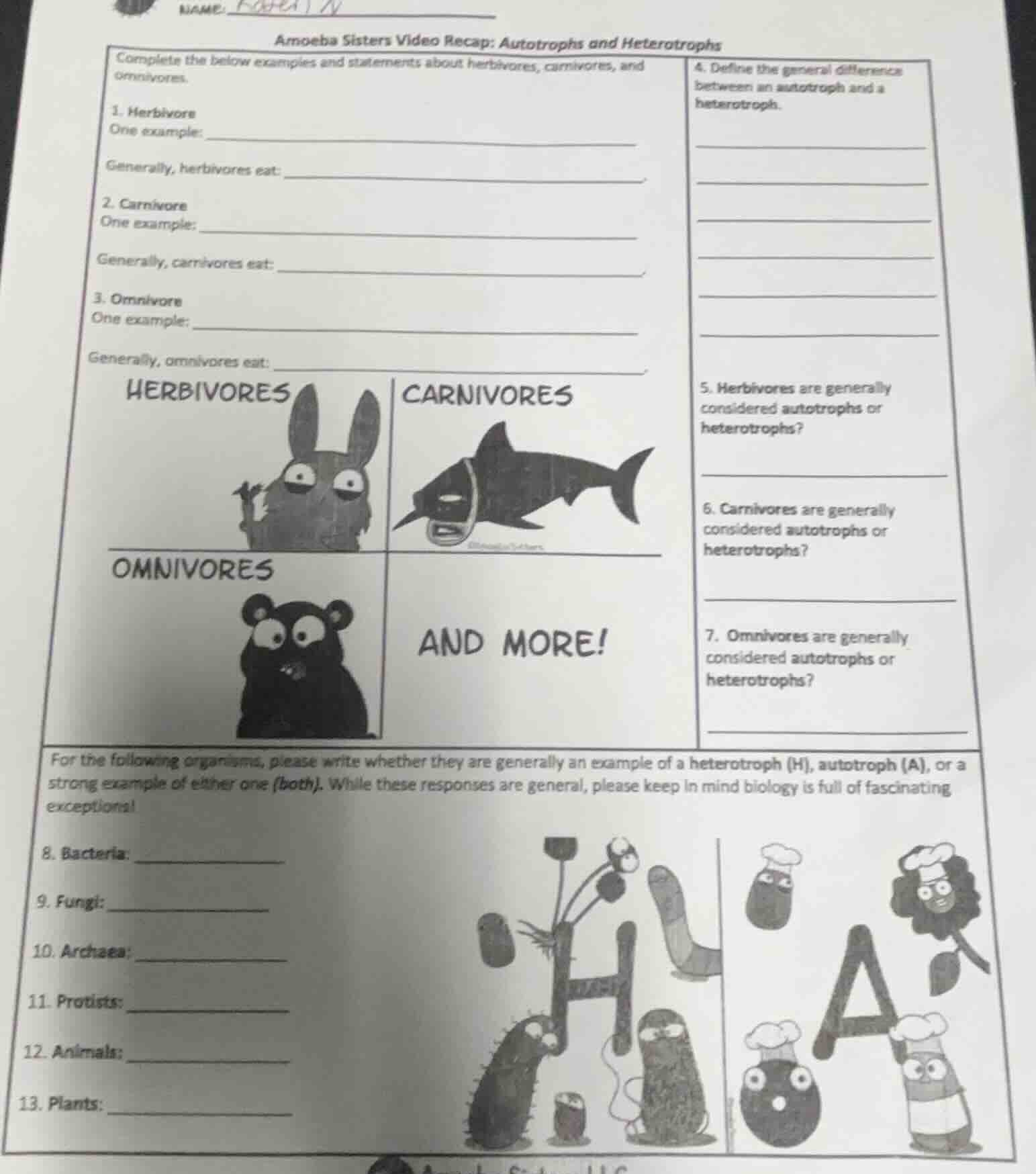
name:amoeba sisters video recap: autotrophs and heterotrophscomplete the below examples and statements about herbivores, carnivores, and omnivores.1. herbivoreone example:generally, herbivores eat:2. carnivoreone example:generally, carnivores eat:3. omnivoreone example:generally, omnivores eat:herbivorescarnivoresomnivoresand more!4. define the general difference between an autotroph and a heterotroph.5. herbivores are generally considered autotrophs or heterotrophs?6. carnivores are generally considered autotrophs or heterotrophs?7. omnivores are generally considered autotrophs or heterotrophs?for the following organisms, please write whether they are generally an example of a heterotroph (h), autotroph (a), or a strong example of either one (both). while these responses are general, please keep in mind biology is full of fascinating exceptions!8. bacteria:9. fungi:10. archaea:11. protists:12. animals:13. plants:
Step1: Answer herbivore questions
- One example: Rabbit
Generally, herbivores eat: Plant-based materials (leaves, grass, etc.)
Step2: Answer carnivore questions
- One example: Shark
Generally, carnivores eat: Other animals
Step3: Answer omnivore questions
- One example: Bear
Generally, omnivores eat: Both plants and animals
Step4: Define autotroph/heterotroph difference
- Autotrophs produce their own organic food (via processes like photosynthesis or chemosynthesis) using inorganic substances, while heterotrophs cannot make their own food and must consume other organisms (or organic matter) to obtain energy and nutrients.
Step5: Classify herbivore trophic type
- Heterotrophs
Step6: Classify carnivore trophic type
- Heterotrophs
Step7: Classify omnivore trophic type
- Heterotrophs
Step8: Classify bacteria trophic type
- Both
Step9: Classify fungi trophic type
- H (Heterotroph)
Step10: Classify archaea trophic type
- Both
Step11: Classify protists trophic type
- Both
Step12: Classify animals trophic type
- H (Heterotroph)
Step13: Classify plants trophic type
- A (Autotroph)

Snap & solve any problem in the app
Get step-by-step solutions on Sovi AI
Photo-based solutions with guided steps
Explore more problems and detailed explanations
- One example: Rabbit; Generally, herbivores eat: Plant-based materials (leaves, grass, etc.)
- One example: Shark; Generally, carnivores eat: Other animals
- One example: Bear; Generally, omnivores eat: Both plants and animals
- Autotrophs produce their own organic food from inorganic sources, while heterotrophs must consume other organisms/organic matter for food.
- Heterotrophs
- Heterotrophs
- Heterotrophs
- Both
- H (Heterotroph)
- Both
- Both
- H (Heterotroph)
- A (Autotroph)