QUESTION IMAGE
Question
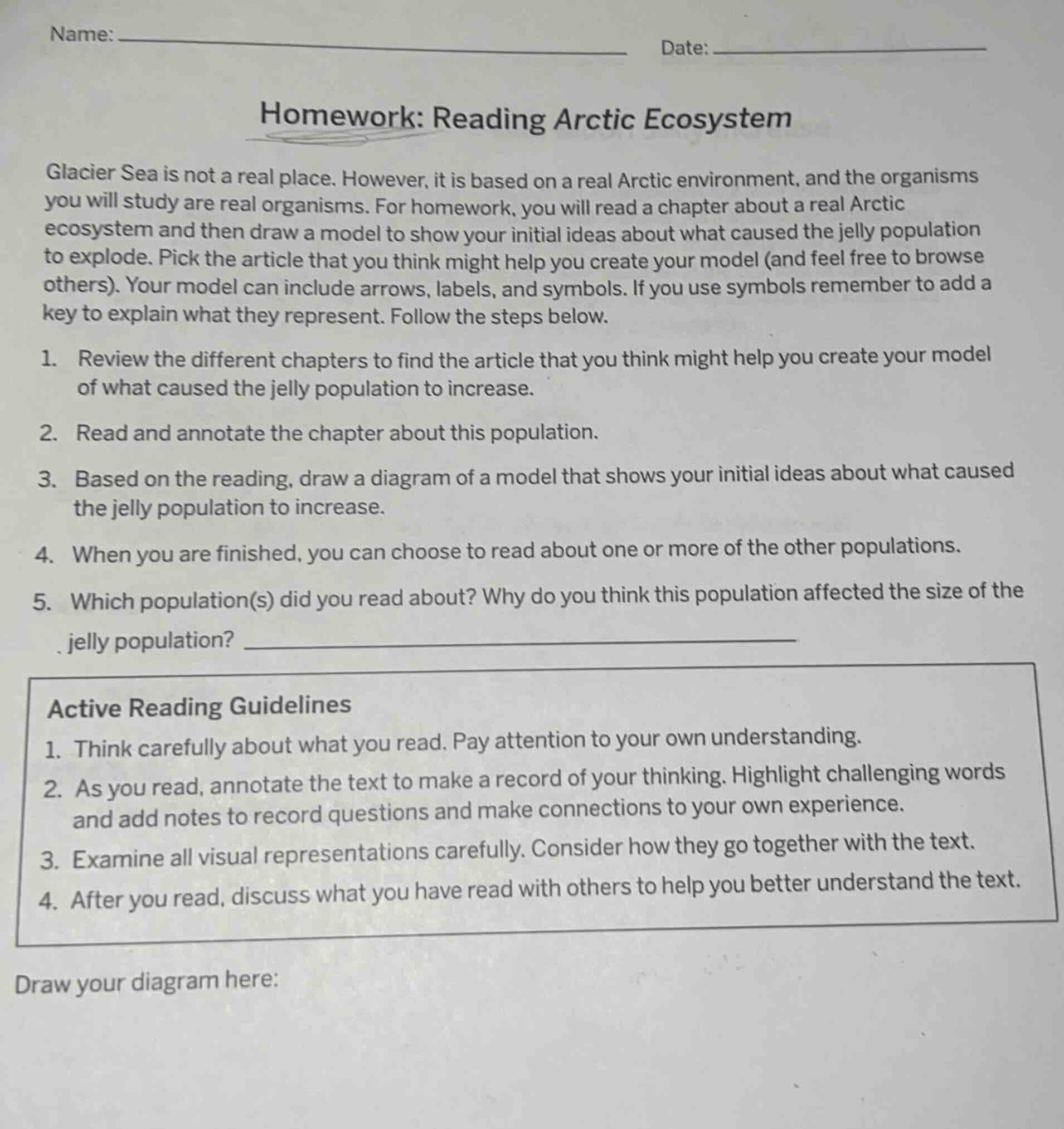
name: _____________________________ date: _____________________ homework: reading arctic ecosystem glacier sea is not a real place. however, it is based on a real arctic environment, and the organisms you will study are real organisms. for homework, you will read a chapter about a real arctic ecosystem and then draw a model to show your initial ideas about what caused the jelly population to explode. pick the article that you think might help you create your model (and feel free to browse others). your model can include arrows, labels, and symbols. if you use symbols remember to add a key to explain what they represent. follow the steps below. 1. review the different chapters to find the article that you think might help you create your model of what caused the jelly population to increase. 2. read and annotate the chapter about this population. 3. based on the reading, draw a diagram of a model that shows your initial ideas about what caused the jelly population to increase. 4. when you are finished, you can choose to read about one or more of the other populations. 5. which population(s) did you read about? why do you think this population affected the size of the jelly population? _____________________________ active reading guidelines 1. think carefully about what you read. pay attention to your own understanding. 2. as you read, annotate the text to make a record of your thinking. highlight challenging words and add notes to record questions and make connections to your own experience. 3. examine all visual representations carefully. consider how they go together with the text. 4. after you read, discuss what you have read with others to help you better understand the text. draw your diagram here:
To answer question 5, first, assume we read about the zooplankton population (a common prey or competitor - related population in Arctic ecosystems). Zooplankton and jellyfish (jellies) might have a predator - prey or competitive relationship. If zooplankton is a food source for jellyfish, an increase in zooplankton (due to factors like increased phytoplankton, which is their food, from warmer Arctic waters or nutrient changes) could lead to more food for jellyfish, allowing them to reproduce more and their population to explode. Or if zooplankton is a competitor for resources (like food or space), a decrease in zooplankton could free up resources for jellyfish, leading to their population increase. So we can say we read about the zooplankton population. The zooplankton population affects the jelly population because jellyfish may feed on zooplankton; if zooplankton numbers increase (e.g., due to more phytoplankton from Arctic environmental changes like melting ice bringing nutrients), jellyfish have more food, so their population can grow. Or if zooplankton declines (due to predation or other factors), jellyfish might face less competition for resources, allowing their population to explode.

Snap & solve any problem in the app
Get step-by-step solutions on Sovi AI
Photo-based solutions with guided steps
Explore more problems and detailed explanations
I read about the zooplankton population. The zooplankton population affects the size of the jelly population because jellyfish often feed on zooplankton. If the zooplankton population increases (for example, due to an increase in their food source like phytoplankton from Arctic environmental changes such as melting ice introducing more nutrients into the water), there is more food available for jellyfish. This additional food allows jellyfish to have higher survival and reproduction rates, leading to an explosion in their population. (Or if zooplankton declines, jellyfish may face less competition for resources like food or space, enabling their population to grow.)