QUESTION IMAGE
Question
name:
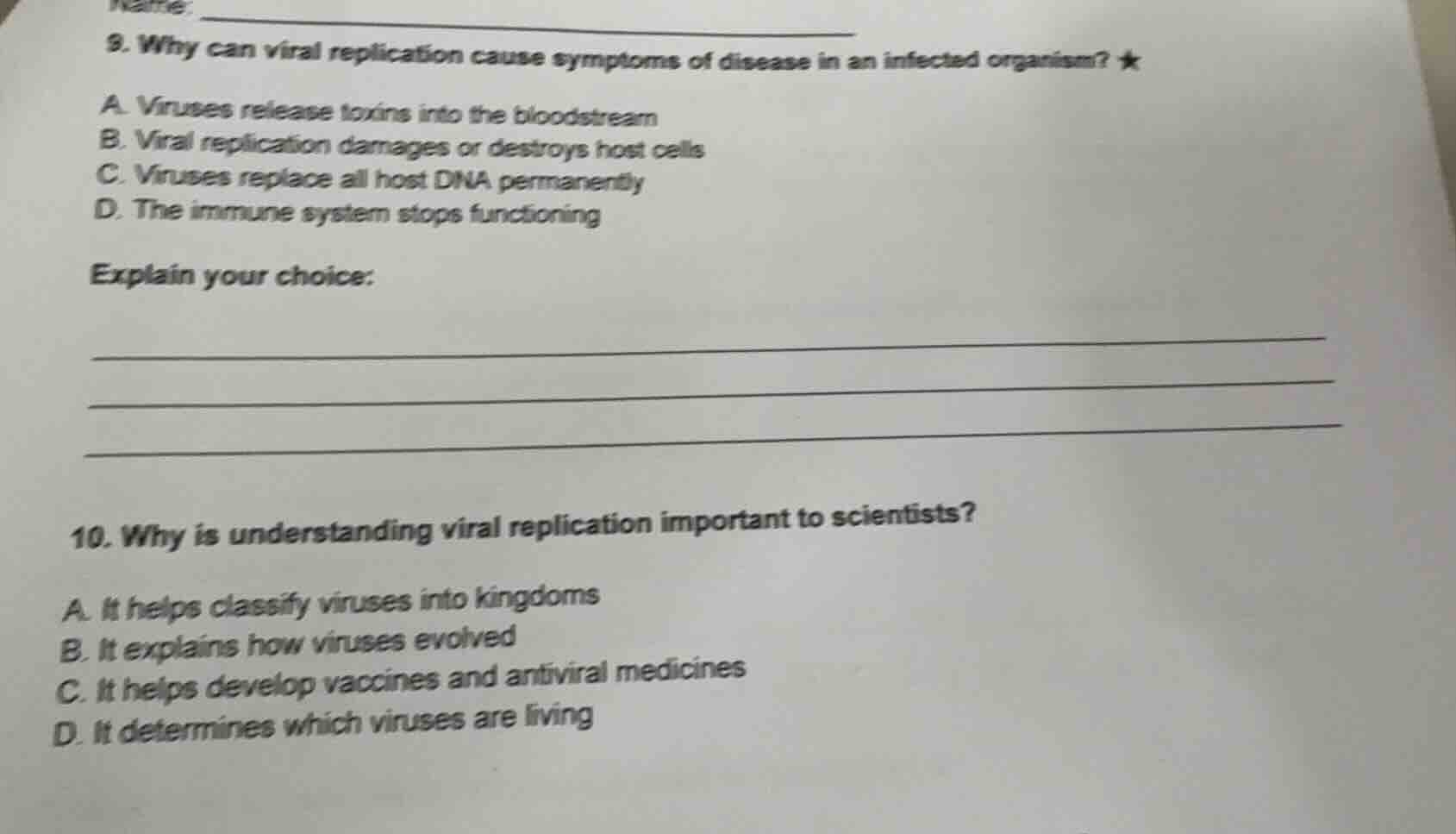
- why can viral replication cause symptoms of disease in an infected organism?
a. viruses release toxins into the bloodstream
b. viral replication damages or destroys host cells
c. viruses replace all host dna permanently
d. the immune system stops functioning
explain your choice:
- why is understanding viral replication important to scientists?
a. it helps classify viruses into kingdoms
b. it explains how viruses evolved
c. it helps develop vaccines and antiviral medicines
d. it determines which viruses are living
Brief Explanations
For Question 9:
- Option A is incorrect because viruses do not produce or release toxins; this is a trait of some bacteria.
- Option B is correct because viruses rely on host cells to replicate. When new viral particles exit the host cell, they often rupture and destroy the cell, or cause ongoing damage to cellular function. This widespread cell damage or destruction leads to the physical symptoms of viral disease.
- Option C is incorrect because viruses do not replace all host DNA permanently; some integrate small segments of their genetic material, but not total replacement.
- Option D is incorrect because viral infections typically activate the immune system, not stop it entirely (severe suppression is rare and not the primary cause of general viral symptoms).
For Question 10:
- Option A is incorrect because viruses are not classified into biological kingdoms, as they are not considered living organisms under traditional classification systems.
- Option B is incorrect while replication can offer clues to evolution, it is not the primary reason scientists study viral replication.
- Option C is correct because targeting the unique steps of viral replication (that do not occur in host cells) allows scientists to develop vaccines (which trigger immune responses to viral components) and antiviral drugs (which block replication steps to stop viral spread).
- Option D is incorrect because the question of whether viruses are living is a philosophical/definitional debate, not a practical application of studying replication.

Snap & solve any problem in the app
Get step-by-step solutions on Sovi AI
Photo-based solutions with guided steps
Explore more problems and detailed explanations
- B. Viral replication damages or destroys host cells
- C. It helps develop vaccines and antiviral medicines