QUESTION IMAGE
Question
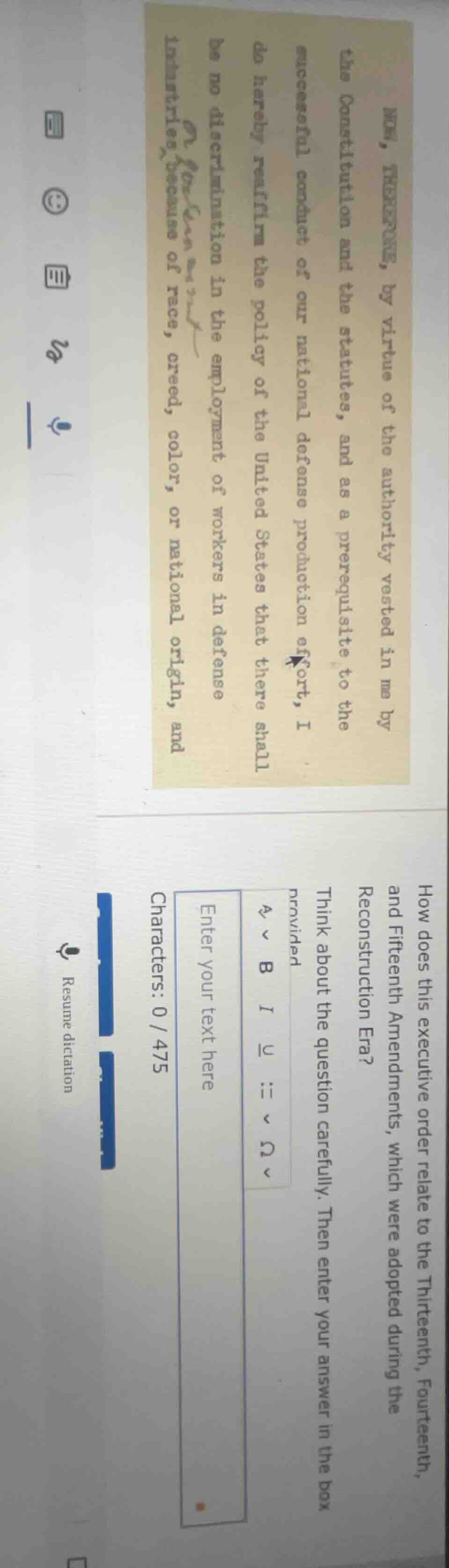
now, therefore, by virtue of the authority vested in me by the constitution and the statutes, and as a prerequisite to the successful conduct of our national defense production effort, i do hereby reaffirm the policy of the united states that there shall be no discrimination in the employment of workers in defense industries because of race, creed, color, or national origin, and
how does this executive order relate to the thirteenth, fourteenth, and fifteenth amendments, which were adopted during the reconstruction era?
think about the question carefully. then enter your answer in the box provided
enter your text here
characters: 0 / 475
This executive order (Executive Order 8802, 1941) builds on the Reconstruction Amendments' foundational anti-discrimination principles:
- The 13th Amendment ended chattel slavery, creating the basis for equal labor access.
- The 14th Amendment established equal protection under the law, which this order extends to employment in defense industries.
- The 15th Amendment prohibited voting discrimination based on race, laying groundwork for broader anti-racial discrimination policies.
The order operationalizes the amendments' equal treatment goals by banning employment discrimination in defense work, advancing the Reconstruction-era push for racial equity in public and economic life.

Snap & solve any problem in the app
Get step-by-step solutions on Sovi AI
Photo-based solutions with guided steps
Explore more problems and detailed explanations
This executive order (Executive Order 8802) is a later extension of the anti-discrimination and equality principles established by the Reconstruction Amendments:
- The 13th Amendment abolished slavery, creating the framework for Black Americans to seek formal employment without forced labor constraints.
- The 14th Amendment's Equal Protection Clause is directly reflected in the order's ban on employment discrimination, as it enshrines the legal idea that all citizens deserve equal access to economic opportunities.
- The 15th Amendment's focus on eliminating racial barriers to civic participation paved the way for broader policies like this order, which targeted racial, creed, and national origin discrimination in defense industry employment, continuing the Reconstruction-era push for racial equity beyond voting rights into economic spheres.