QUESTION IMAGE
Question
nursing
nursing assessment & notes
12/2 1600
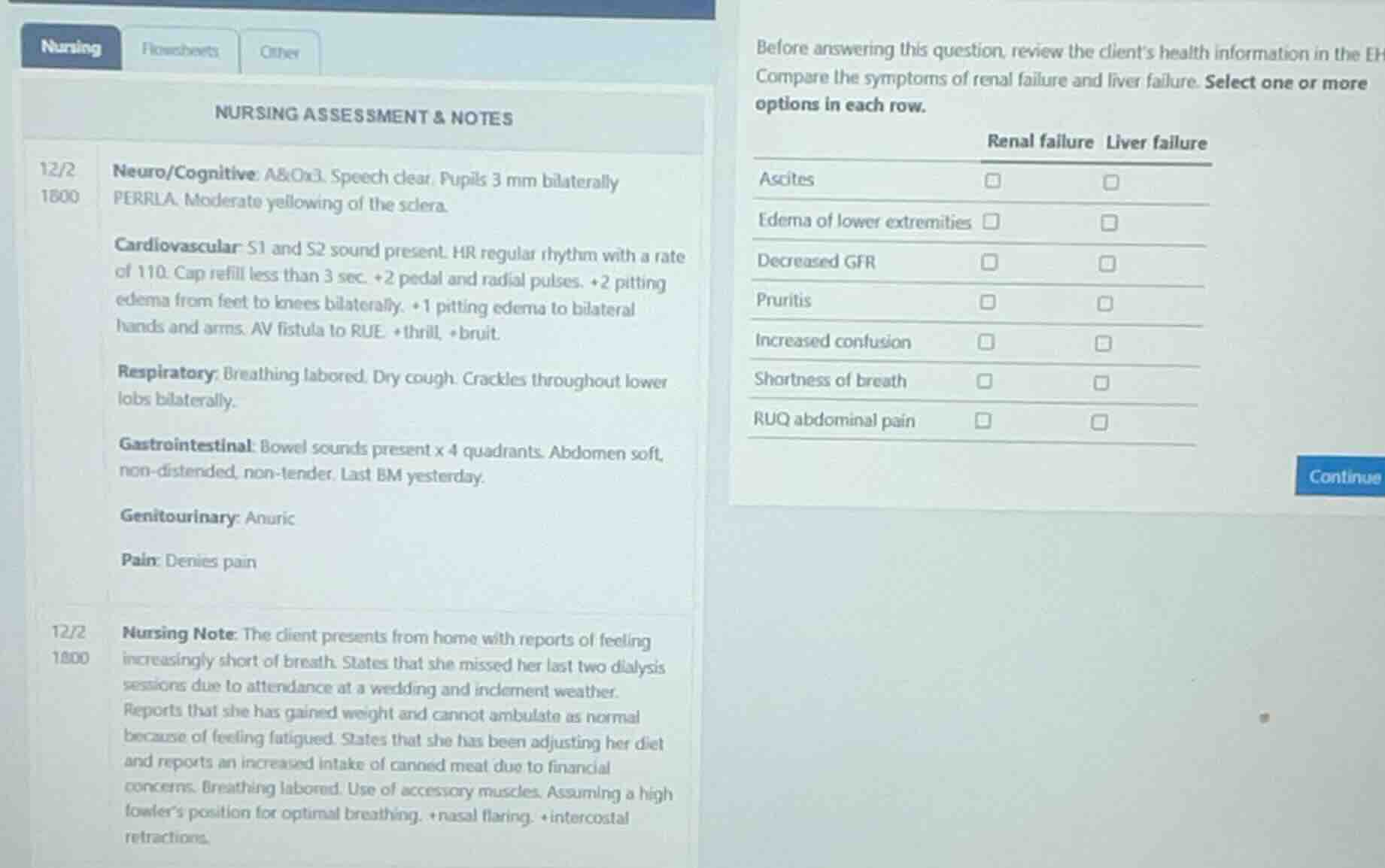
neuro/cognitive: a&ox3. speech clear. pupils 3 mm bilaterally perrla. moderate yellowing of the sclera.
cardiovascular: s1 and s2 sound present. hr regular rhythm with a rate of 110. cap refill less than 3 sec. +2 pedal and radial pulses. +2 pitting edema from feet to knees bilaterally. +1 pitting edema to bilateral hands and arms. av fistula to rue. +thrill, +bruit.
respiratory: breathing labored. dry cough. crackles throughout lower lobes bilaterally.
gastrointestinal: bowel sounds present x 4 quadrants. abdomen soft, non - distended, non - tender. last bm yesterday.
genitourinary: anuric
pain: denies pain
12/2 1800
nursing note: the client presents from home with reports of feeling increasingly short of breath. states that she missed her last two dialysis sessions due to attendance at a wedding and inclement weather. reports that she has gained weight and cannot ambulate as normal because of feeling fatigued. states that she has been adjusting her diet and reports an increased intake of canned meat due to financial concerns. breathing labored. use of accessory muscles. assuming a high fowler’s position for optimal breathing. +nasal flaring. +intercostal retractions.
before answering this question, review the client’s health information in the eh
compare the symptoms of renal failure and liver failure. select one or more options in each row.
\trenal failure liver failure
ascites
edema of lower extremities
decreased gfr
pruritis
increased confusion
shortness of breath
ruq abdominal pain
continue
- Ascites: Fluid buildup in the abdomen is a classic sign of liver failure (from portal hypertension); it can also occur in advanced renal failure, but is more strongly linked to liver dysfunction here.
- Edema of lower extremities: Fluid retention happens in both: renal failure (impaired fluid excretion) and liver failure (low albumin from reduced liver synthesis).
- Decreased GFR: Glomerular Filtration Rate (GFR) is a direct measure of kidney function, so this is exclusive to renal failure.
- Pruritis: Buildup of waste products in renal failure and bile salts in liver failure both cause itching.
- Increased confusion: Uremic toxins in renal failure and elevated ammonia in liver failure (hepatic encephalopathy) both lead to confusion.
- Shortness of breath: Fluid overload in renal failure (pulmonary edema) and ascites/pleural effusions in liver failure both cause dyspnea.
- RUQ abdominal pain: The right upper quadrant is the location of the liver, so pain here is associated with liver failure; renal failure typically causes flank pain, not RUQ pain.

Snap & solve any problem in the app
Get step-by-step solutions on Sovi AI
Photo-based solutions with guided steps
Explore more problems and detailed explanations
- Ascites: Liver failure
- Edema of lower extremities: Renal failure, Liver failure
- Decreased GFR: Renal failure
- Pruritis: Renal failure, Liver failure
- Increased confusion: Renal failure, Liver failure
- Shortness of breath: Renal failure, Liver failure
- RUQ abdominal pain: Liver failure