QUESTION IMAGE
Question
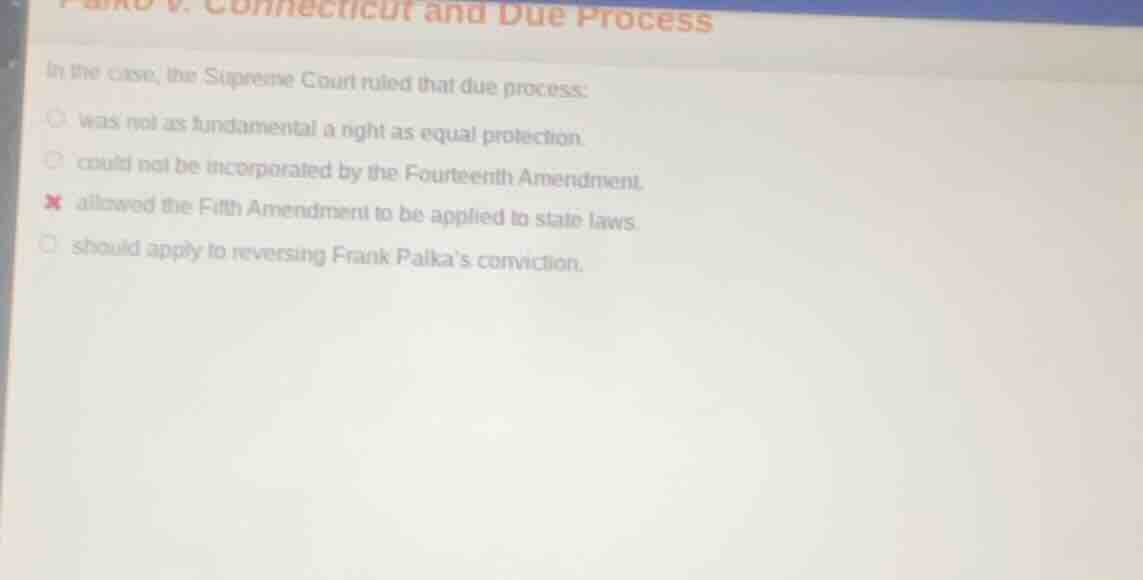
palko v. connecticut and due process
in the case, the supreme court ruled that due process:
- was not as fundamental a right as equal protection.
- could not be incorporated by the fourteenth amendment.
- allowed the fifth amendment to be applied to state laws.
- should apply to reversing frank palko’s conviction.
In Palko v. Connecticut, the Supreme Court established the selective incorporation doctrine, holding that only fundamental Fifth Amendment rights are applied to states via the 14th Amendment's due process clause. The Court ruled against Palko, meaning it did not reverse his conviction, and affirmed that some (not all) Fifth Amendment protections could be incorporated to state laws. The incorrect options: due process was not deemed less fundamental than equal protection; the Court did not say due process couldn't incorporate the 14th Amendment (it used selective incorporation); and it did not reverse Palko's conviction.

Snap & solve any problem in the app
Get step-by-step solutions on Sovi AI
Photo-based solutions with guided steps
Explore more problems and detailed explanations
☑️ allowed the Fifth Amendment to be applied to state laws.