QUESTION IMAGE
Question
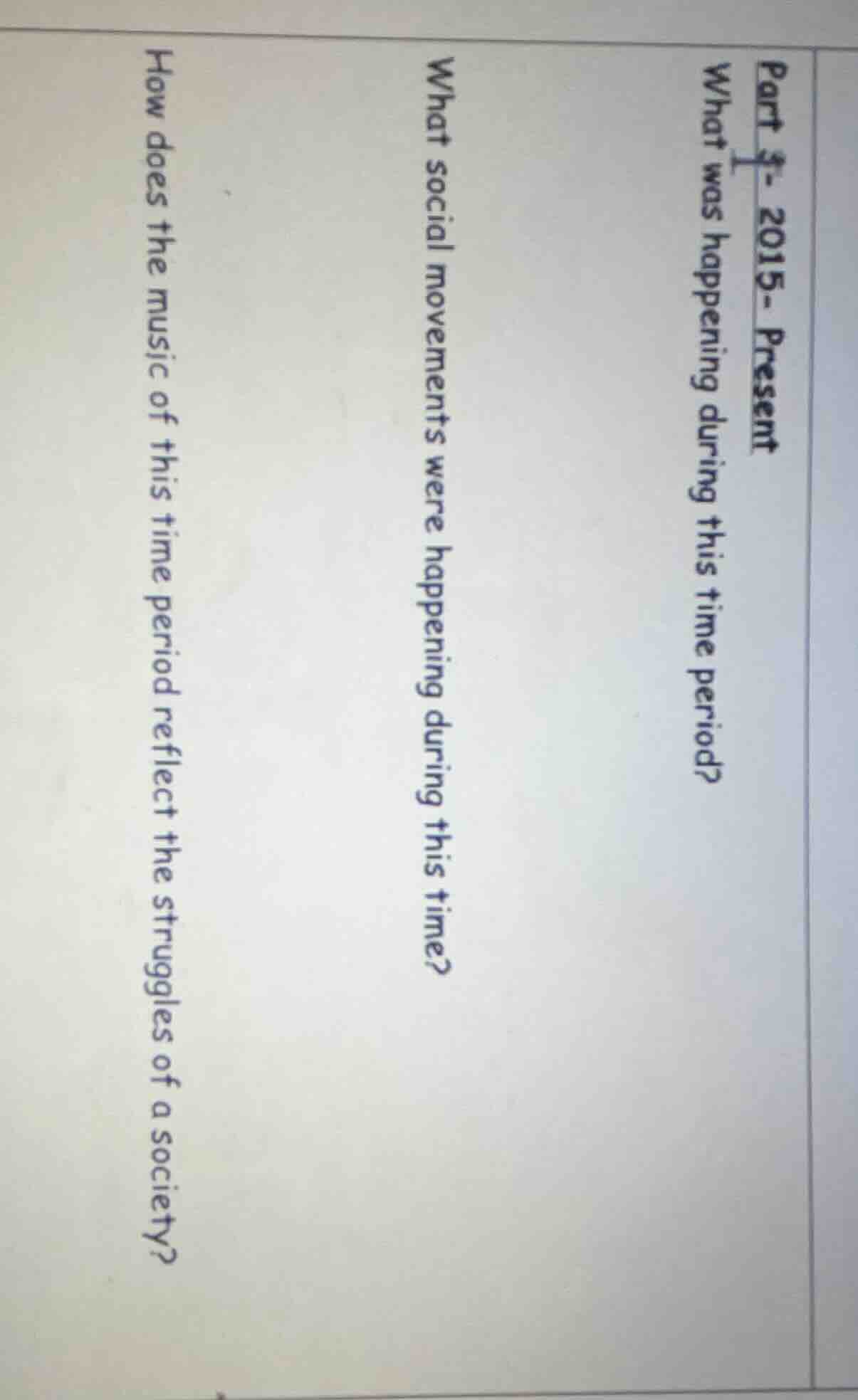
part 1- 2015- present
what was happening during this time period?
what social movements were happening during this time?
how does the music of this time period reflect the struggles of a society?
Brief Explanations
- For the first question: This era saw global political upheaval, the rise of digital culture, post-2008 economic recovery tensions, the COVID-19 pandemic (2020 onward), and growing focus on climate crisis action.
- For the second question: Key movements include Black Lives Matter (gaining global traction after 2020), climate justice movements like Fridays for Future, #MeToo (expanding globally from 2017), and LGBTQ+ rights advocacy (e.g., fights for trans rights in many nations).
- For the third question: Music featured protest anthems (e.g., songs tied to Black Lives Matter), pandemic-themed tracks reflecting isolation and resilience, climate-focused music to mobilize action, and lyrics centering marginalized identities' struggles, using streaming platforms to amplify these messages widely.

Snap & solve any problem in the app
Get step-by-step solutions on Sovi AI
Photo-based solutions with guided steps
Explore more problems and detailed explanations
- During 2015-present, major events include the global spread of the #MeToo movement (2017), the COVID-19 pandemic (2020–2023 and its ongoing impacts), escalating climate crisis events and activism, the 2020 Black Lives Matter global uprisings, and ongoing geopolitical tensions (e.g., the 2022 Russian invasion of Ukraine). Digital culture also became deeply integrated into daily life, with social media shaping discourse and community.
- Prominent social movements of 2015-present are: Black Lives Matter (global expansion post-2020), Fridays for Future (youth-led climate justice movement), #MeToo (anti-sexual harassment/assault movement), trans rights advocacy (fights for legal recognition and protection globally), and reproductive rights movements (e.g., responses to the 2022 Dobbs v. Jackson decision in the U.S.).
- The music of 2015-present reflects societal struggles in multiple ways: protest tracks (e.g., Kendrick Lamar's Alright, a rallying cry for Black Lives Matter) center racial justice; pandemic-era music (e.g., Taylor Swift's folklore/evermore) captures isolation and collective grief; climate-focused songs (e.g., Billie Eilish's All the Good Girls Go to Hell) highlight environmental anxiety; and LGBTQ+ artists (e.g., Lil Nas X) use music to challenge stigma and demand equality. Streaming platforms allow these niche, message-driven works to reach global audiences, amplifying marginalized voices.