QUESTION IMAGE
Question
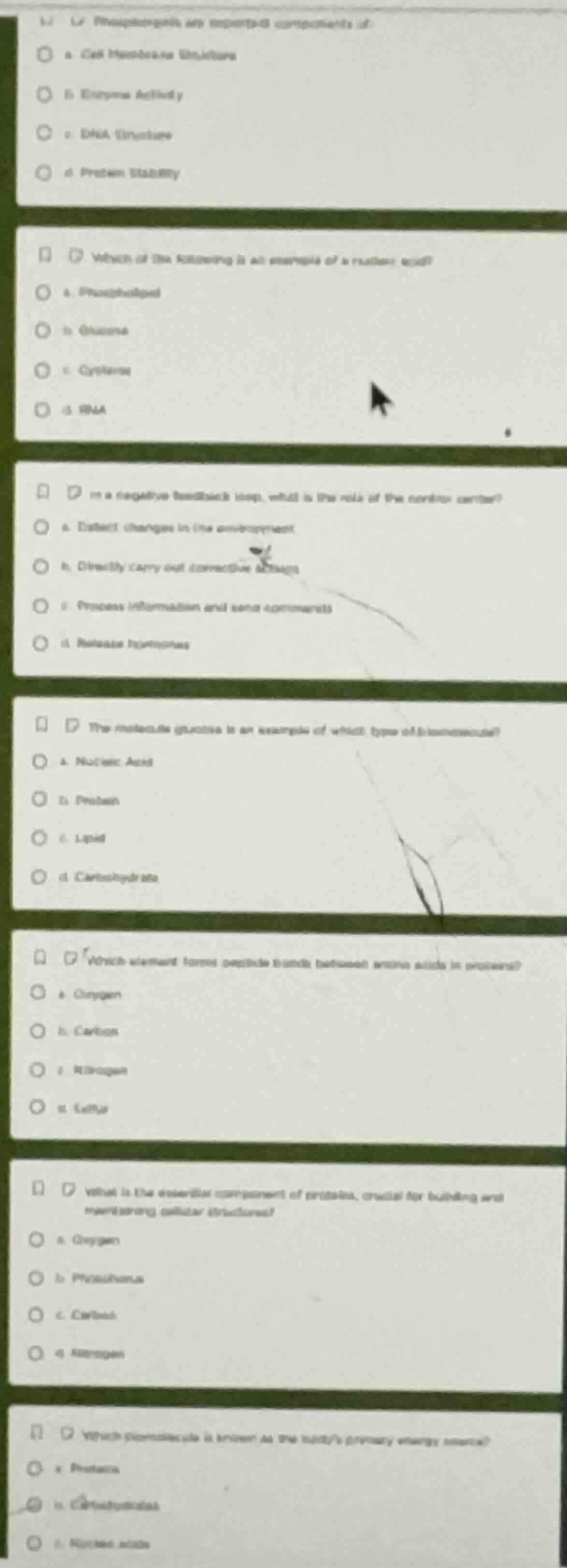
- (partially visible) phospholipids are important components of:
a. cell membrane structure
b. enzyme activity
c. dna structure
d. protein stability
- which of the following is an example of a nucleic acid?
a. phospholipid
b. glucose
c. cytosine
d. rna
- in a negative feedback loop, what is the role of the control center?
a. detect changes in the environment
b. directly carry out corrective actions
c. process information and send commands
d. release hormones
- the molecule glucose is an example of which type of biomolecule?
a. nucleic acid
b. protein
c. lipid
d. carbohydrate
- which element forms peptide bonds between amino acids in proteins?
a. oxygen
b. carbon
c. nitrogen
d. sulfur
- what is the essential component of proteins, crucial for building and repairing cellular structures?
a. oxygen
b. phosphorus
c. carbon
d. nitrogen
- which macromolecule is known as the body’s primary energy source?
a. proteins
b. carbohydrates
c. nucleic acids
Brief Explanations
- Phospholipids form the bilayer of cell membranes, making them key components of this structure.
- RNA is a single-stranded nucleic acid; the other options are not nucleic acids.
- In negative feedback, the control center processes input from receptors and sends commands to effectors.
- Glucose is a monosaccharide, a type of carbohydrate.
- Peptide bonds form between the carboxyl group (containing oxygen) of one amino acid and the amino group of another, with oxygen playing a key structural role in the bond.
- Nitrogen is a core component of amino acids (the building blocks of proteins), critical for protein structure and cellular maintenance.
- Carbohydrates are broken down quickly to provide the body's primary source of energy.

Snap & solve any problem in the app
Get step-by-step solutions on Sovi AI
Photo-based solutions with guided steps
Explore more problems and detailed explanations
- a. Cell Membrane Structure
- d. RNA
- c. Process information and send commands
- d. Carbohydrate
- a. Oxygen
- d. Nitrogen
- b. Carbohydrates