QUESTION IMAGE
Question
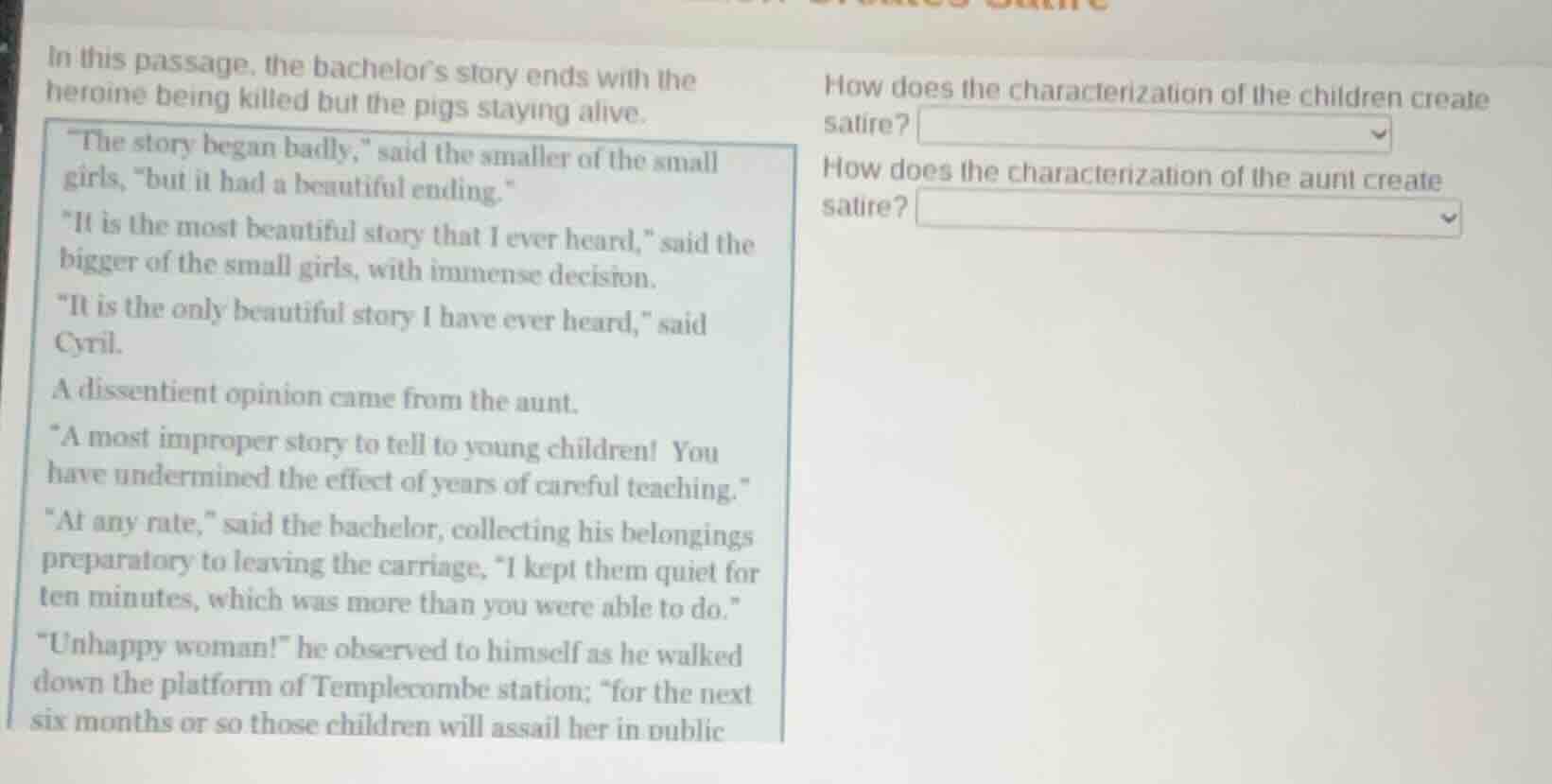
in this passage, the bachelor’s story ends with the heroine being killed but the pigs staying alive.
\the story began badly,\ said the smaller of the small girls, \but it had a beautiful ending.\
\it is the most beautiful story that i ever heard,\ said the bigger of the small girls, with immense decision.
\it is the only beautiful story i have ever heard,\ said cyril.
a dissentient opinion came from the aunt.
\a most improper story to tell to young children! you have undermined the effect of years of careful teaching.\
\at any rate,\ said the bachelor, collecting his belongings preparatory to leaving the carriage, \i kept them quiet for ten minutes, which was more than you were able to do.\
\unhappy woman!\ he observed to himself as he walked down the platform of templecombe station; \for the next six months or so those children will assail her in public
how does the characterization of the children create satire?
how does the characterization of the aunt create satire?
For "How does the characterization of the children create satire?"
The children praise a story with a heroine’s death (improper for kids) as “beautiful,” showing their lack of moral understanding/naivety. Their positive view of a flawed story mocks societal expectations of children’s behavior (e.g., being “proper” or morally discerning), creating satire by highlighting the contrast between expected and actual childish reactions.
The aunt is portrayed as traditional/moralistic (calling the story “improper,” claiming her teaching is undermined) but fails to control the children (they prefer the bachelor’s story). Her self - righteous concern about “proper” stories is satirized by her inability to engage the children, highlighting the hypocrisy of her moral posturing and the ineffectiveness of conventional, rigid moral education.

Snap & solve any problem in the app
Get step-by-step solutions on Sovi AI
Photo-based solutions with guided steps
Explore more problems and detailed explanations
The children’s characterization creates satire by their enthusiastic praise of a story with a morally questionable (heroine killed, pigs alive) ending. They call it “beautiful” despite its improper content, mocking the idea of children being morally discerning or “proper”—their naïve, misplaced approval contrasts with societal expectations of children’s behavior, satirizing both the children’s lack of moral understanding and the ineffectiveness of the aunt’s “careful teaching” (since they prefer the bachelor’s improper story).