QUESTION IMAGE
Question
procedure
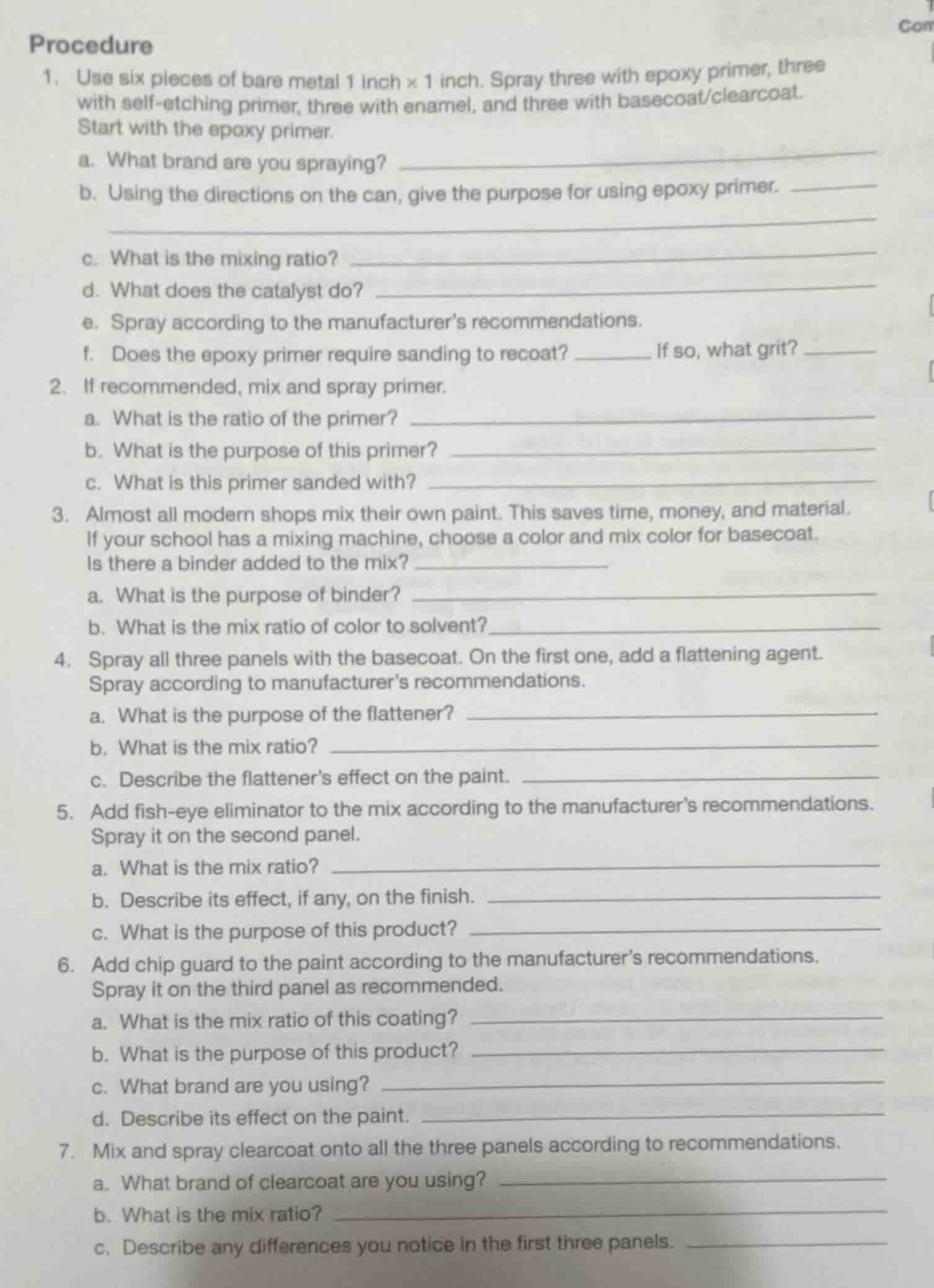
- use six pieces of bare metal 1 inch × 1 inch. spray three with epoxy primer, three with self - etching primer, three with enamel, and three with basecoat/clearcoat. start with the epoxy primer.
a. what brand are you spraying?
b. using the directions on the can, give the purpose for using epoxy primer.
c. what is the mixing ratio?
d. what does the catalyst do?
e. spray according to the manufacturer’s recommendations.
f. does the epoxy primer require sanding to recoat?
if so, what grit?
- if recommended, mix and spray primer.
a. what is the ratio of the primer?
b. what is the purpose of this primer?
c. what is this primer sanded with?
- almost all modern shops mix their own paint. this saves time, money, and material. if your school has a mixing machine, choose a color and mix color for basecoat. is there a binder added to the mix?
a. what is the purpose of binder?
b. what is the mix ratio of color to solvent?
- spray all three panels with the basecoat. on the first one, add a flattening agent. spray according to manufacturer’s recommendations.
a. what is the purpose of the flattener?
b. what is the mix ratio?
c. describe the flattener’s effect on the paint.
- add fish - eye eliminator to the mix according to the manufacturer’s recommendations. spray it on the second panel.
a. what is the mix ratio?
b. describe its effect, if any, on the finish.
c. what is the purpose of this product?
- add chip guard to the paint according to the manufacturer’s recommendations. spray it on the third panel as recommended.
a. what is the mix ratio of this coating?
b. what is the purpose of this product?
c. what brand are you using?
d. describe its effect on the paint.
- mix and spray clearcoat onto all the three panels according to recommendations.
a. what brand of clearcoat are you using?
b. what is the mix ratio?
c. describe any differences you notice in the first three panels.
These questions are related to a practical procedure in painting (likely automotive or metal painting) and require knowledge of painting products, their uses, mixing ratios, and application procedures. Since the questions are about the practical application of painting materials and processes, the subfield under Natural Science would be Engineering (specifically related to materials engineering or surface coating engineering) or potentially a vocational/technical subfield, but from the given list, Engineering is the best fit.
To answer these, you would need to refer to the specific paint products (brands like Dupli - Color, Rust - Oleum, etc., depending on availability) and their instructions. For example, for part 1b, the purpose of epoxy primer (from typical product instructions) is usually to provide excellent adhesion to bare metal, corrosion resistance, and a good base for subsequent coats. The mixing ratio (1c) for epoxy primer varies by brand, e.g., some are 1:1 (primer to catalyst), the catalyst (1d) is used to initiate the curing process, etc.
Since these are fill - in - the - blank questions based on product instructions, here's how you could approach a few:
For question 1a:
Step 1: Identify a common epoxy primer brand.
Common brands of epoxy primer include "Rust - Oleum Automotive Epoxy Primer", "Dupli - Color Epoxy Primer", etc. (the answer depends on the brand available for use).
Step 1: Recall the purpose of epoxy primer from product instructions.
Epoxy primer is used for good adhesion to bare metal, corrosion protection, and as a base for topcoats.
Step 1: Check the mixing ratio on the epoxy primer can.
For many epoxy primers, the mixing ratio is 1:1 (primer to catalyst), but it varies by brand.

Snap & solve any problem in the app
Get step-by-step solutions on Sovi AI
Photo-based solutions with guided steps
Explore more problems and detailed explanations
(Example) Rust - Oleum Automotive Epoxy Primer (or other appropriate brand)