QUESTION IMAGE
Question
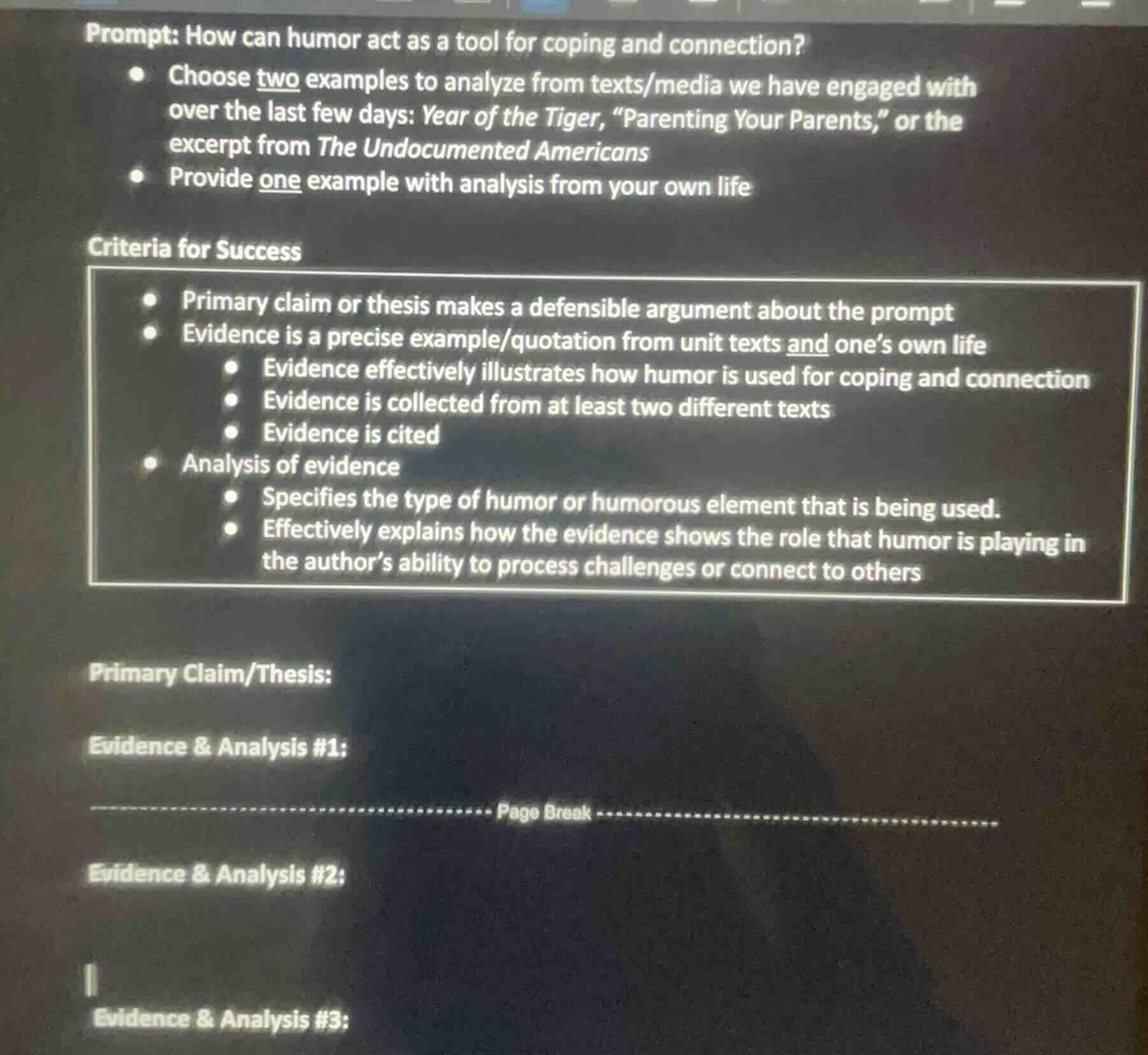
prompt: how can humor act as a tool for coping and connection?
- choose two examples to analyze from texts/media we have engaged with over the last few days: year of the tiger, \parenting your parents,\ or the excerpt from the undocumented americans
- provide one example with analysis from your own life
criteria for success
- primary claim or thesis makes a defensible argument about the prompt
- evidence is a precise example/quotation from unit texts and one’s own life
- evidence effectively illustrates how humor is used for coping and connection
- evidence is collected from at least two different texts
- evidence is cited
- analysis of evidence
- specifies the type of humor or humorous element that is being used.
- effectively explains how the evidence shows the role that humor is playing in the author’s ability to process challenges or connect to others
primary claim/thesis:
evidence & analysis #1:
----------------------- page break -----------------------
evidence & analysis #2:
evidence & analysis #3:
Primary Claim/Thesis:
Humor serves as a multifaceted tool that enables individuals to cope with adversity by reframing challenges and fosters connection by creating shared understanding and emotional resonance, as demonstrated in selected texts and personal experience.
Evidence & Analysis #1:
- *Text Example: Year of the Tiger***
In Year of the Tiger, the author uses self - deprecating humor, such as laughing at their own cultural misunderstandings or awkward experiences as an immigrant. This type of humor is a form of coping because it takes the sting out of feelings of alienation or not - belonging. By sharing these humorous anecdotes, the author also connects with readers who may have had similar experiences of navigating between two cultures. The humor creates a bond as readers recognize their own struggles in the author's light - hearted recounting, showing how humor can bridge the gap between different cultural backgrounds and help the author process the difficulties of assimilation.
Evidence & Analysis #2:
- *Text Example: “Parenting Your Parents”***
In “Parenting Your Parents,” the use of situational humor, like the absurdity of the role reversal where adult children have to care for their aging parents as if they were kids, is evident. This humor helps the author and readers cope with the stressful and emotionally heavy situation of parental aging and caregiving. It lightens the burden of a serious topic, making it more bearable to think about. For connection, this humor resonates with many adult children who are in similar situations, creating a sense of community. They can laugh together at the strange but relatable circumstances, strengthening their bond over a shared life stage.
Evidence & Analysis #3:
- Personal Example
In my own life, when my group of friends and I were stressed about upcoming exams, we started making jokes about our sleep - deprived状态 (sleep - deprived state) and how we were “running on coffee and nerves.” This is a form of coping humor, as it helped us reduce the anxiety of the situation by making light of our exhaustion. For connection, these jokes created a sense of unity among us. We all understood the struggle of exam - related stress, and the humor made us feel like we were in it together, strengthening our friendship as we laughed at our shared predicament.

Snap & solve any problem in the app
Get step-by-step solutions on Sovi AI
Photo-based solutions with guided steps
Explore more problems and detailed explanations
Primary Claim/Thesis:
Humor serves as a multifaceted tool that enables individuals to cope with adversity by reframing challenges and fosters connection by creating shared understanding and emotional resonance, as demonstrated in selected texts and personal experience.
Evidence & Analysis #1:
- *Text Example: Year of the Tiger***
In Year of the Tiger, the author uses self - deprecating humor, such as laughing at their own cultural misunderstandings or awkward experiences as an immigrant. This type of humor is a form of coping because it takes the sting out of feelings of alienation or not - belonging. By sharing these humorous anecdotes, the author also connects with readers who may have had similar experiences of navigating between two cultures. The humor creates a bond as readers recognize their own struggles in the author's light - hearted recounting, showing how humor can bridge the gap between different cultural backgrounds and help the author process the difficulties of assimilation.
Evidence & Analysis #2:
- *Text Example: “Parenting Your Parents”***
In “Parenting Your Parents,” the use of situational humor, like the absurdity of the role reversal where adult children have to care for their aging parents as if they were kids, is evident. This humor helps the author and readers cope with the stressful and emotionally heavy situation of parental aging and caregiving. It lightens the burden of a serious topic, making it more bearable to think about. For connection, this humor resonates with many adult children who are in similar situations, creating a sense of community. They can laugh together at the strange but relatable circumstances, strengthening their bond over a shared life stage.
Evidence & Analysis #3:
- Personal Example
In my own life, when my group of friends and I were stressed about upcoming exams, we started making jokes about our sleep - deprived状态 (sleep - deprived state) and how we were “running on coffee and nerves.” This is a form of coping humor, as it helped us reduce the anxiety of the situation by making light of our exhaustion. For connection, these jokes created a sense of unity among us. We all understood the struggle of exam - related stress, and the humor made us feel like we were in it together, strengthening our friendship as we laughed at our shared predicament.