QUESTION IMAGE
Question
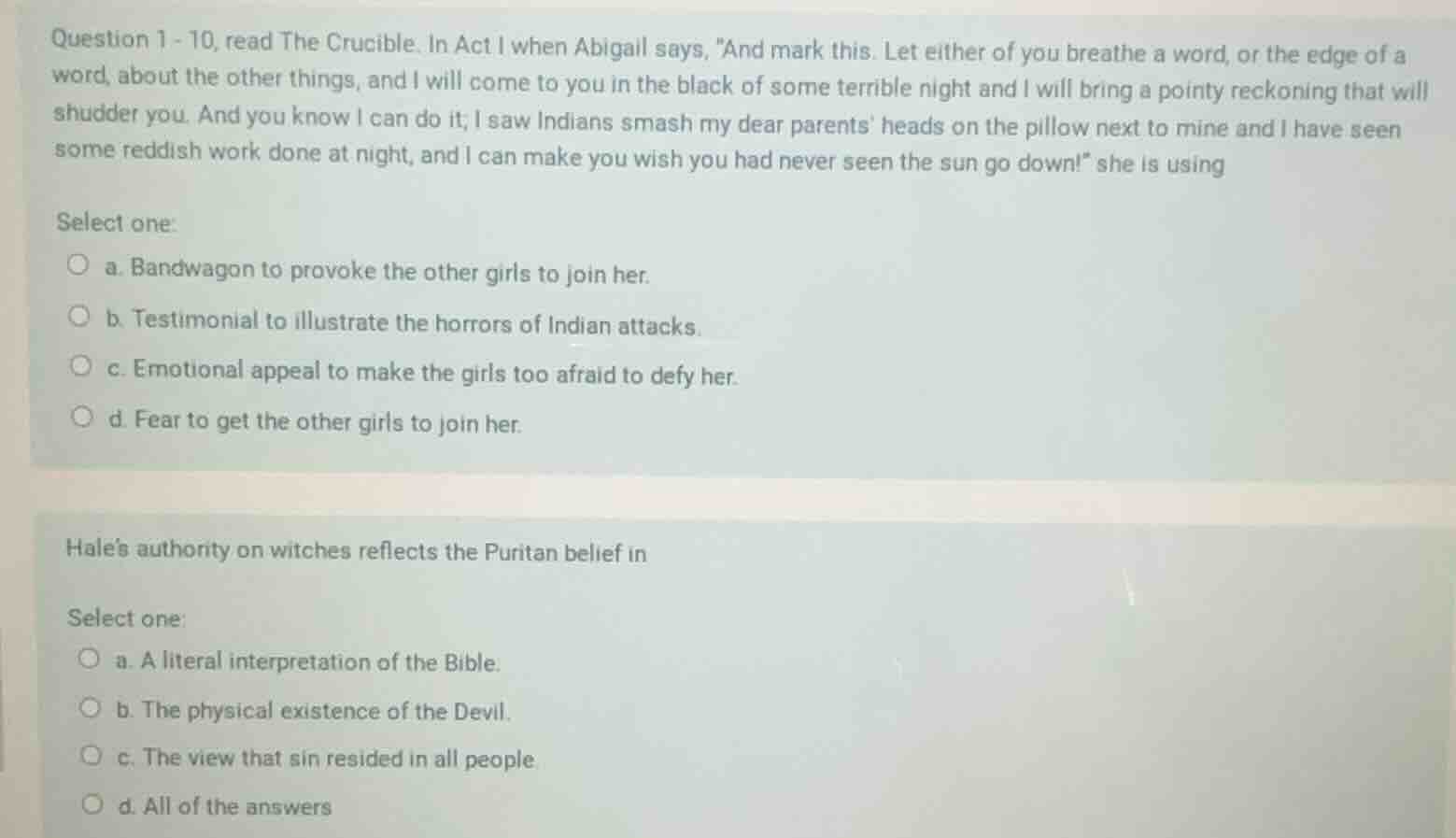
question 1 - 10, read the crucible. in act i when abigail says, \and mark this. let either of you breathe a word, or the edge of a word, about the other things, and i will come to you in the black of some terrible night and i will bring a pointy reckoning that will shudder you. and you know i can do it; i saw indians smash my dear parents heads on the pillow next to mine and i have seen some reddish work done at night, and i can make you wish you had never seen the sun go down!\ she is using
select one:
a. bandwagon to provoke the other girls to join her.
b. testimonial to illustrate the horrors of indian attacks.
c. emotional appeal to make the girls too afraid to defy her.
d. fear to get the other girls to join her.
hales authority on witches reflects the puritan belief in
select one:
a. a literal interpretation of the bible.
b. the physical existence of the devil.
c. the view that sin resided in all people
d. all of the answers
For the first question: Abigail uses graphic, threatening language and references violent, frightening experiences to intimidate the other girls into staying silent, which is an emotional appeal rooted in fear to prevent them from defying her. Option a is incorrect because bandwagon involves peer pressure to join a group, not threats. Option b is wrong as her goal is not to illustrate Indian attacks but to threaten. Option d is imprecise; her direct aim is to scare them into obedience, not just get them to join her.
For the second question: Puritans took the Bible literally, which included beliefs about the physical existence of the Devil and the inherent sinfulness of all people. Hale's role as an expert on witches relies on all these core Puritan beliefs: literal Bible interpretation supports the idea of witchcraft, belief in the Devil's physical existence is central to witchcraft fears, and the view of universal sin frames the context of moral failure that leads to witchcraft.

Snap & solve any problem in the app
Get step-by-step solutions on Sovi AI
Photo-based solutions with guided steps
Explore more problems and detailed explanations
- c. Emotional appeal to make the girls too afraid to defy her.
- d. All of the answers