QUESTION IMAGE
Question
question # 11
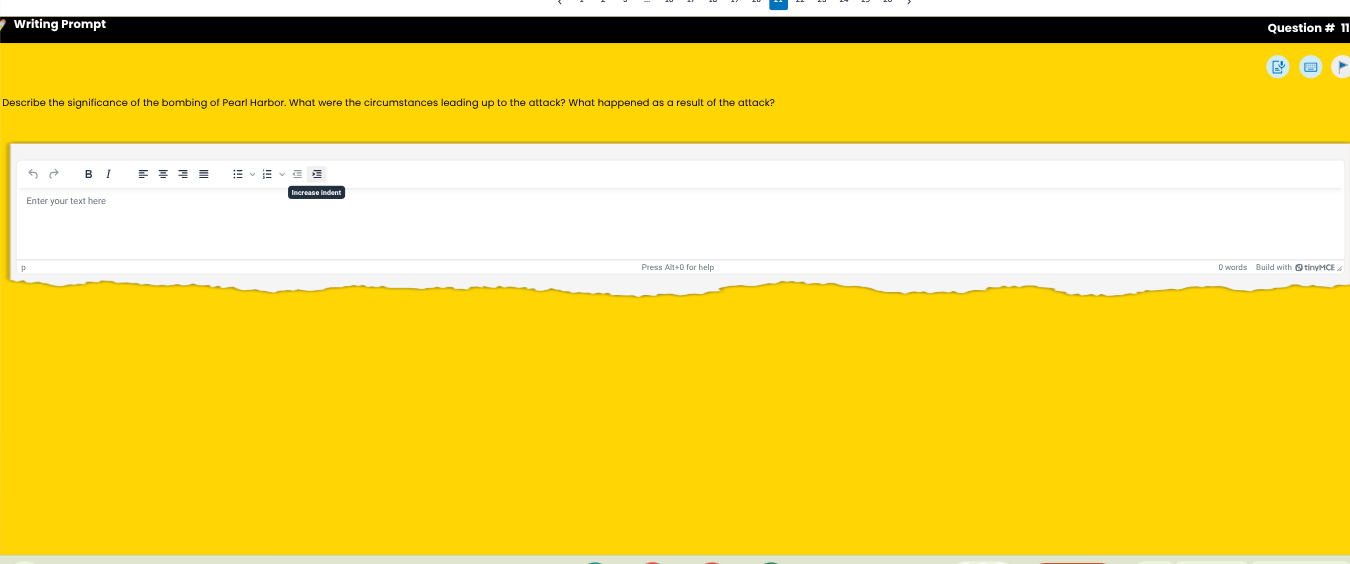
describe the significance of the bombing of pearl harbor. what were the circumstances leading up to the attack? what happened as a result of the attack?
- Circumstances leading to the attack:
Japan was expanding its empire in Asia in the 1930s-1940s, facing resource shortages. The U.S. imposed oil and trade embargoes on Japan to protest its aggression in China and Southeast Asia. Japan viewed a pre-emptive strike on the U.S. Pacific Fleet at Pearl Harbor as necessary to eliminate American naval power in the Pacific, allowing unimpeded expansion.
- Significance and consequences:
The attack on December 7, 1941, destroyed or damaged 19 U.S. naval vessels and over 300 aircraft, killing over 2,400 Americans. It immediately led to the U.S. abandoning its neutrality in World War II, declaring war on Japan the next day. Germany and Italy then declared war on the U.S., drawing the nation fully into the global conflict. The attack unified American public opinion in support of the war effort, and the U.S.'s entry shifted the balance of power in the Allies' favor, accelerating the end of World War II.

Snap & solve any problem in the app
Get step-by-step solutions on Sovi AI
Photo-based solutions with guided steps
Explore more problems and detailed explanations
Circumstances Leading to the Attack:
- Japan's imperial expansion in East/Southeast Asia in the 1930s–1940s created critical resource shortages (oil, steel) for its military and economy.
- The U.S. responded with strict trade embargoes (including oil) and froze Japanese assets to pressure Japan to halt its aggression.
- Japanese military leaders decided a pre-emptive strike on the U.S. Pacific Fleet at Pearl Harbor was the only way to remove American naval resistance to its Pacific expansion plans.
Significance and Outcomes of the Attack:
- Immediate Human/Military Losses: On December 7, 1941, the attack killed 2,403 Americans, wounded 1,178, destroyed/damaged 19 U.S. naval ships (including 8 battleships) and over 300 aircraft.
- U.S. Entry into WWII: The attack ended U.S. neutrality; the U.S. declared war on Japan on December 8, 1941. Germany and Italy then declared war on the U.S., drawing it fully into the global conflict.
- War Momentum Shift: U.S. industrial and military power turned the tide for the Allied forces, accelerating the eventual defeat of the Axis powers.
- Domestic Impact: It unified American public opinion in support of the war effort, ending isolationist sentiment, and led to long-term U.S. global military and political engagement.