QUESTION IMAGE
Question
question 3
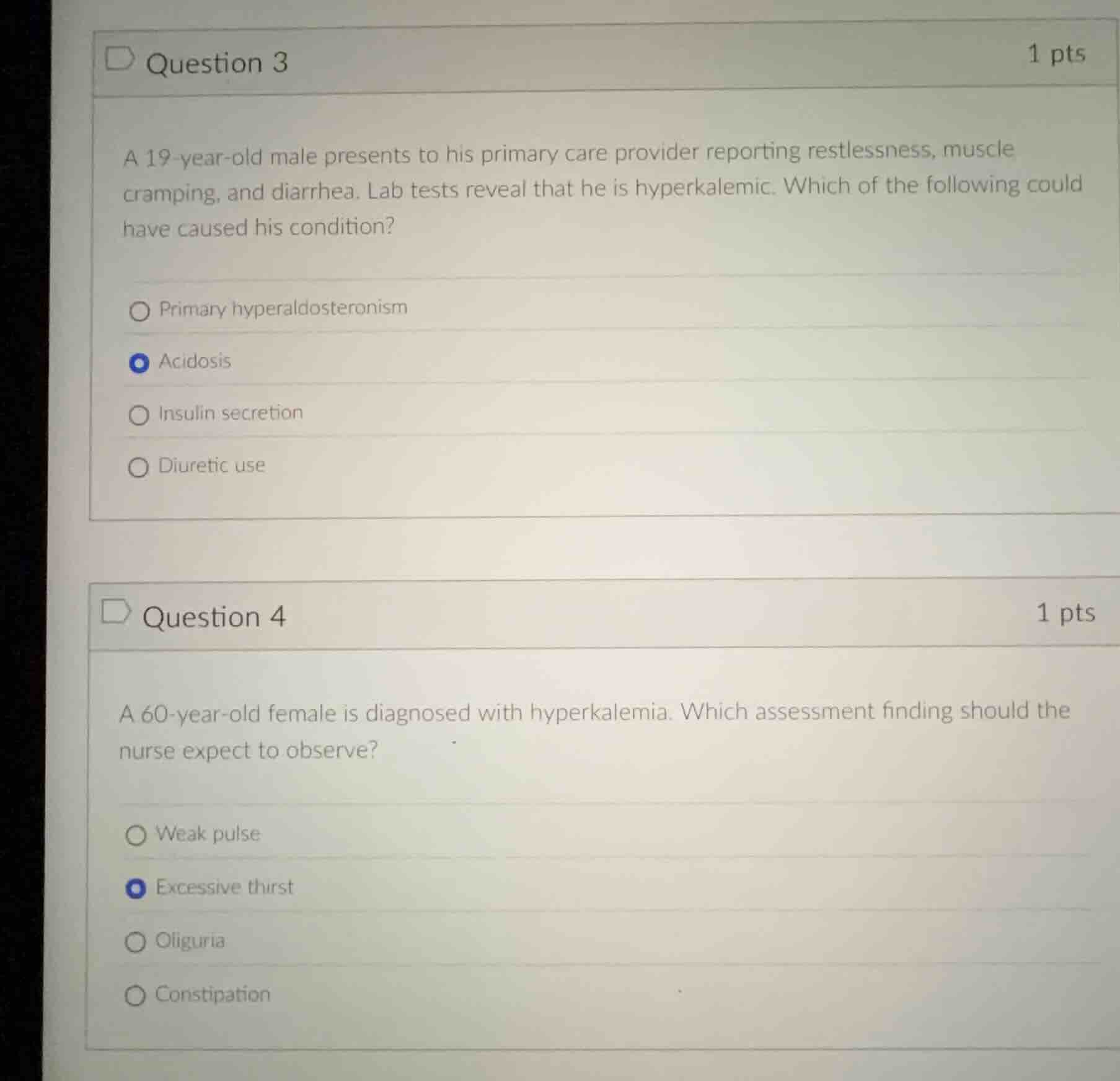
a 19-year-old male presents to his primary care provider reporting restlessness, muscle cramping, and diarrhea. lab tests reveal that he is hyperkalemic. which of the following could have caused his condition?
primary hyperaldosteronism
acidosis
insulin secretion
diuretic use
question 4
a 60-year-old female is diagnosed with hyperkalemia. which assessment finding should the nurse expect to observe?
weak pulse
excessive thirst
oliguria
constipation
Response
Question 3
Brief Explanations
- Primary hyperaldosteronism causes hypokalemia (low potassium), not hyperkalemia.
- Acidosis can lead to hyperkalemia as hydrogen ions enter cells and potassium moves out to maintain electrical neutrality.
- Insulin secretion drives potassium into cells, causing hypokalemia.
- Diuretic use (especially non - potassium - sparing diuretics) usually causes hypokalemia.
Brief Explanations
- Weak pulse is more associated with hypokalemia or other cardiovascular issues not typical of hyperkalemia alone.
- Excessive thirst is related to conditions like diabetes (high blood sugar) or hypernatremia, not hyperkalemia.
- Oliguria can be a sign of kidney dysfunction, and hyperkalemia is often associated with impaired kidney function which can lead to oliguria as the kidneys are not excreting properly.
- Constipation is not a typical finding in hyperkalemia; hyperkalemia is more associated with gastrointestinal symptoms like diarrhea (in some cases) or muscle - related symptoms, and renal - related symptoms like oliguria in case of kidney impairment.

Snap & solve any problem in the app
Get step-by-step solutions on Sovi AI
Photo-based solutions with guided steps
Explore more problems and detailed explanations
B. Acidosis