QUESTION IMAGE
Question
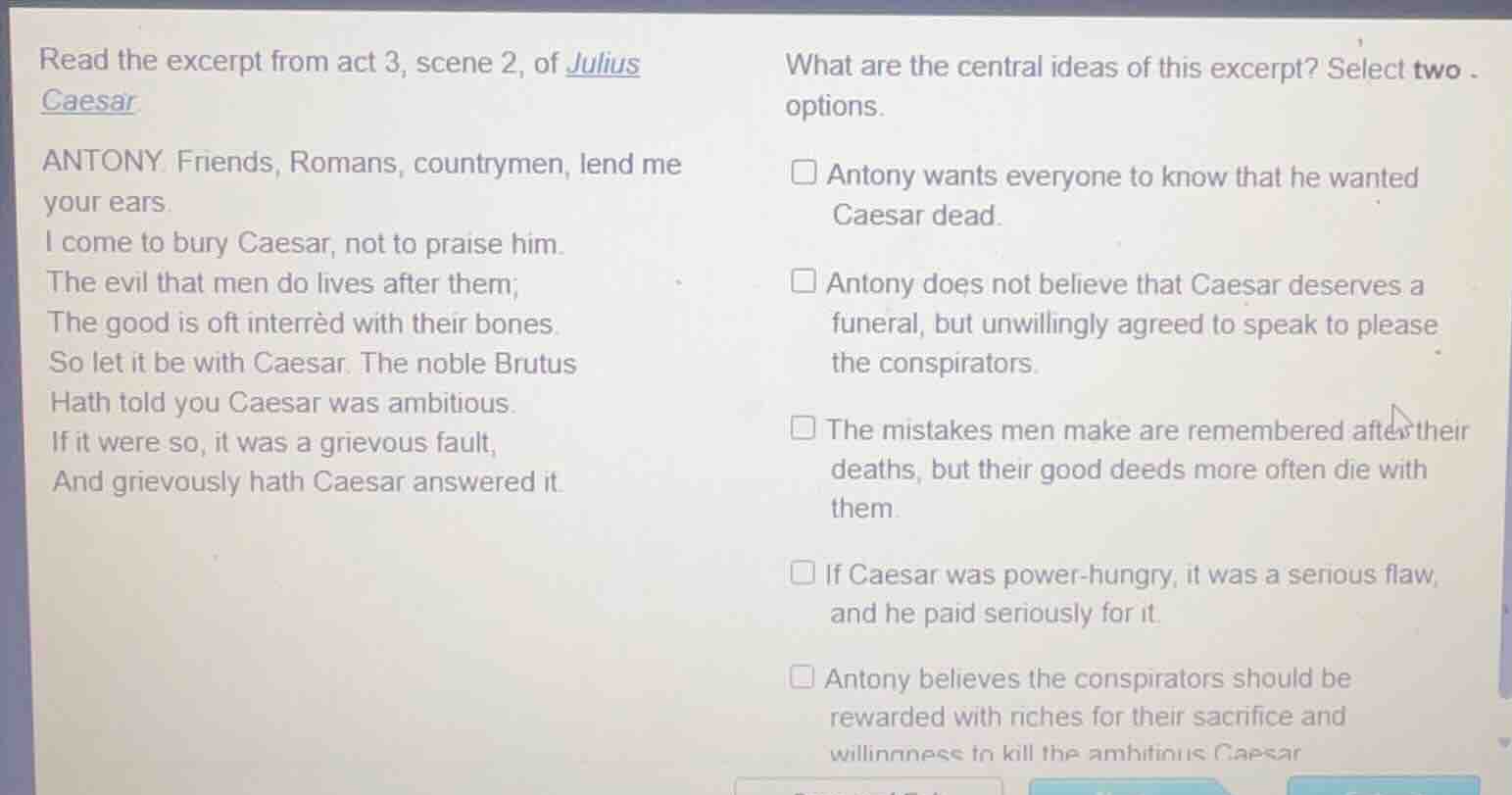
read the excerpt from act 3, scene 2, of julius caesar antony. friends, romans, countrymen, lend me your ears. i come to bury caesar, not to praise him. the evil that men do lives after them; the good is oft interrèd with their bones. so let it be with caesar. the noble brutus hath told you caesar was ambitious. if it were so, it was a grievous fault, and grievously hath caesar answered it. what are the central ideas of this excerpt? select two options. ☐ antony wants everyone to know that he wanted caesar dead. ☐ antony does not believe that caesar deserves a funeral, but unwillingly agreed to speak to please the conspirators. ☐ the mistakes men make are remembered after their deaths, but their good deeds more often die with them. ☐ if caesar was power - hungry, it was a serious flaw, and he paid seriously for it. ☐ antony believes the conspirators should be rewarded with riches for their sacrifice and willingness to kill the ambitious caesar
- The line "The evil that men do lives after them; The good is oft interrèd with their bones" directly matches this central idea about how people's mistakes outlive them while good deeds are forgotten.
- Antony states "If it were so, it was a grievous fault, And grievously hath Caesar answered it," which aligns with the idea that if Caesar was power-hungry (ambitious), it was a serious flaw and he faced a serious consequence (death).
The other options are incorrect: Antony says he comes to bury, not praise, but does not say he wanted Caesar dead; he does not express reluctance to speak or that Caesar did not deserve a funeral; he does not support rewarding the conspirators.

Snap & solve any problem in the app
Get step-by-step solutions on Sovi AI
Photo-based solutions with guided steps
Explore more problems and detailed explanations
- The mistakes men make are remembered after their deaths, but their good deeds more often die with them.
- If Caesar was power-hungry, it was a serious flaw, and he paid seriously for it.