QUESTION IMAGE
Question
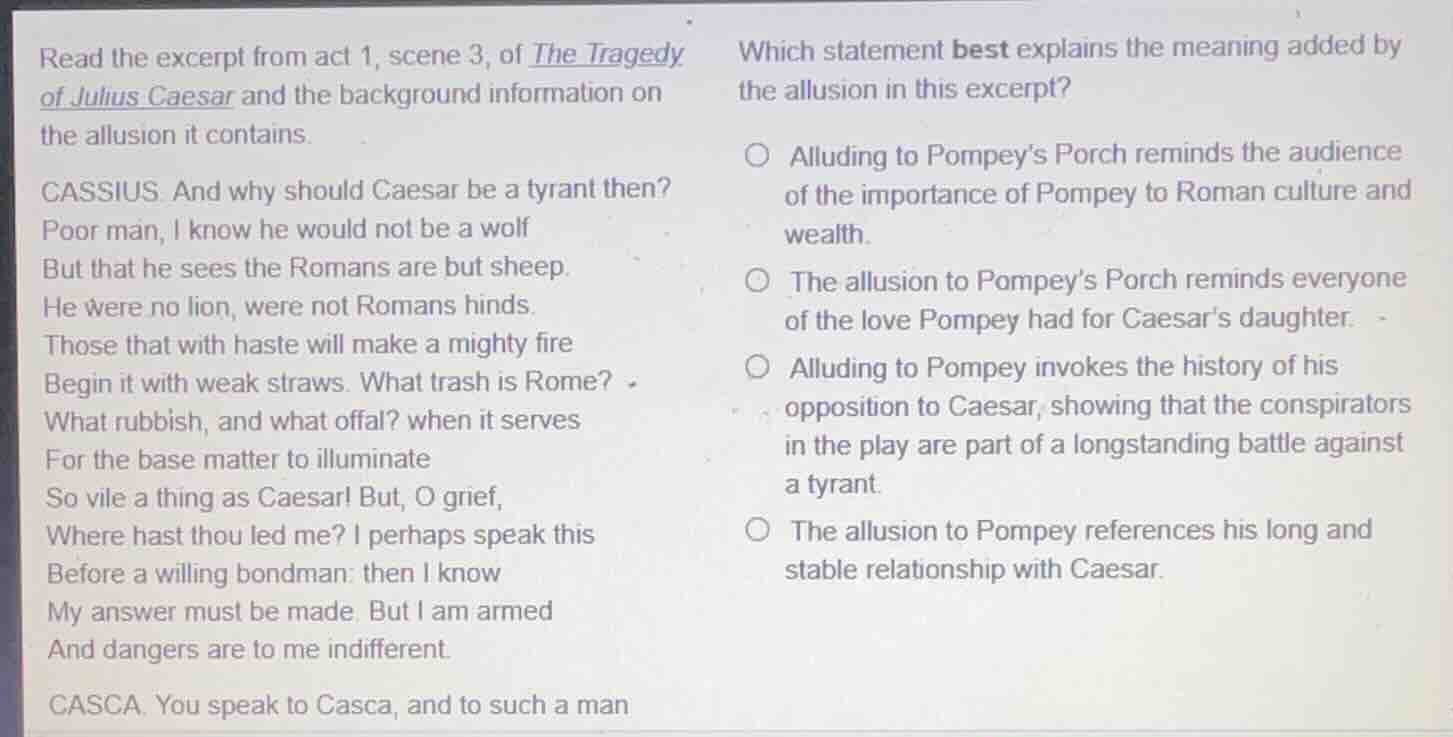
read the excerpt from act 1, scene 3, of the tragedy of julius caesar and the background information on the allusion it contains. cassius and why should caesar be a tyrant then? poor man, i know he would not be a wolf but that he sees the romans are but sheep. he were no lion, were not romans hinds. those that with haste will make a mighty fire begin it with weak straws. what trash is rome? what rubbish, and what offal? when it serves for the base matter to illuminate so vile a thing as caesar! but, o grief, where hast thou led me? i perhaps speak this before a willing bondman: then i know my answer must be made. but i am armed and dangers are to me indifferent. casca. you speak to casca, and to such a man which statement best explains the meaning added by the allusion in this excerpt? alluding to pompey’s porch reminds the audience of the importance of pompey to roman culture and wealth. the allusion to pompey’s porch reminds everyone of the love pompey had for caesar’s daughter. alluding to pompey invokes the history of his opposition to caesar, showing that the conspirators in the play are part of a longstanding battle against a tyrant. the allusion to pompey references his long and stable relationship with caesar.
Pompey was a key rival of Caesar; Cassius, a conspirator, frames Caesar as a tyrant. The allusion to Pompey evokes their historical opposition, positioning the play's conspirators as continuing a fight against tyrannical power. Other options are incorrect: the allusion does not focus on Pompey's cultural importance, his love for Caesar's daughter, or a stable relationship with Caesar.

Snap & solve any problem in the app
Get step-by-step solutions on Sovi AI
Photo-based solutions with guided steps
Explore more problems and detailed explanations
Alluding to Pompey invokes the history of his opposition to Caesar, showing that the conspirators in the play are part of a longstanding battle against a tyrant.